
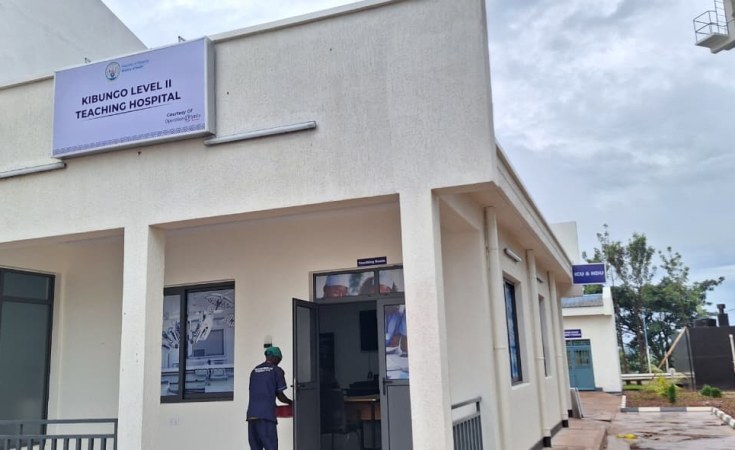
Rwanda is improving its surgical care with the opening of a newly renovated surgical department at Kibungo Level Two Teaching Hospital, previously known as Kibungo Provincial Referral Hospital - a milestone that brings critical services closer to the community.
The new facility, developed through a partnership between the Ministry of Health, the University of Rwanda, and Operation Smile, features upgraded operating theatres, an intensive care unit (ICU), a high-dependency unit (HDU), and teaching spaces that will enhance both service delivery and medical training. It is based on a "hub-and-spoke" model designed to decentralise care. By upgrading district hospitals within a 75-kilometre radius, the goal is to ensure that no patient has to travel more than two hours to access comprehensive surgical services.
Operation Smile began operations in Rwanda in 2011
Follow us on WhatsApp | LinkedIn for the latest headlines
Operation Smile uses a "spoke" model to deliver sustainable cleft care and reconstructive surgery closer to where patients live, particularly in remote or rural areas. In order to achieve sustainable and long-lasting impact, the organisation believes that health workforce education and training are essential.
The Kibungo facility builds upon the momentum gained at the first Pan-African Surgical Conference in Kigali in February 2025. Over 400 academic leaders, policymakers, global surgery experts, and civil society representatives attended the conference in order to contribute to the improvement of surgical systems on the continent. One year after the Pan-African Surgical Conference, an impact report highlights how that moment has translated into measurable progress on the ground. Operation Smile is committed to improving access to safe surgery by investing in specialised training, infrastructure, and system strengthening.
Operation Smile works collaboratively with local and international partners on advancing a strategy focused on localising surgical care, overcoming persistent barriers such as distance from services, limited infrastructure, and a shortage of healthcare professionals. The past year has been marked by collaboration, innovation, and the development of a skilled workforce, reinforcing the shared responsibility to build resilient, inclusive surgical systems that meet the needs of communities across Africa.
Professor Faustin Ntirenganya, the Head of Surgery at the University of Rwanda, said that the urgency of expanding access to care is crucial. An estimated five billion people lack access to safe, timely, and affordable surgical care globally, a situation that is also present in Rwanda. This gap continues to negatively affect health outcomes, economic stability, and the resilience of the health care system. The need for sustainable, locally driven surgical solutions is evident.
"Rwanda has very limited access to surgery, so many patients are waiting for surgery and emergency procedures right now," he said. He added that the country currently has about 172 surgeons, yet by global standards, it should have more than 1,000. "That means we are operating at nearly eight times less than what is needed," said Dr Ntirenganya.
Despite progress, there are still significant gaps, particularly in the area of anaesthesia and broader surgical resources. He said that surgery is not just about personnel, but also about infrastructure, equipment, and technology, all of which require sustained investment.
A critical step forward has been made by the government through its 4x4 programme, according to Dr Ntirenganya.
The programme aims to quadruple the healthcare workforce in the country within four years to meet the WHO recommendation of at least four healthcare professionals per 1,000 population density. This strategic initiative builds upon the groundwork laid out in the National Strategy for Health Professionals Development (NSHPD) 2020-2030 and aligns with the MOH's Strategic Priorities 2023-2025, which aims at improving the primary healthcare system and public health security through promoting evidence-based medicine and systems, enhanced leadership, and digital integration approaches, among others.
However, he said that increasing human resources must go hand in hand with expanding facilities and resources. "If you are quadrupling the workforce, you also need theatres, equipment, and investment to match," he said. Despite this progress, he cautioned that the scale of need is even greater. "We may need maybe eight times more than 4x4," he added, pointing out how surgical care has historically lagged behind other areas of healthcare.
Up to 30% of all diseases are treated by surgery
Dr Ntirenganya also emphasised the broader burden of surgical disease, saying that up to 30% of health conditions require surgical intervention. Addressing this, he suggested, requires a deliberate shift in how health systems are structured and resourced.
The Kibungo initiative is part of a broader, continuing effort to strengthen Rwanda's surgical system. It builds on momentum already established, focusing on multiple gaps at once, from training and infrastructure to system strengthening and improving patient access, he said. He said that Operation Smile has been a key partner throughout this journey.
"We started this in Kigali," he said, referring to what he described as a hub-and-spoke approach, one designed not as a one-off intervention, but as part of a larger, coordinated system aimed at bringing care closer to the population.
Hospitals have been mapped within a 75-kilometre radius, roughly a two-hour drive, to ensure equitable access, Dr Ntirenganya said. "If we complete all these hospitals… we can say that in Rwanda, within two hours, you can reach a hospital that can comprehensively manage these conditions," he said.
At Kibungo, that vision is taking shape through the development of the surgical spoke, with a strong emphasis on training. Critical care services, such as intensive care unit support, are being integrated into teaching to create long-term capacity.
"Sometimes when you operate, you need to support the patient 100%," he said, noting the importance of having the full system in place, not just the surgery itself, but the care that surrounds it.
Dr Ntirenganya said that critical care support is central to the functionality of the new surgical spoke.
As a result, units such as the intensive care unit play a vital role in ensuring patients receive the level of care they require following complex procedures. The facility now has three major operating rooms and one minor operating room, allowing it to perform a broader range of procedures efficiently.
This vision is not the result of a single institution, but of a collaborative effort among partners.
Building on what Dr Ntirenganya said, Operation Smile Rwanda Country Manager Andrew Karima described the programme as a partnership in its truest sense, one that brings together Operation Smile and the Government of Rwanda to translate a shared vision into reality.
"This is a partnership that is meant to bring to life the visions of two parties… around health system development," he said. "Our approach is comprehensive; we focus on training, infrastructure, equipment, and systems all at once. The goal is to make surgical care accessible and ensure it meets acceptable standards for every patient." He said similar work was already carried out in other regions, including referral and military hospitals.
At Kibungo, the integration of operating theatres, ICU and HDU services, and teaching spaces reflects that philosophy - where infrastructure, training, and advanced equipment all work together to deliver outcomes that "any local citizen… would wish to receive in a hospital."
Karima described the Kibungo facility milestone as one of achievement. "Today we are celebrating the project that has been accomplished," he said.
The ambition now extends well beyond Rwanda's borders.
As part of Operation 100, Operation Smile's global initiative to equip 100 cleft operative teams across 100 hospitals. The organisation currently operates in 37 countries; the goal is that no patient, anywhere, should face an impossible journey to reach a surgeon.
A global vision, grounded in local leadership
Susan Can, the Vice President of Marketing and Communications at Operation Smile, said Rwanda's progress offers a model for other countries.
However, she noted that access to surgical care remains a major gap worldwide. She pointed out that nearly two-thirds of the global population still lacks access to safe surgery, making Rwanda's model particularly significant.
"Solutions are not imported, but built collaboratively."
She highlighted that one of the reasons the organisation continues to return to Rwanda is the country's progress in building a functional hub-and-spoke system. "Why we keep coming back to Rwanda is because of how advanced... how far you've gone in bringing that care through the hub-and-spoke system," she said.
For Can, the partnership is also about shared learning.
"I really believe we learn from each other, and we learn together," she said. "Solutions are not imported, but built collaboratively." She said that the level of quality and safety achieved in Rwanda stands out as an example others can learn from.
She described the Pan-African Surgical Conference as a pivotal event that brought together hundreds of stakeholders from across the continent to discuss perioperative care. The discussions, she said, reinforced a key principle: that the answers to Africa's surgical challenges lie within the continent itself.
"Our role... is to support," she said, adding that global partners are there to learn and strengthen existing systems rather than replace them.
She linked this to Operation Smile's broader vision under Operation 100, which builds on decades of experience in cleft care but has since expanded into strengthening entire health systems. What began with treating children with cleft conditions, she said, has evolved into a more comprehensive approach, one that includes training full surgical teams, investing in infrastructure, and ensuring the availability and maintenance of equipment.
She described Rwanda's work as both a model and a learning ground, where global expertise is combined with local leadership to provide access to safe and high-quality surgical care.
Why Operation 100?
Further, she discussed the concept behind Operation 100, describing it as both a learning process and an evolving vision. She said that the goal was to strengthen surgical capacity across 100 district hospitals globally, not as an endpoint, but as a way to understand what works.
"If we can get 100 district hospitals up and running, we'll learn a lot, and that's just the beginning," she said.
Can also shared what continues to inspire her on the ground. Drawing from her background as a pediatric nurse, she described witnessing the level of care being delivered in Rwanda as deeply moving. "It's truly inspiring," she said, reflecting on time spent observing surgeries and engaging with teams.

Sign up for free AllAfrica Newsletters
Get the latest in African news delivered straight to your inbox
None of this would be done without partnerships
She said that none of this progress happens in isolation. Longstanding collaboration with Rwanda's Ministry of Health, she said, has been central since Operation Smile began working in the country in 2011. Equally important are the volunteers - surgeons, nurses, and other professionals - who dedicate their time and expertise to both training and patient care.
"These are volunteers lending their time and talents... to train and to take really good care of patients," she said.
Additionally, she pointed out the role of partnership beyond the clinical sphere, acknowledging the role of media in bringing the issue to the forefront. She said that the lack of access to surgical care remains widely misunderstood, despite its magnitude. She added that in many parts of the world, especially in the West, this reality is often overlooked because surgical care is readily available.
Training surgeons, transforming systems
The goal of building a strong surgical system goes beyond individual expertise, requiring a coordinated, multidisciplinary approach, said Dr Ntirenganya. He said surgery is inherently collaborative, saying that no single surgeon can address all conditions alone.
Rwanda, he added, has made significant progress in expanding its training pipeline. The country currently runs 14 surgical training programmes, including both residency and fellowship tracks, with approximately 226 trainees in the system, a substantial increase from just a few dozen in previous years.
However, becoming a surgeon remains a long and rigorous journey.
Dr Ntirenganya said that training can take between six to nine years after medical school, combining residency and fellowship programmes. Despite the demands, he said, motivation among young professionals remains strong, supported by increased government investment.
"We train, we train, we train," he said.
Still, challenges remain, particularly in balancing the growing number of medical students with the limited capacity for specialised training. While Rwanda's medical schools are producing large numbers of graduates, he said that not all can transition into surgical specialities, pointing to the need for a broader and more balanced health workforce.
Maintaining quality, he said, is now the priority.
To address this, investments in infrastructure, such as expanded operating theatres and training sites, are essential. These spaces, he said, are where real learning happens.
"You cannot train for surgery when you don't have operating rooms," he said. He drew a vivid comparison. "It's like teaching swimming without a pool... And the swimming pools for us are in theatres. It's where we go in, we train our students, we operate as they practice, and they learn."
