

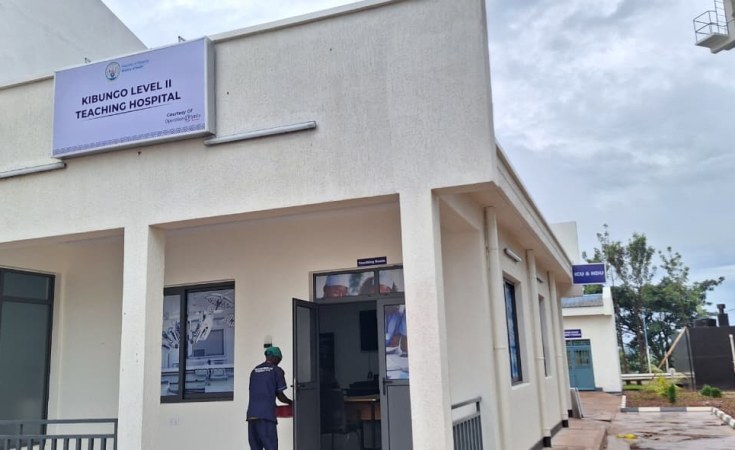
The email arrived quietly, almost like any other assignment, until I read the words "launch" and "surgical programme", and realised this would be more than just another reporting trip. It was an invitation to witness a milestone. A third remodelled surgical spoke was being launched in Rwanda, this time in Kibungo.
For the past four decades, Operation Smile, a global non-profit medical organisation bridging the gap in access to essential surgeries and healthcare, starting with cleft surgery and comprehensive care, has worked across the world, providing free surgeries in over 60 countries, particularly for children and adults. In high-income countries, these conditions are routinely corrected in infancy, but in low-resource settings, they can lead to social exclusion, eating problems, and speech problems. However, the organisation's mission extends beyond the operating table. It strengthens local health systems, trains medical professionals, and ensures that care is not only delivered, but also sustained.
And just like that, the journey began.
From Kigali to Kibungo, the city gave way to rolling hills and terraced farmland. Layers of green stretched as far as the eye could see. The journey itself became part of the story. Banana plantations lined the hills, while clusters of homes dotted the landscape. On the red-dirt roads, children in school uniforms walked in groups, laughing, chatting, and playing. The significance of the mission became apparent.
Keep up with the latest headlines on WhatsApp | LinkedIn
Day 1 - A mission rooted in smiles and surgery
Kibungo Level 2 Teaching Hospital, formerly Kibungo Provincial Referral Hospital, is located in Rwanda's Eastern Province within the Ngoma District. In this newly renovated facility, I entered a waiting room bustling with activity: surgeons, residents, anaesthetists, and patients gathered, ready to begin a life-changing day.
I was guided through the newly renovated wing. Once I entered the facility, I immediately felt a sense of movement. Organised, purposeful, and quietly urgent. This was an energy that was a testament to the life-changing work happening within these walls.
A surgical team from Operation Smile's international network mixed easily with Rwandan nurses and residents as they moved with purpose.
Further inside, we stepped into different units. Each telling its own story of progress and possibility. The building, she explained, now functions as a teaching hospital. This is a status formally conferred just last year, making Kibungo Provincial one of a small number of institutions in Rwanda authorised to train surgical residents.
The moment that stopped me was a room near the back of the wing. Clean, bright, equipped with new monitoring stations that looked startlingly out of place for what I'd expected of a provincial hospital this far. A High Dependency Unit - HDU - the first of its kind in the entire Eastern Province. The HDU stood as a critical addition. Not quite an Intensive Care Unit, but just as vital.
I asked her to explain the difference between an ICU and an HDU.
An HDU, she said, is for patients who are seriously ill but not yet at the threshold for intensive care, but who need close observation that a general ward cannot provide. An ICU is for those who are critically close to the edge. Kibungo now has both designations in the same facility.
The significance is difficult to put into words. Multiple hospitals across the Eastern Province will now be able to refer their most complex cases here. A ministry-managed referral system will route patients from across the region through this single, well-equipped hub. For the first time, families in Ngoma, Rwamagana, Kayonza, and beyond will not have to travel all the way to Kigali for a level of care that, until now, simply did not exist in their region.
What moved me most was not the equipment. It was the people being trained to use it. I watched part of the surgical list from a respectful distance. A case postponed. A patient was referred for further investigation. A young child waiting for surgery. Nearly 80% of the planned procedures were completed. These weren't just clinical decisions; they were human stories unfolding in real time.
There was something quietly powerful about watching registered nurses, doctors, medical practitioners, and students come together, giving their time and skills freely to support the surgeries. Many of them had stepped away from their roles in public and private hospitals - all united by a single purpose.
Day 2 - A Transformation, A Teaching Ground, A New Standard of Care
A morning briefing began on day two, an essential moment for aligning on the day ahead. Teams reviewed the surgical schedules, discussed patient conditions, and provided updates on those who had undergone procedures the previous day. Some cases required further attention, and a few patients were referred to other hospitals for further treatment. Following the briefing, the team dispersed to their respective stations. Others went straight to scrub in, carefully dressing and preparing themselves for the work ahead. The operating theatres were coming to life.
Walking through the newly renovated surgical complex in Kibungo, it quickly became clear that this was more than just an upgrade. It was a complete rethinking of how surgical care is delivered. I had the privilege of hearing directly from the man part of the programme, Benjamin Ngarambe, the Operation Smile's Programs Manager in Rwanda, who walked me through what this transformation really meant.
He said that the hospital previously had only two operating rooms, but has now been expanded to three fully equipped theatres, along with a minor surgery room, and the addition of both an Intensive Care Unit (ICU) and a High Dependency Unit (HDU).
According to him, two items are currently in progress. "There is patient care delivered to the patients, and then learning gained by the residents," he said. "Being a Level 2 Teaching Hospital means the facility carries a dual responsibility, delivering patient care while simultaneously training the next generation of surgeons."
What was once primarily a referral hospital has recently transitioned into a teaching hospital, a shift that is already reshaping its role in Rwanda's healthcare system. Medical residents now train here, gaining hands-on experience in surgery and anaesthesia. The presence of students during the walkthrough was impossible to miss. They moved between rooms, observing and learning in real time.
But the transformation goes beyond adding rooms and equipment.
Before the renovation, one of the most critical problems was something that might seem simple on the surface - pathways. Patients entering for surgery were using the same routes as those exiting post-operation, creating serious contamination risks. "The whole facility had an issue with the pathways," Ngarambe recalled. "Where the patients would come through to go to the operating rooms is where they would exit after the operation." That problem, he was pleased to report, is no longer a challenge.
*Kibungo is the third spoke to be completed under Operation 100's Rwanda strategy. The surgical spoke was built on similar upgrades in other regions, including facilities in the north and southwest of the country. He said that the first two, Ruhengeri in the northern district and Gisenyi in the southwest, are already fully operational. Each also faced similar challenges with pathways and space. However, both received the same core upgrades: renovated theatres, improved circulation, and the addition of ICU and HDU facilities where they were absent.
Looking ahead, he said, more sites are already in the pipeline, signalling a steady expansion of access to specialised care across the country. Kibuye in the western province and Gihondwe in the south are next in the pipeline, with Kibuye set to begin in April. "They are spread out in the country," Ngarambe said, a deliberate design, ensuring that no region is left behind.
I'm proud to be part of Operation Smile.
When I asked Ngarambe what it meant to him personally to be part of this project, he drew a parallel to the very heart of what Operation Smile does. "What we do is kind of result-based interventions," he said. "When we have a cleft lip or a cleft palate baby, they go through surgery, and they come out transformed."
"This is like a dream come true for us… from the initiation, from the discussion with the partners to the end, it's a dream come true," he added. He said it was a moment of collective fulfilment, one where every promise made at the start had been kept by the end. And kept on time, as they never extended the timeline of the construction. Every spoke, every renovation, all delivered when they said it would be.
He ended our conversation with words that were simple but said everything: "I'm proud to be part of Operation Smile."
Day 3: A Launch, A Promise, A Glimpse of What's Possible
The ribbon-cutting ceremony was attended by officials from the Ministry of Health, members of Operation Smile, and delegates. This was more than just the inauguration of a unit, but the start of something long-awaited. The space that had been just plans and construction is now alive and ready to serve.
As the delegates walked through this unit, I was still awestruck. I didn't mind the repeat tour at all. There was something different about moving through the space with the people who had built it, equipped it, and would now use it.
The paediatric room. The maternity ward. The delivery suite. The post-operative bay. Every space seemed to tell a story of preparation and purpose.
Among those who gathered at the Kibungo opening was Primitive Nyiransengimana, 38, from Ngoma District, whose presence was itself a testament to what the day represented.
For more than two decades, she had lived with severe swelling in her legs, a condition that first appeared when she was 17 and went untreated for years. By 2024, it had worsened to the point where moving independently was no longer possible. The social stigma that followed compounded her isolation. Surgery changed that. When she spoke at the event, it was not from a place of complaint but of quiet conviction. She described what it meant to walk again, even with crutches, and to return to the life she had almost lost. Beside her throughout those years of hardship had been her son. She is now rebuilding, one step at a time.

Sign up for free AllAfrica Newsletters
Get the latest in African news delivered straight to your inbox
A Volunteer's Story
For Dr Bruce, a plastic surgeon from the United States, the journey to Rwanda's Kibungo district was not his first. It was his 22nd trip to Rwanda alone, a part of a 27-year relationship with Operation Smile that has taken him to Cambodia, Laos, Vietnam, India, China, Brazil, Bolivia, Egypt, Madagascar and Jordan, among others.
He has kept coming back, he said.
"I like doing the work. I like Operation Smile. I like the Rwandan people who are involved with Operation Smile," he said. "What more can I say?"
As a plastic surgeon, his role within Operation Smile's missions is a direct extension of his profession. But the emotional weight of the work, he said, goes beyond the operating theatre.
"Some patients may have a problem that they thought they would have to live with for the rest of their lives because they didn't think they would get any help. And when you can give them that help, it's very gratifying," he said.
He recalled witnessing moments, particularly in other countries, where the transformation was so complete that parents did not immediately recognise their own children after surgery. "That's pretty amazing," he said.
Dr Bruce was present two years ago when Operation Smile renovated Musanze Hospital in Rwangeri, and returned specifically to witness the opening of the Kibungo facility. For him, each new site represents the same thing: care arriving somewhere it did not exist before.
And then, in true Rwandan spirit, the celebration found its rhythm.
Traditional dancers took the stage, their movements powerful and graceful. It was more than entertainment. It was culture, pride, and joy woven into the moment. A reminder that even in spaces of healing, there is room to celebrate.
The day closed on a lighter note with a football match between the hospital team and Operation Smile. I didn't really care who won. Because standing there, watching the laughter, the energy, the camaraderie. It was clear that something bigger had already been achieved. Partnership. Connection. A shared mission.
As I packed my bags later that day, preparing to head home, one thought stayed with me.
This event was about more than a ribbon-cutting. It was a proof of concept, evidence that the model works, that local ownership is possible, and that the distance between a patient and the care they need can be measured, planned for, and closed.
I left Kibungo with a full heart.

