'Therefore, operational strategies need constant overhauling. The president should review military and intelligence performances... "
There has been no let down in the attacks on the the Nigerian State by non-state actors. In Maiduguri, the Borno State capital, multiple bomb blasts shattered the peace last week, with scores of fatalities and many more seriously injured. These gory spectacles of violence are the lived experiences in many parts of the country, consequent upon steady waves of banditry and kidnapping.
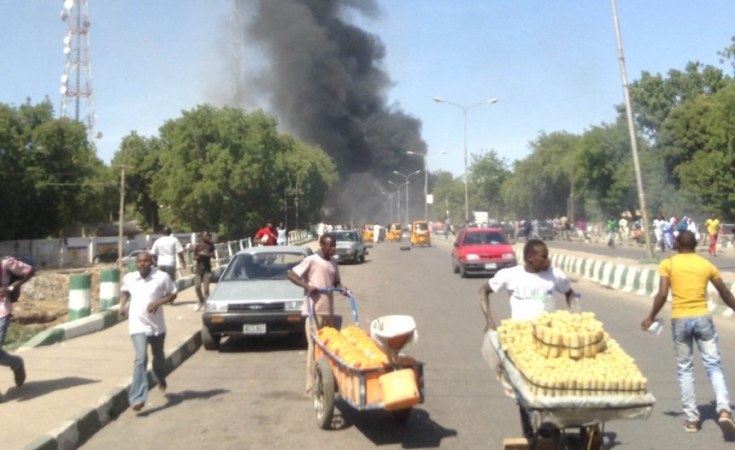
Improvised explosive devices (IEDs) detonated by Boko Haram fighters at the popular Monday Market, the University of Maiduguri Teaching Hospital (UMTH) gate, and Post Office, last Monday, left 23 persons killed, and 108 others in critical conditions. In Kwara State, the February killing of 162 persons in Woro and Nuku communities in a single attack by armed invaders continues to unnerve.
Keep up with the latest headlines on WhatsApp | LinkedIn
The dust of these barbaric acts were yet to settle when, in the wee hours of Wednesday, Islamic State West Africa Province (ISWAP) launched an attack on the 68 Battalion of the Nigerian Army's Main Defensive Area. But the group met its waterloo as 75 of the insurgents were killed in the Malam Fatori area, during their ground advance with many armed drones. Military formations in Baga, Buratai, Ajilari and Damboa, were also breached.
These were audacious escalations from an earlier, but successful assault of the insurgents on a military base in Ngoshe, on 3 March. About 14 soldiers were reportedly killed, while an armoured vehicle was burnt, which cleared the coast for the terrorists to invade an IDP camp, where over 100 women and children were abducted. The military have been attacked four times in the state this month, indicative of the worsening security situation in the area.
Apparently, a well-coordinated triangular security challenge, straddling and revolving amongst the North-east, North-west and North-central geopolitical zones, tests Nigeria's counterterrorism resolve. This should really worry the authorities. President Bola Tinubu describes the latest Maiduguri bombings as "profoundly unsettling" and rightly so, according to a statement issued by his Special Adviser on Information and Strategy, Bayo Onanuga.
Before now, these heinous crimes were perpetrated on the outskirts of the state capital, leaving Maiduguri as a safe haven for many, especially Internally Displaced Persons (IDPs). Military chiefs have relocated to the area at the behest of the president, to assess the situation and restore order. However, only proactive engagements would count for much!
The embarrassing extreme violence and resultant death tolls occassioned by insurgents have instigated countless emergency security meetings between the president and the security chiefs, with directives given to contain the menace. Ironically, the stepping up of counterinsurgency measures have equally provoked the escalation of the murderous and barbaric responses of insurgents, as highlighted by a military source, which cited their offensives in the Sambisa, Mandara, and Lake Chad areas. This is, however, debatable.
Undoubtedly, in an insurgency, the repeated killings of military commanders by the enemy vitiate the moral armour of soldiers. Such ranking victims include, but are not limited to Colonel Aliyu Paiko, the commanding officer of 202 battalion; Major UI Mairiga, commander of the Forward Operation Military Base (FOB); a Major and commanding officer of a military unit involved in the 28 January attack during which seven officers were killed; Brigadier General Musa Uba, killed by ISWAP in an ambush in Wajiroko; and the Commanding Officer of 181 Amphibious Battalion, killed alongside 17 others in Okuama, Delta State, among others.
The estimated 10,217 people killed by non-state actors in the first two years of Tinubu's administration, according to Amnesty International; and about 3.74 million IDPs scattered in 3,900 camps, from the Displacement Tracking Index data of the International Organisation for Migration, offer a scarier insight into an existential crisis that exacerbates by the day. This trend is further corroborated by the fourth position ranking of Nigeria in the just released 2026 Global Terrorism Index.
Therefore, operational strategies need constant overhauling. The president should review military and intelligence performances, in relation to their alignment with his expectations from the state of emergency declaration on security on 26 November, 2025. Yet, his striking point that his "administration has the courage and determination to keep this country safe and ensure our citizens live in peace," appears just like a hope inspiring rhetoric, from the look of this so far. Nigerians are getting needlessly killed, and overwhelmed daily by the panic and uncertainty imposed by the lawlessness of non-state insecurity actors.
Ali Ndume, representing Borno South in the Senate, and also a former chairman of its standing Committee on Army, recently chided the military for not having attack helicopters or fighter jets permanently stationed in the North-East, for effectiveness in counterinsurgency operations. This claim needs to be seriously looked into.

Sign up for free AllAfrica Newsletters
Get the latest in African news delivered straight to your inbox
The resurgence of Islamist assaults, in the main, is due to the lack of security structures to firmly hold territories that the military had freed from the stranglehold of these dark operatives. It is shameful that our overpaid federal lawmakers, many of who are afraid to visit their constituencies, due to fears of insecurity, have not, in almost three years now, seen the necessity of treating the devolution of policing in the country as a matter of urgency.
However, Mr Tinubu has woken up late to this need in his express charge to the newly appointed Inspector General of Police, Olatunji Disu, to implement state policing. Yet, it remains squarely within the remit of the National Assembly members, given the legislative or constitutional hurdle that remains to be overcome.
While a farrago of misplaced legislative priorities has undermined its realisation this far, the lawmakers should, therefore, act now in order for the country to move swiftly towards the arrest of this dangerous security drift. These jihadists, bandits and kidnappers need to be confined to their proper places.
