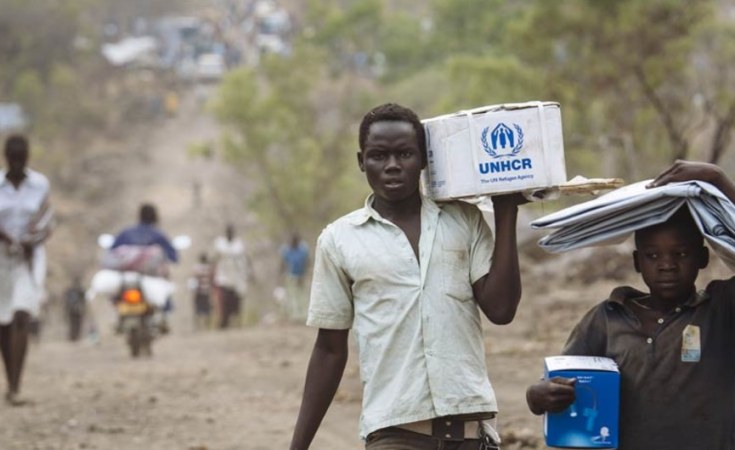
The Office of the Prime Minister (OPM) has announced that Uganda is preparing to receive an additional 27,000 refugees in the 2026/2027 financial year, further cementing the country's reputation as a global leader in refugee hosting.
Assistant Commissioner Apollo Kivumbi made the disclosure while appearing before Members of Parliament on the Committee on Presidential Affairs on Thursday.
He said the new arrivals are expected under the second phase of the Development Response to Displacement Impacts Project, a programme aimed at supporting both refugees and host communities.
Uganda already hosts over two million refugees, most of whom have fled ongoing conflicts in neighbouring Democratic Republic of Congo and South Sudan.
Keep up with the latest headlines on WhatsApp | LinkedIn
The upcoming intake will be supported through international funding, largely from the United Nations High Commissioner for Refugees (UNHCR).
The project is estimated at about US$328 million, with funds earmarked for improving social services, building infrastructure, and creating economic opportunities in refugee-hosting districts.
Kivumbi explained that the funding is intended not only to assist refugees but also to ease pressure on local communities sharing limited resources such as schools, health facilities, and roads.
However, the plan received mixed reactions from lawmakers. Adjumani East MP James Mamawi argued that priority should be given to strengthening livelihoods for existing refugees rather than increasing intake numbers.
Uganda's open-door refugee policy has long been praised internationally, granting refugees access to land, work, and public services.
Last year, President Museveni described Uganda as a safe destination for those fleeing conflict.
"Some of our neighbouring countries are still at war, and Uganda is hosting about two million refugees. Peace must be protected," he said at a campaign rally in Bukomansimbi.
With fresh arrivals expected, the government faces the ongoing challenge of balancing humanitarian commitments with growing pressure on resources, while continuing to rely heavily on donor support to sustain its refugee response programmes.

