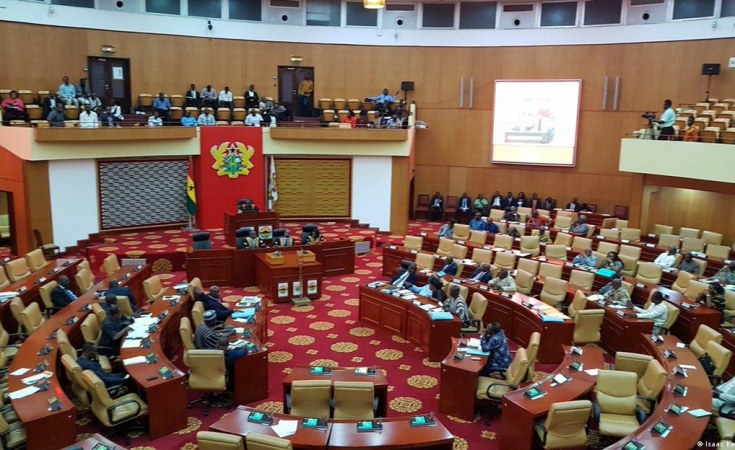
Liberia may be heading toward another defining constitutional moment as the House of Representatives begins deliberations on a potential national referendum that could fundamentally reshape the country's identity, citizenship framework, and property regime.
A long-standing and controversial provision in the 1986 Constitution--Article 27(b)--which restricts Liberian citizenship to persons of "Negro descent" is at the heart of the debate. The renewed push for reform, sparked by former President Ellen Johnson Sirleaf in a recent interview, has ignited national reflection on race, belonging, and Liberia's place in a rapidly globalizing world.
Lawmakers are considering a package of amendments that, if passed, would mark one of the most significant constitutional overhauls in decades. Key proposals include Citizenship Reform: Removing the "Negro clause" and redefining eligibility for Liberian citizenship; Dual Citizenship: Allowing natural-born Liberians to hold citizenship in other countries; Property Rights Reform: Permitting non-citizens to own property under regulated conditions, and Public Office Restrictions: Limiting elected positions to natural-born Liberians
These proposals are framed as part of a broader effort to modernize Liberia's legal framework and align it with contemporary democratic and human rights standards.
Keep up with the latest headlines on WhatsApp | LinkedIn
Speaking before lawmakers, former President Sirleaf argued that the current provision is inconsistent with Liberia's constitutional commitment to equality.
"We must ensure that our laws reflect who we are today--not who we were two centuries ago," she urged, calling for a re-examination of Article 27(b).
To understand the sensitivity of the current debate, one must return to Liberia's founding in 1847. Established by freed Black slaves from the United States, Liberia was conceived as a homeland for people of African descent. The "Negro clause" was therefore not incidental--it was foundational, designed to preserve the country as a Black republic in a colonial era dominated by racial exclusion.
For much of Liberia's history, this provision symbolized sovereignty and resistance against external domination. However, critics now argue that in the 21st century, it has become exclusionary and inconsistent with global norms on citizenship and non-discrimination.
The country's history with constitutional referendums offers important context for the current process.
The most recent major referendum was held in December 2020 under President George Weah, proposing several constitutional changes, including reduction of presidential and legislative term lengths, and adjustment of election dates.
While some propositions received majority support, none met the constitutional requirement of a two-thirds threshold, leading to their failure. The outcome highlighted both public skepticism and the high bar required for constitutional change.
Earlier referendums, including those leading to the adoption of the 1986 Constitution of Liberia, were shaped by post-conflict transitions and political restructuring, often reflecting elite consensus more than broad-based civic engagement.
The current push, therefore, faces a dual challenge--securing legislative backing and winning overwhelming public approval.
Under Articles 91 and 92 of the Constitution, the path to amendment is deliberately rigorous Two-thirds approval in both the House and Senate, Publication in the Official Gazette, and a national referendum requiring two-thirds voter approval
With an estimated cost of US$19 million, the referendum also raises questions about fiscal priorities in a country facing competing development needs.
Regional and Continental Context: How Liberia Compares
Across West Africa and the broader continent, citizenship laws have evolved significantly--often in ways that contrast sharply with Liberia's current framework.
West Africa, Ghana allows dual citizenship and does not impose racial restrictions on nationality, Nigeria permits dual citizenship for citizens by birth and has more flexible naturalization pathways, and Sierra Leone removed similar restrictions and now recognizes dual citizenship.
Across the African continent, countries such as South Africa and Kenya have adopted inclusive citizenship regimes that prioritize residency, descent, and legal processes over racial identity.
These reforms have often been driven by economic considerations--particularly the need to attract diaspora investment and integrate into global systems.
Allowing dual citizenship could unlock significant economic potential. Liberia's diaspora--spread across the United States, Europe, and elsewhere--remains a major source of remittances. However, current laws discourage long-term investment by forcing individuals to choose between citizenships.
Reform could encourage diaspora investment in real estate and business, strengthen knowledge transfer and professional networks, and boost confidence among international partners.
Perhaps the most profound implication lies in the realm of identity. Removing the "Negro clause" would redefine Liberia's founding philosophy--shifting from a racially defined state to a civic, inclusive nation.
Supporters see this as progress toward equality and modernization. Critics, however, fear it could dilute Liberia's historical identity as Africa's first Black republic.
The proposal to allow non-citizens to own property is likely to generate intense debate. Land in Liberia is not just an economic asset--it is deeply tied to heritage, culture, and community identity.
While reform could attract foreign investment, it also raises concerns about land dispossession, elite capture of resources and weak regulatory enforcement.

Sign up for free AllAfrica Newsletters
Get the latest in African news delivered straight to your inbox
Restricting elected offices to natural-born Liberians reflects a balancing act--opening citizenship while preserving national control over political leadership.
This approach mirrors practices in countries like the United States, where only natural-born citizens can become president.
The House's decision to initiate referendum discussions signals more than legislative activity--it reflects a nation grappling with its past and negotiating its future.
Experts invited to guide the process, including representatives from the Law Reform Commission and academia, are expected to shape a debate that goes beyond legal text to fundamental questions of identity, inclusion, and development.
Yet, as history shows, constitutional reform is never purely technical--it is deeply political and often emotional.
Even if lawmakers reach consensus, the ultimate decision will rest with the Liberian people. And as past referendums have demonstrated, public approval cannot be taken for granted.
The conversation sparked by Ellen Johnson Sirleaf has reopened one of the most consequential debates in the country's modern history about who belongs, who decides, and what kind of nation Liberia aspires to become.
The answers, if they come, will not only reshape the Constitution--but redefine the very idea of Liberia itself.

