

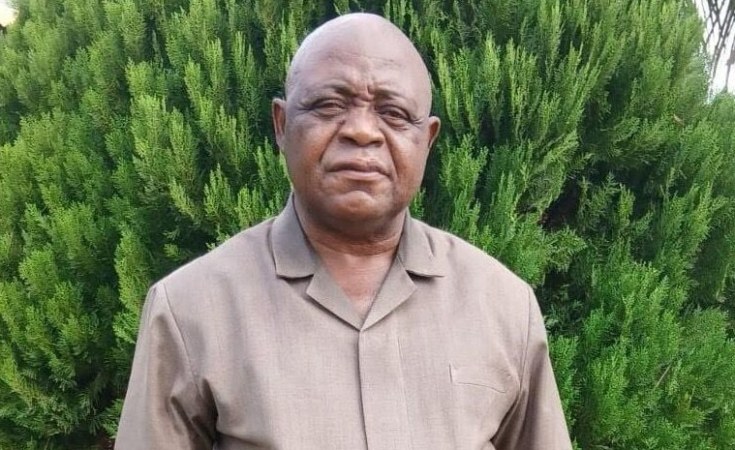
Monrovia — President Joseph Nyuma Boakai's nomination of former National Elections Commission (NEC) Commissioner Jonathan K. Weedor as Chairman of the NEC is drawing mixed reactions, with supporters citing his extensive experience and critics raising concerns about his political neutrality.
The appointment, announced by the Executive Mansion, follows the resignation of former NEC Chairperson Davidetta Browne-Lansanah. While the Presidency has expressed confidence in Weedor's ability to lead the electoral body, some civil society actors and political commentators argue that his alleged ties to the ruling Unity Party could undermine public trust in the Commission.
In a statement, Presidential Press Secretary Atty. Kula Bonah Nyei Fofana described Weedor as a seasoned professional with a strong background in electoral administration, governance, and public service.
Follow us on WhatsApp | LinkedIn for the latest headlines
"Mr. Weedor brings to the position a wealth of experience in electoral administration, governance, and public service. He previously served as Commissioner of the National Elections Commission from 2004 to 2020, during which time he held key oversight responsibilities, including Human Resources, Finance, and Procurement," the statement said.
The President, according to Fofana, has "full confidence in Mr. Weedor's competence, integrity, and professionalism," and expects that under his leadership, the NEC will continue to uphold transparency, independence, and credibility in the conduct of elections.
However, concerns about Weedor's "closeness" to the ruling establishment have quickly surfaced.
During the 2023 presidential and legislative elections, Weedor and former NEC Chairman Cllr. James Fromoyan were involved in the Unity Party's campaign activities. A video circulating on social media shows both men addressing a press conference in which they predicted an outright victory for the party in the first round of voting. The election ultimately proceeded to a runoff, which the Unity Party narrowly won against the then-ruling Coalition for Democratic Change (CDC).
Anderson Miamen, Executive Director of the Center for Transparency and Accountability, acknowledged Weedor's qualifications but questioned his independence.
"The President's choice as Chairman of the National Elections Commission, Mr. Jonathan Weedor, has the requisite experience and technical capabilities. He is a seasoned expert in electoral management and governance," Miamen said.
"However, the same cannot be said about his independence, an equally important factor in determining the suitability of candidates to occupy such a vital and sensitive position. The video circulating on social media, which shows his strong connection to the Unity Party and the current government, undermines his independence and suitability for the position."
Miamen further argued that appointing individuals with perceived political ties risks eroding confidence in the electoral process.
"This is concerning, especially when there are equally qualified and demonstrably independent Liberians who could serve in this role," he said. "Repeating past mistakes does not make them right. The issue is not capacity, but independence."
Clergy member and activist Dr. Clarence Pearson also weighed in, warning that perceptions of bias--regardless of legal qualifications--could have broader implications for Liberia's democracy.
"The real issue is not whether Weedor can lawfully be nominated. It is whether his nomination strengthens or weakens 'loser's consent'--the willingness of defeated candidates and their supporters to accept election outcomes," Pearson said.
"In fragile democracies, people often do not revolt because they lose; they revolt because they believe they were denied a fair chance to win. If the NEC Chair is seen as politically close to the ruling establishment, then every close race or disputed result risks being interpreted not as error, but as engineered advantage."
Pearson added that once such perceptions take hold, even a legally sound electoral process may struggle to maintain public confidence and peace.
Opposition figures have also criticized the nomination. Garrison Doldeh Yealue, a member of the CDC and former Representative of Nimba County, questioned the decision, using strong rhetoric to express skepticism about the process and warning of potential political resistance.
Meanwhile, some supporters of the ruling establishment argue that concerns about political affiliation are not new. They point to past appointments, including under former President George Weah, where individuals with perceived political ties were appointed to the NEC but later served in independent capacities.
Liberia's election law requires that commissioners be Liberian citizens of good moral character, at least 35 years old, and unaffiliated with political parties at the time of appointment. However, critics say that legal compliance alone is insufficient to guarantee public trust.
The NEC, which comprises a seven-member board including a chairperson, co-chairperson, and five commissioners, plays a critical role in managing elections and maintaining democratic stability in Liberia.

Sign up for free AllAfrica Newsletters
Get the latest in African news delivered straight to your inbox
Eddie Jarwolo, Executive Director of Naymote Partners for Democratic Development, emphasized the importance of credibility in electoral leadership, noting that elections in post-conflict societies like Liberia must be managed with integrity and professionalism to sustain public trust.
"The credibility and effectiveness of the NEC are central to safeguarding peace, stability, and social cohesion," Jarwolo said. "This is a consequential moment that calls for careful and principled decision-making in the best interest of the country."
The debate surrounding Weedor's nomination underscores the delicate balance between competence and perceived neutrality in electoral governance. While his supporters highlight his institutional knowledge and long service, critics insist that public confidence in the NEC depends not only on expertise but also on unquestioned independence.
As the nomination proceeds to the Senate for confirmation, attention is expected to focus on whether lawmakers will prioritize experience, public perception, or a combination of both in determining the future leadership of Liberia's electoral body.

