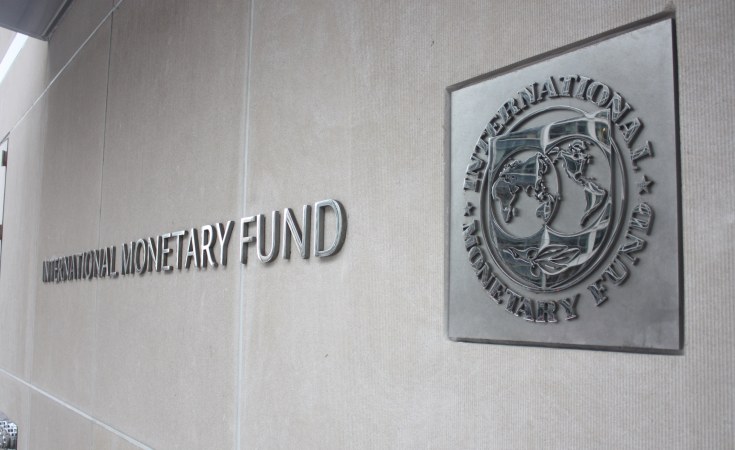
MONROVIA -- The International Monetary Fund has approved a $266 million financing package for Liberia, the largest single injection of multilateral support since President Joseph Nyuma Boakai took office, arriving as the country's economy recorded its strongest growth performance in recent years.
The IMF Executive Board approved the package on April 27 under a 21-month arrangement through its Resilience and Sustainability Facility, a mechanism designed to help low-income countries strengthen climate adaptation, build institutional capacity, and prepare for future economic shocks, including pandemics. The approval came alongside the completion of the third review of Liberia's Extended Credit Facility program, which unlocked an immediate additional disbursement of $26.49 million, bringing total ECF disbursements to approximately $105.96 million since the program was approved in September 2024.
The two actions represent the most substantial vote of international financial confidence in Liberia's economic management in the current administration's tenure.
Growth at 5.1 Percent
Follow us on WhatsApp | LinkedIn for the latest headlines
The IMF cited accelerating economic momentum in its assessment, noting that Liberia's economy grew by 5.1 percent in 2025, driven primarily by mining sector expansion. The Fund also noted that the country's political environment remains conducive to the implementation of reform, a reference to the government's ARREST Agenda for Inclusive Development.
IMF Acting Chair Bo Li commended Liberian authorities for maintaining sound macroeconomic policies while cautioning that the work is far from finished.
"Fiscal adjustment has helped reduce debt vulnerabilities," Li said, noting that ongoing expenditure reforms have enabled the government to redirect resources toward priority development projects and essential social programs. He stressed that further progress is needed to consolidate those gains.
Li also acknowledged government measures to cushion citizens against rising global fuel prices, citing targeted subsidies for public transportation as having helped mitigate the impact on vulnerable populations.
Finance Minister: A Milestone in the Reform Journey
Finance Minister Augustine Kpehe Ngafuan, who has been central to Liberia's engagement with the IMF since the ECF was approved last year, welcomed the decision in direct terms.
"We are elated that our country has been approved to receive additional financing for development and macroeconomic stability," Ngafuan said. "This reflects the hard work and commitment demonstrated since October 2024 to meet the IMF's benchmarks and qualify for this support."
Ngafuan credited President Boakai for his leadership in driving the reform process and noted that RSF disbursements will be made in tranches over 21 months, conditional on the achievement of specific performance targets. He said the financing will advance climate resilience initiatives, strengthen macroeconomic stability and improve governance and institutional effectiveness.

Sign up for free AllAfrica Newsletters
Get the latest in African news delivered straight to your inbox
The RSF approval is also expected to catalyze additional funding from development partners, who typically treat IMF program status as a signal of creditworthiness and reform credibility. The facility will also support the Central Bank of Liberia, bolstering the country's balance of payments position.
Ngafuan made the remarks in the context of the IMF-World Bank Spring Meetings in Washington, where he had also warned of potential spillover effects from geopolitical tensions and volatile energy prices on Liberia's economy, and outlined measures being taken to mitigate external shocks.
