... as NCDC warns of increasing fatality rate
The death toll from the outbreak of Lassa fever in Nigeria has risen to 191, with health authorities warning over increasing infections recorded across several states in the country.
According to the report, 23 states across 106 local government areas have recorded at least one confirmed case this year.
The report revealed that a heavy concentration of infections continues to be seen in just five states -- Bauchi, Ondo, Taraba, Edo and Benue -- which account for 84 per cent of all confirmed cases.
Keep up with the latest headlines on WhatsApp | LinkedIn
Bauchi and Ondo alone contribute 26 per cent each, followed by Taraba (16%), Edo (9%) and Benue (7%).
Also, data showed that the 21-30 age group remains the most affected, with cases spanning ages from 1 to 90 years and a median age of 30. The report also noted a near-balanced gender distribution, with a male-to-female ratio of 1:0.9.
The NCDC further confirmed that one healthcare worker was newly infected in Week 18, underscoring ongoing risks to frontline responders despite intensified infection prevention measures.
The NCDC said the rising infections reflect persistent gaps in early detection and community response.
"We are seeing late presentation of cases in many communities, and this continues to drive preventable deaths.
"The high fatality rate is a clear signal that people are arriving at treatment centres too late."
The agency noted that while suspected cases have declined, confirmed infections are rising, suggesting improved detection but also sustained transmission in high-burden areas.
The report warned that the CFR of 24.6 per cent remains dangerously high, indicating weak health-seeking behaviour and delayed access to care.
"Lassa fever is treatable when detected early, but we are still losing too many lives because patients come in late."
The NCDC said it has activated a multi-partner Incident Management System (IMS) nationwide and intensified response activities, including the following: Infection prevention and control (IPC) training for healthcare workers in Ondo and Ebonyi, deployment of rapid response teams to high-burden states, prepositioning of PPE across treatment centres? community sensitisation campaigns with traditional and religious leaders and expansion of ring IPC strategies in Benue and other hotspot states
The agency added that it is working with partners, including WHO, UNICEF, US CDC, MSF, ALIMA, and RTI International, to strengthen surveillance and outbreak control.
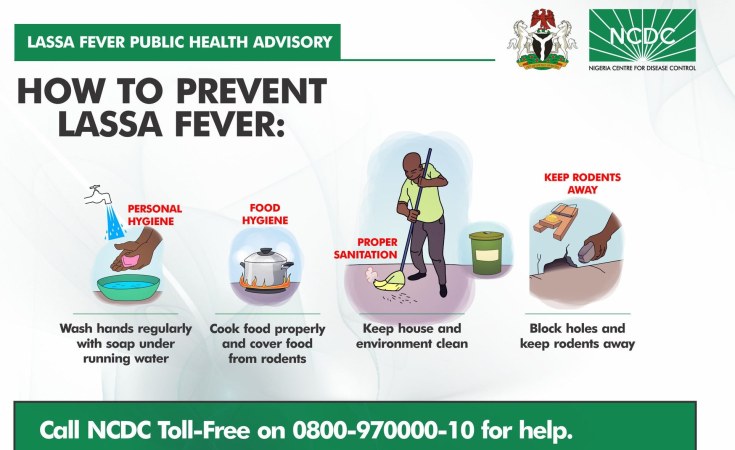
The agency urged states to intensify year-round prevention efforts, particularly environmental sanitation and rodent control, which remain key drivers of transmission.

Sign up for free AllAfrica Newsletters
Get the latest in African news delivered straight to your inbox
"All stakeholders must sustain community engagement and strengthen infection prevention practices in both health facilities and households," the report advised.
The NCDC reaffirmed its commitment to reducing fatalities through early detection, improved treatment access, and strengthened healthcare worker protection.
