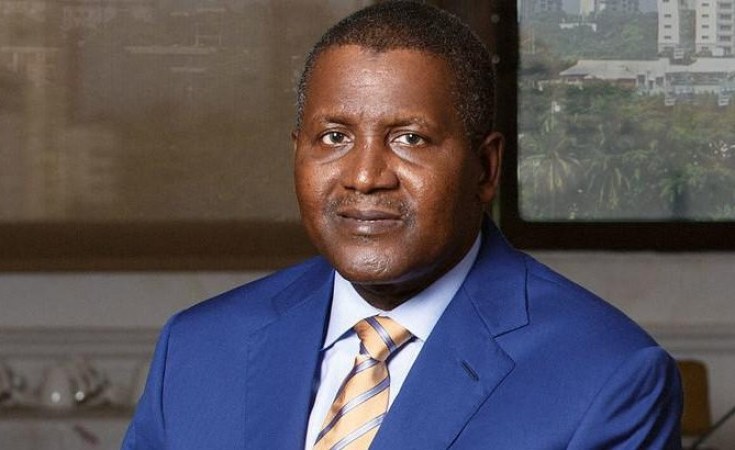
Mr Dangote said small groups profited from local product allocations under the subsidy regime and that subsidy payments alone reached nearly $10 billion annually.
Africa's richest man, Aliko Dangote, has revealed how entrenched interests benefiting from Nigeria's fuel import and subsidy regime tried to frustrate the construction of his $20 billion refinery, describing them as a powerful "mafia" determined to preserve a lucrative subsidy system.
Mr Dangote said the resistance came from traders, shippers and local beneficiaries of Nigeria's long-running petrol subsidy arrangement who saw the refinery as a threat to billions of naira in profits.
Follow us on WhatsApp | LinkedIn for the latest headlines
Speaking in an interview with Nicolai Tangen, chief executive officer of the Norwegian Sovereign Wealth Fund, he said these interests worked to delay access to project land and frustrate the refinery's take-off.
"All this would have been blocked by what you call the mafia in oil business to make sure that we don't come and address these issues," he said.
He said securing land to build his world-class refinery took five years, with one site delayed for three and a half years and another for one and a half years, as vested interests sought to stop the project.
"But we were not deterred at all. We were actually focused. We knew what we were doing," he added.
Mr Dangote explained that for decades Nigeria spent huge sums importing refined petroleum products despite being a major crude producer, creating a system that enriched a few players at the expense of the wider economy.
He said subsidy payments alone reached nearly $10 billion annually.
"The people who were actually benefiting because Nigeria was giving almost about $10 billion every year as subsidy... there are shippers who are making tonnes of money, there are traders who are making tonnes of money," he said.
He added that a small group also profited from local product allocations under the subsidy regime.
"So these are the people that are not agreeing for us to settle down because they believe that no, we are coming here to displace them. Of course, that's what we have done now," he said.
The refinery, which required the construction of an entirely new port, roads and water infrastructure, employed 67,000 people during construction, the African billionaire said.
Mr Dangote said the project became far larger and more difficult than initially imagined, but abandoning it was never an option.
"When you get to the middle of the ocean, you realise that the tide was bad. When you go forward, it's bad. When you go backwards, it's bad. So you have to work forward," he said, using the analogy to paint a broader picture of the difficulties he encountered while building the refinery.

Sign up for free AllAfrica Newsletters
Get the latest in African news delivered straight to your inbox
He said the refinery has now changed the market structure and significantly reduced the influence of those who depended on imports and subsidy payments.
The plant currently sources over half of its crude from Nigeria while also importing from Angola, Libya and the United States.
"We source about 56 per cent from Nigeria and some from Angola. We buy quite a bit from Angola, we buy from Libya, and we buy from the US. At one point, we were doing about seven to eight cargoes of WTI from the US. But we're getting more of Nigeria's crude now, he said.
Mr Dangote explained that the refinery is currently buying 21 cargoes every month in Nigeria. "That's how big we are," he added, stating that they are more than doubling the refinery.
"You know, in the next 30 months, we will be at 1.4 million barrels per day, which is huge," he noted.

