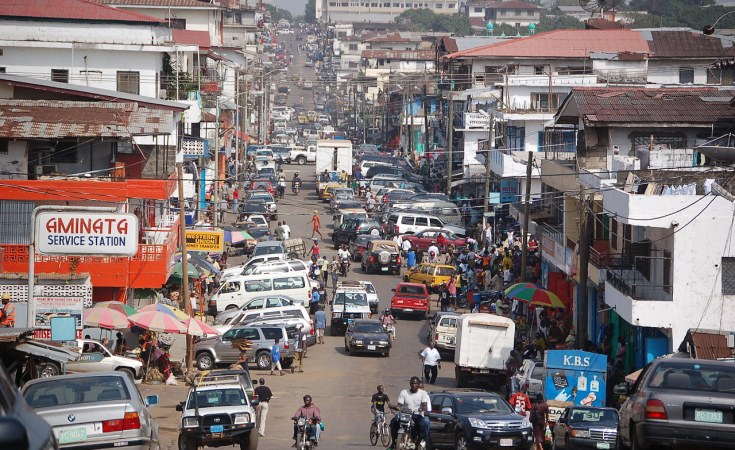
MONROVIA -- When former President Ellen Johnson Sirleaf called Monrovia "filthy" on a popular radio program in late April, she was not saying anything that hundreds of thousands of residents do not already know. What she did was make it politically inconvenient to ignore and that, in Liberia, is when things get complicated.
President Joseph Nyuma Boakai, who spent 12 years as Sirleaf's vice president before succeeding George Weah in January 2024, did not dispute the garbage piling along Water Street or the sewage flooding pedestrian walkways in Waterside. He disputed the framing.
"Monrovia may be dirty compared to maybe other cities, but I think it's cleaner than it used to be," Boakai said on May 7 during a cabinet engagement in Monrovia.
Keep up with the latest headlines on WhatsApp | LinkedIn
It was a telling response -- not because it was wrong, exactly, but because it revealed the reflexive defensiveness that has defined Liberia's relationship with its own capital for decades. Sirleaf's remarks landed not as a governance challenge requiring urgent action but as a political attack requiring a political answer. Meanwhile, the trash remains.
For residents who contend with overflowing trash, blocked drainages, and polluted streets every day, this exchange was painfully familiar. Sanitation in Monrovia is rarely just about cleanliness. It often becomes about which government failed more, who inherited the problem, and who deserves the blame. The garbage debate becomes a debate over legacy, and the city continues to decay.
A City Drowning in Waste
The evidence is not difficult to find. Along Water Street and through the Waterside commercial center, overflowing sewage spills into pedestrian walkways. The smell of human waste and stagnant water is constant. Commuters and shoppers cover their noses. Traders who spend entire days in the area have simply stopped noticing.
Center Street is buried under large piles of garbage. Plastic waste clogs drainage channels, and during rainfall, the resulting floods turn markets into wading pools.
At Red Light in Paynesville, Liberia's busiest commercial hub, where tens of thousands of traders, hawkers, and commuters converge daily, the scale of the crisis is overwhelming. Drainages are permanently blocked by plastic waste. Flooding follows every heavy rainfall. At the Pipeline Road junction, standing water has transformed sections of road into muddy channels barely navigable on foot. Flies hover over food sold beside foul-smelling water.
Esther Paygar, a fishmonger near the stagnant water at Red Light, said she endures the conditions because there is no alternative. "Getting a spot in Red Light to sell is not something easy," she said. "We want to leave from here, but where else do we go? We just have to bear it."
Money exchanger Cyrus Thomas directed his frustration at the Liberia Marketing Association, which collects fees from traders but delivers little visible sanitation service. "They share tickets and collect money from business people here, but nothing they are doing about collecting dirt," he said.
The Pattern of Deflection
Sirleaf's April 30 remarks on Truth FM's "Truth Breakfast Show" were not the first time an outside voice triggered a political storm over Monrovia's condition. In 2021, then-EUAmbassador Laurent Delahousse publicly described the city as dirty despite substantial donor support for sanitation efforts. He called for stronger accountability. The response from Weah's government was not a reflection -- it was backlash. Mayor Jefferson Tamba Koijee and other government defenders accused the diplomat of making demeaning comments about Liberia. The criticism grew so intense that Delahousse issued a public apology. Five years later, the script is nearly identical.
The Sirleaf-Boakai exchange carries added political significance given the complex history between the two leaders. When Boakai ran for president in 2017, after serving as Sirleaf's vice president for more than a decade, he tried to distance himself from her record. He described himself as a "packed racing car" unable to operate fully within her government, and accused her administration of wasting opportunities for infrastructure development. Those comments strained their relationship and led Sirleaf to withhold her support from him in that election, which Weah ultimately won.
When Boakai finally secured the presidency in 2023 by a narrow margin, he projected himself as Liberia's most experienced and qualified leader, a statesman ready to solve the country's longstanding problems. Sanitation was among those challenges. More than two years into his administration, it remains deeply entrenched. Sirleaf's "filthy" remark therefore struck not only at governance performance but at the broader political promise on which Boakai ran.
Ironically, some Liberians still recall with a degree of nostalgia the controversial sanitation campaigns of former Monrovia Mayor Mary Broh during Sirleaf's administration. Broh became nationally known for aggressive clean-up operations, arriving unannounced at markets, confiscating goods from traders who blocked streets, and enforcing rules with a severity that many residents feared. The city was not clean under Broh, but it appeared more orderly. Critics have since argued that those campaigns were cosmetic and politically staged, and lackedsustainable infrastructure. Roads were paved without adequate drainage. Markets expanded without organized waste systems. Population growth outpaced planning. Every rainy season exposes the same vulnerabilities.
Structural Problems That Politics Cannot Excuse
City authorities consistently cite genuine structural constraints. The landfill at Wein Town, long used as the primary waste disposal site for Monrovia and Paynesville, has surpassed capacity and essentially shut down. Without a workable alternative, garbage collection frequently faces disruption. Officials also highlight shortages of trucks, fuel, equipment, and funds.
Monrovia's population has grown dramatically since the end of the civil wars, but urban planning and infrastructure have not kept pace. Informal settlements continue expanding into wetlands and drainage corridors. Plastic pollution has accelerated due to weak environmental regulation and no meaningful recycling system. Open defecation persists in some communities. Enforcement of sanitation laws is inconsistent at best.
But critics argue, with considerable justification, that they cannot excuse what has accumulated across three successive administrations. Sirleaf's government had strong international support and global goodwill and left the city largely as she found it. Weah promised pro-poor transformation and deepened urban frustration. Boakai campaigned on competence and national rescue and is now confronting the same public dissatisfaction his predecessors faced.
The Pipeline Road in Paynesville traces that arc precisely. It was paved during Sirleaf's second term to improve access for residents and traders. It was expanded and upgraded under Weah in 2019 after sustained protests from market women demanding better infrastructure. Years later, much of the work has deteriorated, undone by the same inadequate drainage systems and weak maintenance regimes that have undermined road investments across Bushrod Island communities like Momo Town and Duala.

Sign up for free AllAfrica Newsletters
Get the latest in African news delivered straight to your inbox
Beyond the Garbage
Sirleaf framed Monrovia's condition as a question of national dignity, and she is not wrong. Liberia actively courts foreign investment, tourism and international partnerships. Diplomats, investors and visitors arriving in Monrovia encounter overflowing waste, damaged roads and polluted waterways almost immediately. Those images sit in sharp contrast to the rhetoric of national progress that political leaders project.
Sanitation is a key indicator of a government's ability to provide basic services. Clean streets, working drainage, and organized waste collection may not be glamorous, but they don't bring ribbon-cutting ceremonies or campaign ads; they directly impact public health, urban safety, and the daily quality of life for the people the government is meant to serve.
In Liberia, sanitation becomes a political issue only when criticism pushes it into the spotlight. What follows isn't real reform but just positioning. Sirleaf's government blamed post-war limitations. Weah's government blamed inherited problems. Boakai's administration points to gradual progress. Ordinary Liberians keep navigating the same streets.
The deeper tragedy in the "filthy versus cleaner than it used to be" argument is that both positions contain partial truth. Monrovia may be cleaner in some areas than it was years ago. It is also profoundly overwhelmed by sanitation failures that no administration has genuinely resolved.
