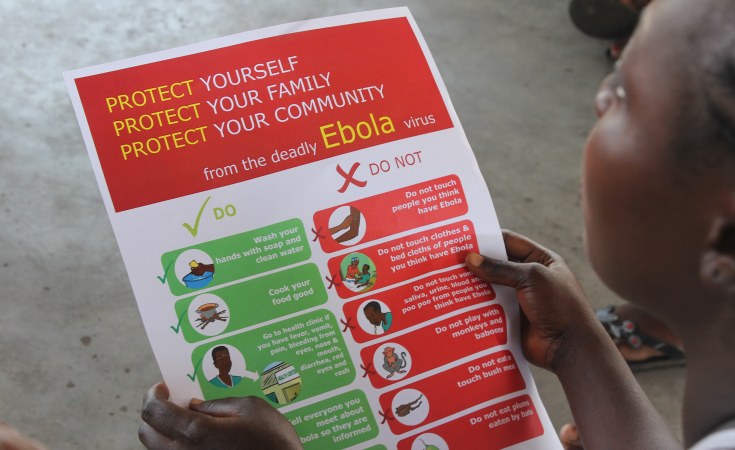
A viral audio has since sparked panic across Liberia, reviving painful memories of the dreadful outbreak of Ebola, the deadliest public health catastrophe the country experienced over a decade ago.
With that viral audio, the nation is once again confronting the ghost of one of the darkest chapters in its modern history after health authorities confirmed that sixteen individuals arriving from Ebola-affected African countries are currently under surveillance, triggering widespread public anxiety and reviving painful memories of the devastating 2014-2015 Ebola epidemic that crippled the nation and the wider Mano River Union basin.
Although the National Public Health Institute of Liberia (NPHIL), the Ministry of Health, and the John F. Kennedy Medical Center (JFK) have categorically stated that Liberia has not recorded any confirmed, probable, or suspected Ebola case, the disclosure has done little to calm public fear after the audio message circulated across social media warning that suspected Ebola patients had allegedly entered the country.
The audio, allegedly linked to Liberian nurse Paola N. Bedell, spread rapidly through WhatsApp groups, Facebook pages, churches, schools, marketplaces, and communities, instantly igniting panic among citizens still haunted by memories of the catastrophic Ebola outbreak that devastated Liberia and neighboring countries more than a decade ago.
Follow us on WhatsApp | LinkedIn for the latest headlines
For many Liberians, the mere mention of Ebola is enough to reopen emotional wounds that never fully healed.
Liberia is a nation still scarred by Ebola. Between 2014 and 2015, Liberia became one of the epicenters of the worst Ebola outbreak in recorded history.
The epidemic, which ravaged the Mano River Union countries of Liberia, Sierra Leone, and Guinea, claimed more than 11,000 lives across West Africa, according to the World Health Organization (WHO). Liberia alone recorded over 10,000 cases and nearly 5,000 deaths, including hundreds of healthcare workers who died while treating infected patients.
Entire communities were quarantined. Families watched loved ones die in isolation. Hospitals collapsed under overwhelming pressure. Schools, churches, businesses, and government institutions shut down. Fear consumed daily life.
The outbreak devastated the country's fragile healthcare system, crippled economic activity, disrupted agriculture and trade, and left deep psychological scars across the population.
Images of overflowing treatment centers, body bags, abandoned streets, and desperate families became symbols of national trauma.
Many Liberians still vividly remember the infamous quarantine of West Point in Monrovia, the collapse of trust in public institutions, and the terror surrounding every fever, cough, or unexplained illness.
Against that painful historical backdrop, the latest Ebola scare has triggered widespread emotional distress far beyond an ordinary public health alert.
"This country has not forgotten Ebola," a social media commenter said. "The trauma is still alive in people's minds. That is why even rumors can create immediate panic."
The Viral Audio That Sparked Fear
The controversy erupted after an audio recording allegedly linked to nurse Paola N. Bedell circulated widely online.
In the message, Bedell allegedly warned that several individuals returning from a church conference in Uganda had developed Ebola-like symptoms, including vomiting, red eyes, and anus complications.
She reportedly urged Liberians to resume handwashing, avoid handshakes, increase vigilance, and wear protective equipment.
The audio quickly spread across the country, generating fear and speculation that authorities were secretly managing Ebola cases without informing the public.
The panic intensified after NPHIL later confirmed that sixteen individuals from countries experiencing Ebola-related concerns -- including Uganda and the Democratic Republic of Congo -- are indeed under active surveillance in Liberia.
Although authorities stressed that none of the individuals have tested positive for Ebola, many citizens viewed the revelation as partially validating public concerns.
For some Liberians, the sequence of events created suspicion and confusion.
"If there is no threat, why are people under Ebola surveillance?" a curious James Partuah asked in a Facebook post.
That question has increasingly surfaced in public discussions, especially on talk shows and social media platforms.
Health Authorities Attempt Damage Control
In response to growing anxiety, NPHIL, the Ministry of Health, and JFK Medical Center issued firm statements denying the existence of any confirmed Ebola case in Liberia.
Authorities described the viral audio as misleading and dangerous.
JFK Nursing Director Joana Joekai later clarified that educational sessions conducted for nurses were strictly precautionary and part of ongoing preparedness measures.
"It is important to clearly state that at no point during these educational engagements did I, or any member of my team, disclose or suggest that Liberia has any confirmed Ebola case," Joekai emphasized.
She explained that the training focused on infection prevention, patient triaging, outbreak preparedness, and proper use of Personal Protective Equipment (PPE).
According to Joekai, Liberia's painful Ebola history and ongoing outbreaks elsewhere in Africa make such preparedness exercises necessary.
Only the Ministry of Health, she stressed, has the authority to officially declare Ebola cases.
Meanwhile, JFK suspended nurse Bedell pending investigation into the viral audio controversy, while authorities continue probing the matter.
Hospital administrators insist the suspension is an administrative measure rather than a declaration of guilt.
Transparency matters now more than ever, Liberians say.Public health experts say the situation demonstrates the delicate balance governments must maintain between preventing panic and ensuring transparency.
Experts warn that secrecy, delayed communication, or contradictory messaging during infectious disease scares can rapidly erode public trust -- particularly in countries with painful epidemic histories like Liberia.
"The biggest lesson from Ebola was that transparency saves lives," one Liberian epidemiologist who was highly involved in the 2014 crisis said.
During the 2014 outbreak, distrust of government institutions and misinformation significantly complicated response efforts.
In some communities, people hid sick relatives, citizens distrusted health workers, treatment centers were feared, rumors spread faster than official information, and resistance to public health measures intensified transmission.
Health experts say early, transparent, and factual communication is essential because public trust determines whether citizens cooperate with surveillance efforts, contact tracing, quarantine measures, vaccination campaigns, and infection prevention protocols.
"If there is ever an outbreak again, the government cannot afford communication failures," the epidemiologist added.
Experts argue that NPHIL's decision to disclose the surveillance status of the sixteen individuals may ultimately help reinforce transparency, even if it temporarily increases public anxiety.
"People may panic initially," one said, "but long-term trust comes from openness, not secrecy."
Despite significant improvements since 2015, Liberia's healthcare system remains fragile and vulnerable to future outbreaks.
Following Ebola, Liberia received substantial international support to strengthen disease surveillance systems, emergency response structures, laboratory capacity, health worker training, and infection prevention programs.
Institutions such as NPHIL were established specifically to improve outbreak preparedness and response coordination.
However, experts say serious structural weaknesses remain, including limited healthcare infrastructure, shortages of medical personnel, inadequate rural health services, weak emergency logistics, poor sanitation systems, and insufficient healthcare financing.
The recent Ebola scare has therefore renewed broader concerns about whether Liberia could withstand another major epidemic if one were to occur.
Regional Threats Continue
The fear is compounded by the reality that Ebola remains active in parts of Africa.
Uganda and the Democratic Republic of Congo have periodically battled Ebola outbreaks in recent years, while regional health systems continue monitoring potential cross-border transmission risks.
Given Liberia's extensive regional travel networks and porous borders within the Mano River Union basin, public health authorities remain highly cautious about imported infectious diseases.
The Mano River region's interconnectedness was one of the factors that accelerated Ebola transmission during the 2014 crisis.
Cross-border trade, family movement, informal transportation routes, and weak border surveillance allowed the virus to spread rapidly across Liberia, Sierra Leone, and Guinea.

Sign up for free AllAfrica Newsletters
Get the latest in African news delivered straight to your inbox
That history explains why even reports of surveillance measures today can trigger widespread national anxiety.
Social Media, Misinformation, and Public Fear
The controversy also highlights the powerful role social media now plays in shaping public perception during health crises.
During the Ebola epidemic, misinformation often spread through word-of-mouth and local rumors.
Today, WhatsApp audios, Facebook posts, and TikTok videos can spread nationwide within minutes.
Public health experts warn that while digital platforms can support awareness campaigns, they can also amplify fear, spread false information, undermine official messaging, and fuel public distrust.
"The danger is not just the disease itself," a renowned fact-checker posted on Facebook. "The danger is panic, misinformation, and breakdown of public confidence."
At the same time, many are cautioning authorities against relying solely on punitive responses to whistleblowers or health workers expressing concerns.
Instead, experts recommend clear public briefings, routine updates, rapid fact-checking, transparent investigations, and engagement with healthcare workers and communities.
For many Liberians, the latest scare has become an emotional reminder of how close the memories of Ebola still remain. The fear is not simply about disease. It is about trauma. It is about loss.
It is about a nation that once watched its healthcare system collapse under the weight of a merciless epidemic.
And while authorities insist Liberia currently has no confirmed Ebola case, the episode has revealed how fragile public confidence can become when fear collides with uncertainty.
As Liberia watches developments closely, many citizens now hope that the painful lessons of 2014 -- especially the importance of preparedness, transparency, and public trust -- will guide the country's response to any future public health threat.
Because for Liberia and the wider Mano River Union basin, Ebola is not merely history.
It is a nightmare the region never wants to relive again.
