

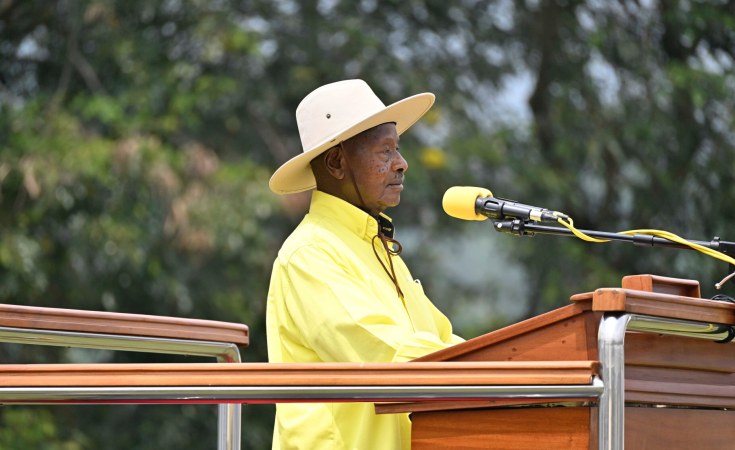
President Museveni on Tuesday evening unveiled a sweeping new cabinet list that has left Uganda's political class stunned, confused and once again reminded of one enduring reality about the veteran leader: he hates being predicted.
For weeks, political observers, ruling National Resistance Movement (NRM) insiders and social media analysts had attempted to piece together who would rise, who would fall and which political camps were gaining influence inside government.
But by the time the final list emerged, Museveni had once again overturned many of the assumptions that had dominated public debate.
Keep up with the latest headlines on WhatsApp | LinkedIn
From the dropping of veteran ministers once considered untouchable to the survival of figures widely believed to be politically finished, the reshuffle has exposed both the unpredictability of Museveni's leadership style and the continuing complexity of power within Uganda's ruling establishment.
Among the biggest shocks was the removal of Matia Kasaija as Finance Minister and his replacement by his junior minister, Henry Musasizi.
Kasaija was not just another minister. A historical member of the NRA struggle and one of the financiers of the Bush War that brought Museveni to power in 1986, he occupied a symbolic place within the ruling movement.
Beyond politics, he had also become surprisingly popular among ordinary Ugandans and social media users for his calm demeanor, humorous public remarks and ability to avoid political controversy.
Many expected Museveni to retain him, especially given the relative economic stability Uganda has maintained amid difficult global economic conditions. His removal therefore immediately signaled that historical contribution alone may no longer guarantee survival within cabinet.
Another major casualty was Gen David Muhoozi, the former Minister of State for Internal Affairs and former Chief of Defence Forces. Muhoozi had largely maintained a reputation as a disciplined, level-headed officer whose transition from military leadership into cabinet appeared smooth and stable.
His exit surprised many, especially because he had avoided major public controversy and was generally viewed as a steady performer within government.
The dropping of Henry Okello Oryem as Minister of State for Foreign Affairs also raised eyebrows. Oryem had over the years become one of the most visible faces of Uganda's diplomacy and was often praised for his composure and communication skills during international crises.
Politically, many also believed Oryem's standing remained secure because of his perceived closeness to Gen Muhoozi Kainerugaba, the Senior Presidential Advisor on Special Operations and son to the President.
Oryem additionally carried symbolic political significance as the son of former President Tito Okello, one of Museveni's former adversaries during Uganda's turbulent post-independence conflicts. Over the years, Museveni has often presented his inclusion of former rivals and their families in government as part of his broader reconciliation strategy.
That context made Oryem's removal even more unexpected.
The reshuffle also produced one of the biggest surprises around Ruth Nankabirwa, who was dropped as Minister of Energy despite being viewed as one of the stronger performers in cabinet.
Nankabirwa had become central to Uganda's energy transition policies and was heavily associated with government's decision to directly handle petroleum importation through Vitol Bahrain, a move officials argued would stabilize fuel prices and reduce supply disruptions.
Earlier this month, Nankabirwa publicly declared she saw no reason to be dropped from cabinet, insisting she had served Museveni loyally and effectively. Her removal therefore further reinforced the long-standing perception that cabinet reshuffles under Museveni rarely follow predictable logic.
Another figure whose absence surprised many was Godfrey Kabbyanga. In recent months, Kabbyanga had publicly appeared politically secure following repeated praise from Gen Muhoozi Kainerugaba. Within political circles, that relationship had fueled speculation that he would comfortably return to cabinet.
Instead, Museveni dropped him altogether.
At the same time, Joyce Nabbosa Ssebugwawo not only survived but retained her ICT docket despite frequent criticism, particularly on social media, where critics often mocked the irony of an ICT minister with limited online presence.
Her retention became yet another reminder that public opinion and online narratives do not always shape Museveni's political calculations.
One of the most dramatic twists involved the return of Rebecca Kadaga. Recent media reports had suggested Museveni privately informed Kadaga during a meeting that she would not return to cabinet.
Yet when the list was released, Kadaga's name appeared once again, stunning even some of her own supporters.
The reshuffle also challenged a growing public narrative that Gen Muhoozi Kainerugaba now heavily influences cabinet formation.
For months, political debate had increasingly portrayed cabinet appointments as potentially reflecting Muhoozi's rising influence within the state. His public disagreements with senior politicians further intensified that perception.
One major example involved Chris Baryomunsi. Following public tensions between the two, many believed Baryomunsi's political fate had been sealed after Muhoozi publicly declared he would "never be a minister again."
Instead, Museveni appointed Baryomunsi as Health Minister -- one of the country's most sensitive and strategic ministries.
The retention of Kahinda Otafiire similarly surprised many observers. Otafiire and Muhoozi have over the years appeared politically uncomfortable with each other, leading some analysts to believe the veteran bush war historical would finally be pushed aside.
Instead, Museveni retained him.
The reshuffle also embarrassed several political power brokers who had claimed influence over the process.
For example, close allies of David Kabanda had projected him as an emerging political kingmaker due to his perceived closeness to Muhoozi Kainerugaba. Yet while some expected Kabanda's allies to benefit from cabinet appointments, Museveni instead elevated figures such as Justine Nameere, despite her recent public disagreements with Kabanda.

Sign up for free AllAfrica Newsletters
Get the latest in African news delivered straight to your inbox
The message appeared unmistakable: cabinet remains Museveni's personal domain.
Perhaps the most symbolic departure, however, was that of Moses Ali, one of Uganda's longest-serving political figures and a man many believed would remain in cabinet for life.
For years, political folklore suggested Museveni had privately assured Moses Ali that he would remain in government for as long as he lived. Whether true or not, his absence from the new cabinet shattered one of the most persistent assumptions in Ugandan politics.
Then came another surprise: the return of Crispus Kiyonga as Second Deputy Prime Minister.
Many had assumed Kiyonga's appointment as Chancellor of Makerere University marked the end of his frontline political career after previously serving as Uganda's ambassador to China.
Instead, Museveni brought him back into cabinet, proving once again that in Uganda's politics, retirement from power is never guaranteed -- and neither is survival within it.
Ultimately, the new cabinet has reinforced one enduring truth about Museveni's rule: political calculations around him remain deeply personal, highly strategic and deliberately unpredictable.
In doing so, Museveni may once again have achieved what he often appears to value most in politics -- reminding allies, rivals and the public alike that the final decision still rests with him alone.

