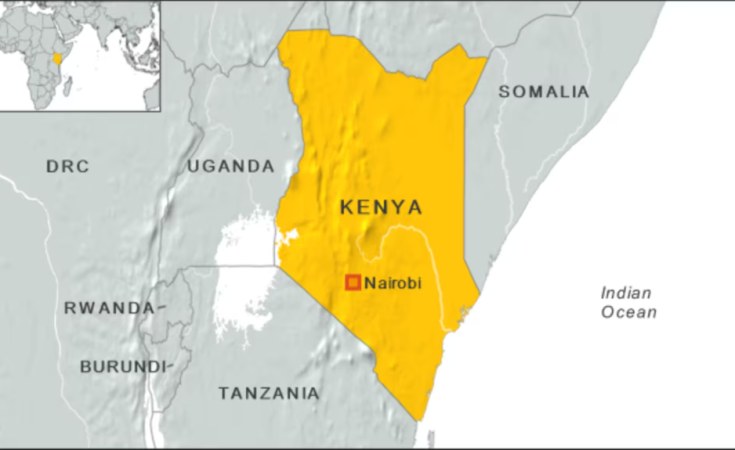
A Kenyan high court has ordered the temporary suspension of plans for the United States to set up an Ebola quarantine facility in the country, after a rights group challenged the plan.
The White House said on Thursday that the US was setting up a facility in Kenya to quarantine its citizens who had been exposed to Ebola, and that it would not bring them home if they develop symptoms, but would send them to a third country instead.
The US-built facility, located at the East African country's Laikipia Air Base, was due to open on Friday to "quarantine American citizens who may have been exposed to the Bundibugyo variant of the Ebola virus," a US official speaking on condition of anonymity told reporters.
The centre will have 50 isolation beds and is to be managed by US medical staff and technicians currently en route to Kenya, he added.
Keep up with the latest headlines on WhatsApp | LinkedIn
But late on Thursday, High Court Judge Patricia Nyaundi ordered the plans to be suspended after Kenyan rights group the Katiba Institute challenged the plan in court.
"The secretive, unilateral establishment of an Ebola quarantine facility raises grave constitutional concerns regarding the rights to life, health, fair administrative action, public participation and parliamentary oversight," the rights group said.
Nyaundi also ruled that Kenya was not allowed to admit anyone exposed to or infected by Ebola under the planned agreement with the US, until a case challenging the deal was heard and determined.
The next hearing for the case will be on 2 June, Nyaundi said in her order.
Rubio vows to keep Ebola out of US
'We will overcome this'
A source close to the matter told RFI the decision to set up the facility was taken last week.
However, the US and Kenya had disagreed over who should be admitted - Nairobi favoured opening the centre to all nationalities, whereas the White House wanted access restricted to American citizens.
The court decision comes as the head of the World Health Organization (WHO) Tedros Adhanom Ghebreyesus arrived in the Democratic Republic of Congo (DRC), where the latest Ebola outbreak began on 15 May.
He is set to travel to Ituri province in northeastern DRC, the epidemic's epicentre, on Friday.
"That thing can be stopped," Tedros said, adding that the WHO did not support travel bans to combat the outbreak because they "don't help much".
"Together, we will overcome this outbreak," he said earlier, vowing to do "everything in my power to help you".
WHO chief says Ebola 'can be stopped' as he lands in DR Congo
Drop in funding
The WHO has declared the outbreak of the rare Bundibugyo strain a public health emergency of international concern.

Sign up for free AllAfrica Newsletters
Get the latest in African news delivered straight to your inbox
It has recorded 10 confirmed and 223 suspected Ebola deaths in the DRC since the outbreak was declared, out of more than 1,000 confirmed and suspected cases, according to latest figures up to 24 May.
The virus has reached neighbouring Uganda, which has confirmed seven cases and one death.
Kenya has recorded no cases so far.
A spokesperson for US Secretary of State Marco Rubio said in a statement on Thursday that Washington intends to provide $13.5 million in aid to fund Kenya's Ebola preparedness efforts.
Deadly DR Congo Ebola outbreak spreads to rebel-held South Kivu
However, funding pledges to contain the outbreak in Africa have almost halved since Monday, the continent's main health body said on Thursday.
Jean Kaseya, director general of the Africa Centres for Disease Control and Prevention (Africa CDC), told reporters that Africa CDC's partners on Monday had pledged almost $500 million to support the fight against the outbreak.
Since then, the figure has decreased to around $290 million after a number of donors changed their minds, he said, without naming them.
"People are dying. How can we come and say: we commit X million dollars, and the next day they are calling me to say no, it was a mistake?" Kaseya said.
(with newswires)

