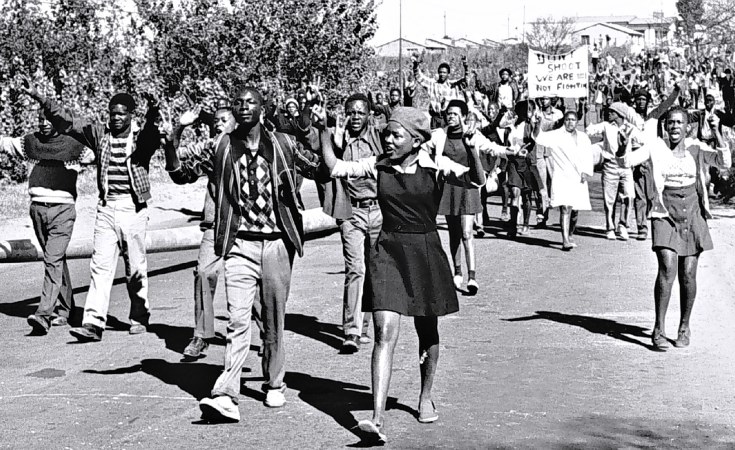
Fifty years later, 16 June 1976 is seen as a hinge moment in SA's history. We delve into that day as news reached Baragwanath Hospital and staff began to grasp what was unfolding outside.
A committee of Soweto high school students had carefully planned a protest on 16 June 1976 against the looming enforcement of Afrikaans as the medium of instruction in the sciences and mathematics for black students, as well as against the thoroughly unequal "Bantu Education" system.
But 16 June's protest became something very different from just one more protest in a long line of protests against the harsh apartheid system imposed by the National Party after 1948.
That day, the students' march meant the deaths of hundreds and the grievous wounding of still more by the South African police.
In the years since 1976, it has become right to laud the bravery of those students, as their struggle is recorded in books and other first-person testimony, as well as immortalised in photographs, dramas, films, music and novels about the protests of the period. But we must also acknowledge the bravery of others, such as the physicians and nurses who rallied to aid waves of students carried to clinics and hospitals such as Baragwanath Hospital.
Now, 50 years later, one doctor wrote to me describing the dawning realisation of the significance of what was happening as news filtered into the hospital. Back...

