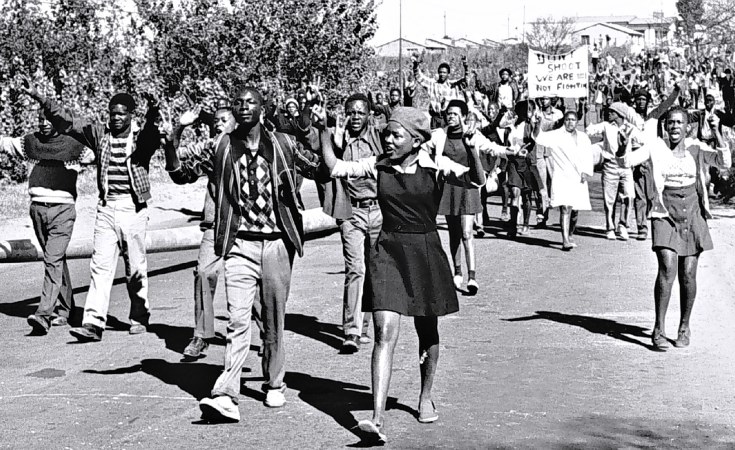
The class of 1976 had made it very clear what motivated their protest and what they were fighting for. On the 50th anniversary of the uprising, young people in a very different country still want their voices to be heard. Times have changed, but the issues are no less urgent.
On 16 June 1976, thousands of black students walked out of schools all over Soweto and into history. What followed - police gunfire, scores of deaths and an uprising that spread across South Africa - was the product not of a spontaneous moment of rage, but of months of organised resistance against the apartheid government's imposition of Afrikaans as a compulsory medium of instruction and the Bantu Education system designed to keep black children's futures deliberately small.
According to Professor Noor Nieftagodien, head of the History Workshop at the University of the Witwatersrand, students in Alexandra, the East Rand and Cape Town mobilised solidarity action with their Soweto comrades, producing the first national anti-apartheid movement since the early 1960s.
Fifty years later, South Africa is a democracy. But for its young people, the terrain of struggle has shifted rather than disappeared.
A different struggle
Fifty years on, the drivers of inequality in young South Africans' lives remain stubbornly familiar. According to Leandi Erasmus, writing in the Journal of Human Rights and Social Work, those drivers are poverty, rurality, gender-based violence and race, and the dimensions most severely affected are education, healthcare, service delivery and unemployment.
Statistics South Africa's Quarterly Labour...

