

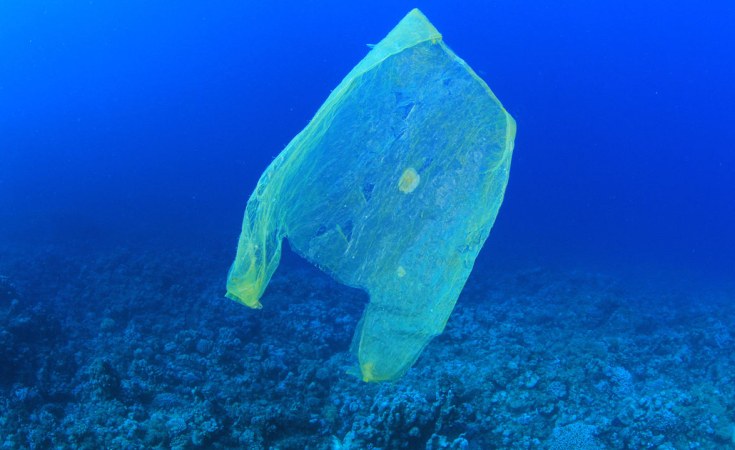
Mombasa, Kenya — Plastic pollution is one of the biggest environmental threats to the world's oceans and ecosystems, and experts warn that solutions must go far beyond clean-up efforts and instead focus on preventing waste at its source. An estimated 14 million tonnes of plastic enter marine ecosystems every year, with wildlife suffering injury and death, coastlines being damaged, and ocean resilience being compromised.
It affects oceans, rivers, cities, and even our bodies.
Plastic has become a global pollutant whose effects are difficult to mitigate or eliminate. While larger plastics like bottles, bags, and packaging are the most obvious waste, focus is now shifting to a more hidden danger: microplastics. These tiny particles are now found in water, food, soil, and air. They highlight the extent of a crisis that ranges from what we can easily see to what we can hardly detect.
Follow us on WhatsApp | LinkedIn for the latest headlines
As world leaders gathered in Mombasa for the 11th Our Ocean Conference, the scale of the crisis they came to confront was written into the numbers. Plastic pollution has become a borderless crisis, with millions of tonnes entering the oceans each year and spreading from the deepest seas to the most remote ecosystems. Every year, the world produces more than 430 million metric tonnes of plastic, around 11 million tonnes of which pour into the oceans, and despite national measures, pollution continues to rise.
Clemence Schmid, Head of Circularity and Director of the Global Plastics Action Partnership at the World Economic Forum, said: "Plastic pollution represents over 80% of the total marine pollution." She warned that once plastic reaches the ocean, "it is already too late and the remediation becomes the only band-aid we have."
She described the Global Plastic Action Partnership as the world's largest initiative tackling plastic pollution, working with 25 countries across the Global South to support governments, the private sector, academia, civil society and the informal sector in turning commitments into action toward a circular plastics economy. Schmid commended Kenya for hosting the first ocean conference on African soil and for launching the Kenya National Plastic Action Partnership. She said that Kenya is treating plastic pollution not only as an environmental crisis, but also as an economic opportunity to drive green industrialisation and strengthen economic resilience.
Pollution is a real economic threat.
She also warned of the wider economic costs of marine plastic pollution. She said that when plastic debris entangles coral reefs, it makes them "20 times more likely to develop disease." She pointed out that coral reefs support around 70 million tourist visits and generate about $36 billion in revenue across more than 100 countries, stressing that pollution is therefore a "real economic threat."
She referred to wider economic losses in sectors including tourism, shipping, and fisheries, particularly in the Asia-Pacific region, where marine debris has cost billions of dollars in recent years, excluding cleanup expenses.
Beyond environmental and economic impacts, she also flagged health concerns. She noted that microplastics are now found in the human body and that "each of us ingests or breathes the equivalent of a credit card of microplastic a week."
"The question is no longer whether solutions exist; the question is how we create the policy conditions and the right environment to allow those solutions to scale," said Schmid.
Indonesia tackles plastic pollution at the root
Indonesia is taking a source-to-sea approach to tackling marine debris, recognising that plastic pollution often originates far from the coastline and requires coordinated action across entire ecosystems.
Kartika Listriana, the Director General of Marine Spatial Planning at Indonesia's Ministry of Marine Affairs and Fisheries, said marine debris should not be viewed solely as an ocean issue but as a challenge that begins upstream in watersheds, rivers, cities and coastal communities.
"Addressing marine debris requires more than cleaning the ocean. It requires integrated management from the source to the sea," said Listriana.
As the world's largest archipelagic nation, Indonesia is strengthening the integration of terrestrial and marine spatial planning to ensure that watershed management, waste management, coastal protection and marine conservation are treated as interconnected systems. Listriana said that rivers, coasts and oceans cannot be managed in isolation if countries are to curb plastic leakage into marine environments effectively.
She said Indonesia is advancing a community-based net-zero waste approach, particularly in coastal and watershed areas. Their goal is not only to reduce marine debris but also to create economic opportunities for local communities. "By promoting circular economy practices and community empowerment, we seek to transform waste from an environmental burden into a valuable resource that supports livelihoods and inclusive growth," she said.
Listriana spoke of the importance of strengthening collaboration efforts with governments, communities, academia, the private sector and development partners. Through various initiatives, she said, we are promoting behaviour change, improving waste management systems, protecting critical coastal ecosystems, and reducing waste leakage into the marine environment. She also acknowledged the contribution of the Global Plastic Action Partnership (GPAP), saying that Indonesia became the first country to join the initiative in 2019. Since then, the National Plastic Action Partnership Indonesia has helped coordinate stakeholders and accelerate the country's transition toward a circular plastic economy.
"This reflects our broader vision of the blue economy, where environmental sustainability and community welfare go hand in hand," said Listriana. "Indonesia remains committed to strengthening partnerships, sharing experiences and working with the international community to achieve a cleaner, healthier and more resilient ocean for future generations."
Healthy oceans, healthy economies
The growing threat of plastic pollution has long attracted the attention of policymakers and scientists, but Shamim Wasii Nyanda, Community Manager at Africa Hatch Blue, argues that a greater focus should be placed on the people already implementing solutions on the ground.
Nyanda said discussions around marine pollution often centre on the scale of the problem rather than the innovations emerging across African communities. She highlighted the work of women entrepreneurs who are helping to address plastic pollution while strengthening livelihoods and food security.
Through the programme, Women in Ocean Food Africa, Africa Hatch Blue supports over 11 women-led businesses across seven sub-Saharan African countries, working in seafood, aquaculture, seaweed, fish processing, nutrition, and circular economy solutions. "These entrepreneurs are reducing waste, creating jobs, and strengthening food security, because that is what we need," she said.
"Too often we focus on the problem, but across Africa, women are already building solutions and tackling plastic pollution," said Nyanda.
She said that blue food systems support more than three billion people globally and stressed that healthy oceans and economic growth should be viewed as complementary goals rather than competing priorities.
"If we want to tackle marine pollution from micro to macro, we must invest in people who are already implementing solutions on the ground," she said. "We must invest in women... If we are serious about achieving Africa's Agenda 2063 by building healthy oceans for the future generations, women cannot be left behind."
Targeting women and the blue economy
Financing remains one of the biggest barriers to tackling plastic pollution at scale, according to Joyce Kluh, Sector Engineer at the European Investment Bank (EIB), who said many waste management projects struggle to attract investment because they are not yet financially viable.
"The main reason for plastic pollution in rivers is the mismanagement of solid waste," she said. "If waste is not managed at the source, it finds its way into our oceans," said Kluh.
She said that while the EIB was keen to support plastic waste management projects across sub-Saharan Africa, finding projects that met the bank's financing requirements proved challenging. To secure funding, projects must demonstrate a strong business case, clear revenue streams, credible sponsors and compliance with environmental, social and technical standards. To address this gap, the EIB partnered with development finance institutions, including the European Investment Bank, Germany's KfW Development Bank, AFD, and France's Agence Française de Développement under the Clean Oceans Initiative. These banks committed €4 billion to finance projects that are related to preventing plastic pollutions into the oceans.
One outcome was the Clean Oceans Project Identification and Preparation Programme (COPI), which focused on developing bankable waste management projects across sub-Saharan Africa.
Kluh said the programme identified potential projects in 20 countries. Following assessments and pre-feasibility studies, five projects advanced to the financing stage. Loan agreements have already been signed with Benin and Gabon, while projects in Kenya, Tanzania and The Gambia continue to be developed.
"This is how we are able to come into this risky sector and finance projects through technical assistance programmes that prepare them and bring them to bankability," she said.
Recognising that smaller businesses often cannot access large-scale financing, the EIB also established a dedicated Ocean Credit Line to support small and medium-sized enterprises operating in the blue economy. Through the initiative, the bank provided financing to commercial banks, which in turn lend to smaller businesses. In Tanzania, the pilot programme included conditions requiring at least 30% of financing to support women and a further 30% to support blue economy activities.
Kluh said the programme also includes risk-sharing mechanisms and technical assistance to strengthen financial literacy among entrepreneurs and help financial institutions better understand opportunities within the blue economy sector.
She said that similar initiatives are now underway in Madagascar and could be expanded to other countries.
Over the past six years, the EIB has invested more than €15 billion in blue economy sectors, including waste management, water infrastructure, stormwater systems and renewable energy projects. According to Kluh, financing solutions must be paired with technical support and capacity building if countries are to effectively tackle plastic pollution and build more sustainable ocean economies.
"Plastic pollution is not only a waste problem. It is an ecosystem and development challenge."
More than waste
Dr Julie Mulonga, Regional Director for Wetlands International Eastern Africa, said plastic pollution should be viewed not only as a waste management issue but also as a broader ecosystem and development challenge.
She said that much of the pollution found in oceans originates on land, with rivers, wetlands and coastal ecosystems serving as pathways through which waste eventually reaches marine environments.
"Plastic pollution is not only a waste problem. It is an ecosystem and development challenge," Mulonga said. "If we want healthy oceans, we must start by addressing the problem on land and upstream."
Despite the scale of the challenge, Mulonga said there are encouraging signs across East Africa that demonstrate progress is possible.
One source of optimism, she said, is the growing involvement of communities, particularly women and young people, in collecting and recycling plastic waste. Over the years, she has witnessed communities organise themselves into groups that recover plastic from wetlands and coastal areas and channel it into recycling initiatives.
In one mangrove restoration project, community members were collecting and aggregating plastic waste before sending it to recyclers, creating both environmental and economic benefits.
"The communities are actually doing something about it," she said. "They are finding uses for this plastic, recycling it and working with different organisations to support these efforts."
Mulonga said that communities are increasingly recognising the link between ecosystem restoration and waste management. These days, more and more, the restoration of mangroves and wetlands goes hand-in-hand with the removal of plastic waste, which improves the overall health of these ecosystems.
She also pointed to growing policy action across the region as another reason for optimism. Some countries have announced limits on plastic products, and companies are increasingly taking steps to cut down on their plastic use. "The policies may not be fully implemented yet, but it is encouraging to see countries taking action and the private sector supporting those efforts," she said.
Mulonga welcomed the growing recognition of plastic pollution as a source-to-sea challenge rather than simply a marine issue.
"I am happy to hear more people talking about this as a source-to-sea problem," she said. "If we do not address pollution at the source, we are not doing enough."
Looking ahead, she called for greater support for community-based initiatives that collect, sort and recycle plastic waste. Such programmes, she said, can help strengthen local livelihoods while reducing the amount of pollution entering rivers, wetlands and oceans. Mulonga also welcomed emerging financing mechanisms aimed at supporting environmental projects, saying investments that empower communities to manage waste and restore ecosystems will be critical to tackling plastic pollution at scale.
Bridging the financial rift
Kenya's experience with Extended Producer Responsibility (EPR) is demonstrating both the opportunities and challenges of building a circular economy in Africa, according to Joyce Gachugi-Waweru, Chief Executive Officer of the Packaging Producer Responsibility Organisation (PAKPRO).
"In Kenya today, like a few other jurisdictions in Africa, we do have mandatory extended producer responsibility, which is really a policy approach where producers, the source, are now being made to manage the post-consumer packaging that they release into the environment," she said. "EPR is a policy approach where producers are now being made to manage the post-consumer packaging that they release into the environment."
However, she said that implementing EPR in Africa requires adapting a model that was largely developed in Europe to local realities.
"When EPR was being put together in a textbook, it was deemed that it could be copy-pasted everywhere globally," she said. "But when we come to Africa, our infrastructure systems are different, our recovery models are different, and our financing options are different."
"Very few of our waste value chain actors can actually walk into a bank and access that credit."
One of the biggest challenges, she said, is that much of Africa's waste collection system remains informal and community-based, making it difficult for waste collectors and recyclers to access conventional financing. Although development finance institutions are increasingly offering funding for circular economy projects, many actors in the waste value chain struggle to meet traditional lending requirements.
"There is a mismatch between risk and return," said Gachugi-Waweru. "Very few of our waste value chain actors can actually walk into a bank and access that credit."
She said that financial institutions often assess risks using traditional models that fail to reflect the realities of waste collection and recycling businesses. At the same time, many waste collectors lack the data and financial records needed to demonstrate their viability. According to Gachugi-Waweru, EPR schemes can help bridge this gap by creating more predictable demand and revenue streams throughout the recycling value chain.
She said that EPR funds provide recyclers with greater certainty that collected materials will have a market. Waste collectors gain confidence that there will be buyers for the materials they recover. "EPR is coming in to provide that stability that gives comfort and helps de-risk the system," she said.
To unlock greater investment, she called for closer collaboration between producer responsibility organisations, financial institutions, development partners and waste collection enterprises to design financing products that reflect the realities of the sector. She warned that many circular economy initiatives continue to rely heavily on grant funding, making them difficult to sustain once pilot programmes end.
"The reality is that people say cash is king, but actually cash flows are king," she said. "As long as waste value chain actors do not have steady streams of cash flow, financial institutions are not going to give them a chance."
In the face of these structural barriers, how can we de-risk the flow of financial capital?
Nyanda said that tackling plastic pollution requires a shift in focus from repeatedly diagnosing the problem to investing in the people already developing solutions. She said responsible consumption is not only a policy issue but also a consumer challenge.
"We need to understand how we talk about sustainability when it comes to consumption, but also how we bring people to embrace and adopt the solutions that are being created," she said.
Nyanda said that women across Africa are already leading innovative businesses that address waste, marine pollution, food security and circular economy challenges, yet many struggle to attract investment and visibility.
"Science has been speaking for the past 60 years. We have policies, treaties and frameworks, but implementation is here," she said. "The question now is how do we work with investors and how do we make sure women-led businesses are investable."
She pointed to a women-led enterprise that transforms fish-processing waste into marketable products, helping reduce waste while creating additional value from resources that would otherwise be discarded. Such initiatives demonstrate how environmental protection, food security and economic development can be addressed simultaneously through locally driven innovation, she said.
But many entrepreneurs, especially women in coastal and fishing communities, still face barriers to accessing finance and scaling their businesses, she said. She called for more practical partnerships beyond short-term grant funding, warning that projects often struggle to stay afloat once donor support ends. "We need concrete partnerships where we are tackling problems together," she said. "When funding stops, many projects come to a standstill because there are no sustainable systems behind them."
She also urged policymakers and investors to confront the realities of Africa's transition away from plastic pollution, including infrastructure gaps, affordability concerns and limited access to financing.
"Nobody is telling us the reality," she said. Despite these challenges, Nyanda said that women remain central to building sustainable ocean and food systems. From waste collection and recycling to innovation and entrepreneurship, women are already driving many of the solutions needed to reduce pollution and strengthen the blue economy.
"We need to continue investing in women because they are the leaders and often the ones with the solutions," she said. "Women are builders of this continent and they are the backbone of food systems."

Sign up for free AllAfrica Newsletters
Get the latest in African news delivered straight to your inbox
New roadmap unveiled to combat ocean 'ghost gear'
Mexico has announced a new commitment to tackle abandoned, lost, and discarded fishing gear, commonly known as "ghost gear", which Ambassador Giselle Fernandez-Ludlow described as a major but often overlooked source of marine pollution.
Fernandez-Ludlow, Mexico's Ambassador to Kenya and Representative to UNEP and UN-Habitat, said the country will undertake a national diagnostic study to assess the scale, impacts and distribution of ghost gear across its coastal and marine ecosystems. "Ghost gear represents one of the most pressing challenges facing our ocean," she said, noting that it harms marine life, damages coral reefs and mangroves, contributes to plastic pollution and affects fishing-dependent communities.
The initiative, which builds on Mexico's membership in the Global Ghost Gear Initiative since 2020, will help develop a national roadmap for action. Fernandez-Ludlow said the process involves government agencies, fishing communities, researchers and conservation groups, with preliminary findings already identifying more than 200 initiatives addressing ghost gear across 16 Mexican states.
"No country can solve this issue alone," she said. She called for stronger international cooperation, knowledge sharing and circular economy solutions to address marine plastic pollution.
Massive coalition mobilised in plastic pollution battle
Brazil has reaffirmed its commitment to tackling marine plastic pollution through the implementation of its National Strategy for a Plastic-Free Ocean, adopted in 2025 through a presidential decree.
Ana Paula Frates, Director of Ocean and Coastal Management at Brazil's Ministry of Environment and Climate Change, described plastic pollution as one of the world's most significant environmental challenges, affecting marine biodiversity, fisheries, coastal communities, public health and economies.
"Plastic pollution is one of today's major environmental challenges," she said.
Frates said the strategy provides a framework to prevent, reduce and eliminate plastic pollution in marine and coastal environments and was developed through a broad consultative process involving government, the private sector, civil society, waste pickers, local communities and researchers.
Implementation is already underway through a federal action plan comprising eight priority actions coordinated by 17 federal institutions. She added that reducing plastic pollution is also an important climate action, noting that the plastic value chain contributes significantly to global greenhouse gas emissions.
"There is only one ocean, and plastic pollution affects us all," Frates said, calling for stronger international cooperation and greater urgency in advancing global efforts to address plastic pollution.
Italy's Environmental Advisor, Valentina Morello, warned that plastic pollution is not only an environmental issue but also a growing human health concern, citing scientific evidence showing plastics have been detected in human placentas.
She said Italy has implemented several measures to tackle plastic pollution on land and at sea, but stressed that coordinated international action remains essential, particularly in shared marine regions such as the Mediterranean.
"Plastic pollution is a problem for marine ecosystems, but also for humans," said Morello.
She highlighted Italy's support for the Barcelona Convention, including efforts to implement a legally binding regional marine litter management plan and strengthen monitoring programmes that track pollution in rivers, coastlines, seabeds and river mouths.
Morello also reaffirmed Italy's support for a legally binding global agreement on plastic pollution, saying international cooperation will be critical to protecting the world's shared oceans.
FAO commits to reducing fishing gear pollution
The Food and Agriculture Organization of the United Nations (FAO) announced a new commitment to reduce marine litter from fisheries and maritime transport, with a particular focus on abandoned, lost and discarded fishing gear (ALDFG). Matthew Camilleri said fishing gear made largely of plastic continues to pose long-term threats to marine ecosystems even after it is lost at sea.
"Marine litter from fisheries continues to threaten ecosystems, biodiversity and coastal livelihoods," he said.
FAO's commitment includes three main actions through 2030: promoting voluntary guidelines on fishing gear marking, conducting global gear loss surveys, and providing technical assistance in partnership with the International Maritime Organization.
The agency will invest more than US$7 million, alongside in-kind contributions, to strengthen prevention and monitoring systems. Camilleri said the goal is to turn knowledge into action and improve fisheries management while reducing plastic leakage into oceans.

