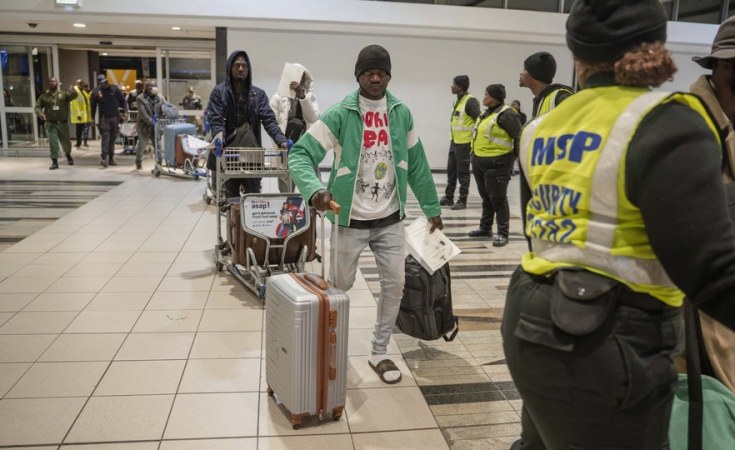
On Tuesday, South Africans marched out in droves across cities to protest the presence of African migrants in the country.
The Senior Special Assistant to the President on Foreign Affairs and Protocol, Ademola Oshodi, has declared that Nigeria would not tolerate xenophobic violence against its nationals.
In a statement on Monday, the official described the violent attacks on black foreigners that have accompanied the mass anti-immigration protests in South Africa over the last few weeks as disturbing and unacceptable.
"Africa cannot speak of unity while Africans remain unsafe in Africa.
Keep up with the latest headlines on WhatsApp | LinkedIn
"The warning is simple: Nigeria expects action. Investigate every reported attack, protect Nigerian communities, restrain vigilante groups, prosecute wrongdoing, and activate the Nigeria-South Africa Early Warning Mechanism without further delay," he said.
Although the anti-foreigners campaign by xenophobic South Africans began in April, with footage of citizens attacking African foreigners circulating online, a 30 June deadline the aggressors set for foreigners to leave South Africa intensified tension. On Tuesday, thousands of South Africans marched out in droves across cities to protest the presence of African migrants in the country.
In the city of Pietermaritzburg, protesters wore traditional attire and marched through the city centre, chanting "Abahambe!" ("They must go!" in Zulu, the most widely spoken language in the country).
This phrase is considered the movement's rallying cry.
At least the deaths of two Nigerians, five Mozambicans, and five Ethiopians have been attributed to xenophobic violence in the country. The crisis has also created intense tension between South Africa and many African countries.
In April and May, Ghana and Nigeria summoned the South African High Commissioners to their respective countries to indicate their displeasure with the violence against Africans in South Africa. Nigeria demanded a thorough investigation into the deaths of two citizens allegedly killed by security operatives.
However, the most prominent diplomatic reaction has been the repatriation of citizens from the country. A decision that led to a televised address from the South African President Cyril Ramaphosa, who hammered on the state's intolerance towards groups inciting tension and "taking laws into their own hands." Observers have, however, argued that the South African government is not doing enough to curb the anti-immigrant violence and is actually encouraging it with its own rhetoric.
He declared that while the people's concerns over illegal migration remain valid, "only authorised government officials can act against violations of our law."
Nigeria has evacuated more than 400 Nigerians from the country in the past month. Ghana repatriated over 1000 citizens back to their home countries.

Sign up for free AllAfrica Newsletters
Get the latest in African news delivered straight to your inbox
Mr Oshodi declared that the xenophobic attacks against Nigerians and other African nationals must be investigated.
"South Africa has every right to enforce its immigration laws. But that responsibility belongs to the state, through lawful institutions, not to mobs, vigilante groups, or political movements targeting foreign nationals.
"No African should be attacked, threatened, denied healthcare, pushed out of business, or humiliated because of where they come from," he declared.
Mr Oshodi reiterated the need for unity among African states, while identifying the protection of "African lives" as the continent's most urgent goal.
He said it is also important to protect "democracy that delivers, stronger security cooperation, lawful movement across our continent, and African solutions financed by Africans."

