

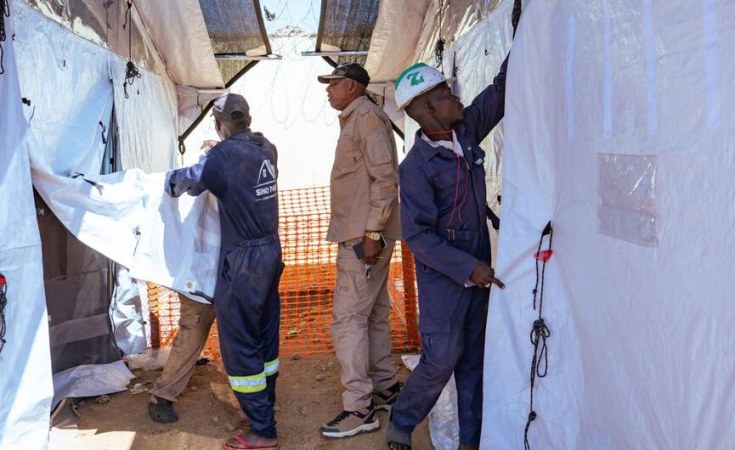
The Democratic Republic of Congo has launched a clinical trial of experimental Ebola treatments as the outbreak continues to spread in the north-east of the country.
Health authorities say 1,460 confirmed cases have been recorded since the Ebola outbreak was declared on 15 May, while 447 have been killed by the disease, giving a fatality rate of 30.6 percent.
But in a potential breakthrough, the World Health Organization (WHO) said in a statement that a clinical trial of two experimental treatments began in the Democratic Republic of Congo (DRC_ on Thursday, with the first patient enrolled.
The study is testing the monoclonal antibody MBP134 and the antiviral drug remdesivir, both separately and in combination, against the Bundibugyo strain of Ebola, for which there are currently no approved vaccines or specific treatments.
Follow us on WhatsApp | LinkedIn for the latest headlines
WHO director-general Tedros Adhanom Ghebreyesus said the trial could take months and may involve more than 1,000 patients.
He said those enrolled would receive supportive care and close monitoring, while the agency is also working to secure post-trial access if the drugs prove safe and effective.
US releases experimental Ebola drug for DR Congo outbreak trials
Wider transmission fears
The WHO says the outbreak is still expanding, with an average of 38 new confirmed cases a day over the past two weeks. It added that contact tracing and testing capacity have improved, but treatment centres are already close to full.
The outbreak remains centred in the north-eastern Ituri province, where the majority of the deaths have been reported, but cases have also been found in North Kivu and South Kivu, and a first infection has been confirmed in Kisangani, a major city far from the original epicentre.
'We're sitting on a volcano' warns EU Commissioner after visit to Ebola-hit DRC
The case in Kisangani has heightened concern about the risk of wider transmission.
The victim was a 24-year-old pregnant woman whose body was reportedly transported by motorcycle from Nia Nia in Ituri, underscoring the danger posed by unsafe handling of the dead, which can fuel the spread of Ebola.
The outbreak response is also being complicated by mistrust and violence. Health workers in Ituri face resistance from some local communities, and an Ebola treatment centre was set on fire this week after protests over the burial of suspected victims.
Two people died in the attack, patients fled, and the incident has further hampered containment efforts.
(with newswires)

Sign up for free AllAfrica Newsletters
Get the latest in African news delivered straight to your inbox

