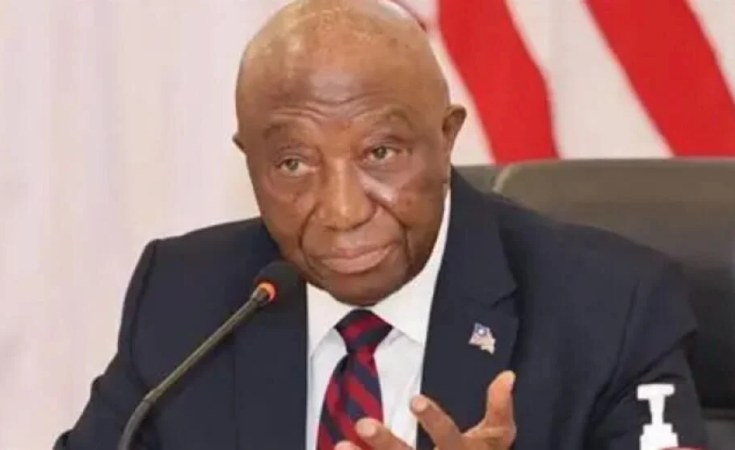
Monrovia — The letter from the Executive Mansion arrived Thursday with the flat, procedural language governments use when they want a story to sound routine: the president had "ordered the immediate dismissal, suspension, and investigation of several officials of government and law enforcement personnel." Four names were attached to it. Nothing about how those four men have spent the last several weeks has been routine.
"The actions form part of the Government's continued efforts to uphold accountability, strengthen the rule of law, and ensure that public officials entrusted with serving the Liberian people conduct themselves with integrity and in full compliance with the law," the statement read -- the kind of sentence that could have accompanied almost any personnel notice, attached this time to the widest shake-up yet in a scandal that has swallowed Boakai's summer.
Mark Egon Kuiah, Deputy Director for Operations at Roberts International Airport, was dismissed with immediate effect. So was Johnny Bolar Dean, whom the statement lists under the fuller title of Commissioner of Police for Criminal Investigation, Intelligence and INTERPOL -- a formal echo of something Inspector General Gregory Coleman had already done days earlier, standing outside his own headquarters, visibly frustrated, announcing Dean's removal on the spot. Patrick Doe, a deputy director at the National Security Agency, was dismissed too. And an officer known in the case file only as Patrick Komasu, badge 702, who had been seconded to the Liberia Drug Enforcement Agency, was pulled off that assignment, suspended without pay, and put under investigation.
What the Writ of Arrest Says About Kuiah
Keep up with the latest headlines on WhatsApp | LinkedIn
Of the four, Kuiah is the one whose name was already sitting in a court document before Thursday's letter went out. A charge sheet filed July 29 before Stipendiary Magistrate William G. Saygah, brought by the Ministry of Justice on a complaint from the LDEA, tells a story that starts two years earlier and several links up the chain from him. In 2024, the document alleges, Edison Brown and Mohammed Alpha Bah brought a group of foreign nationals into Liberia behind the cover of what looked like an ordinary local air transport business at Roberts International Airport. One of those charged, Jammel V. Jallah, allegedly recruited a man named Caycee Nelson to manage the aircraft on the ground. And Nelson, according to the charge sheet, brought in a friend of his own to help -- a man it identifies as Mark Quiah, Deputy Manager for Operations at RIA.
From there, prosecutors say, the operation grew teeth. Co-defendant Johann David Garces Grajales and a group of foreign nationals allegedly began scouting land and building what looked, from the outside, like an ordinary fishing operation on the Po River in Bomi County -- cover, investigators believe, for cocaine coming ashore from the Atlantic. That pipeline is what fed the July 21 raid on a house in Paynesville's VOA Community, where officers found 3,971 plates of cocaine worth an estimated $317.68 million, sitting alongside GPS trackers, Starlink satellite equipment, diving suits, a drone and firearms -- not the trappings of a single lucky shipment, but of something built to last.
Kuiah's name lives inside that story, but not on the charge sheet's actual list of twelve defendants -- which names Grajales, Serbian national Srdan Seles, Brown, Bah, Jallah, Christopher Sayee, Christian L. Nyantee, Nelson, and four others identified only by partial names. Prosecutors say there are still more people they haven't identified.
A Friendship the President's Son Had Already Addressed
There's a second thread running through Kuiah's name this week, separate from the charge sheet. On July 30, Joseph N. Boakai Jr. -- the president's own son -- sat down to answer a viral video accusing his family of cartel ties, and before anyone could ask him directly, he brought up Kuiah himself. "Friendship is not immunity from the law," the younger Boakai said, acknowledging the two men know each other, in a line that read at the time like a man trying to get ahead of a question before it was asked. Hours later, Kuiah was out of a job. Whether the two things are connected or simply landed in the same news cycle, Liberians will read them together regardless.
Kuiah hasn't said anything publicly, either about his role as the charge sheet describes it or about losing his post. He hasn't been charged with anything. Like everyone else named in the case's background story but not on its list of defendants, he's entitled to the presumption of innocence unless and until prosecutors decide otherwise.
Dean, Doe and Komasu: What's Known and What Isn't
Dean's story had already played out once in public, in miniature, before Thursday's letter made it official. On July 24, Coleman stood in front of reporters and admitted, plainly, that a man in his own circle -- Dean, then running a specialized police intelligence unit -- had taken $10,000 to make things easier for two suspects picked up in the Paynesville raid. "A senior officer became compromised in this investigation," Coleman said, and fired him before he finished the sentence. Thursday's presidential order reads like the paperwork finally catching up to that morning.
Doe and Komasu are harder to read. The Executive Mansion's statement names their punishments -- dismissal for one, recall and suspension without pay for the other -- without explaining what investigators actually found. What's known is where they sat: one inside the National Security Agency, the other embedded with the drug enforcement agency itself, both close enough to the case to matter, neither one, as of Thursday night, publicly explained.

Sign up for free AllAfrica Newsletters
Get the latest in African news delivered straight to your inbox
Why It Matters
What makes Thursday different from the firings and arrests that came before it is the shape of it -- four people, three different institutions, one signature. Civil aviation, police intelligence, national security: not isolated bad actors anymore, but a pattern the president himself is now moving to be seen cutting out all at once. It also means Roberts International Airport stays under a magnifying glass it hasn't been able to shake since June, after lawmakers had already pushed for its cargo operations to be suspended while the first case played out.
None of that changes what a court has and hasn't decided. None of the twelve defendants in the $317.68 million case have entered a plea, and the presumption of innocence still belongs to anyone named in the story around the case -- Kuiah, Doe, Komasu -- who hasn't actually been charged.
This report is developing and will be updated.
