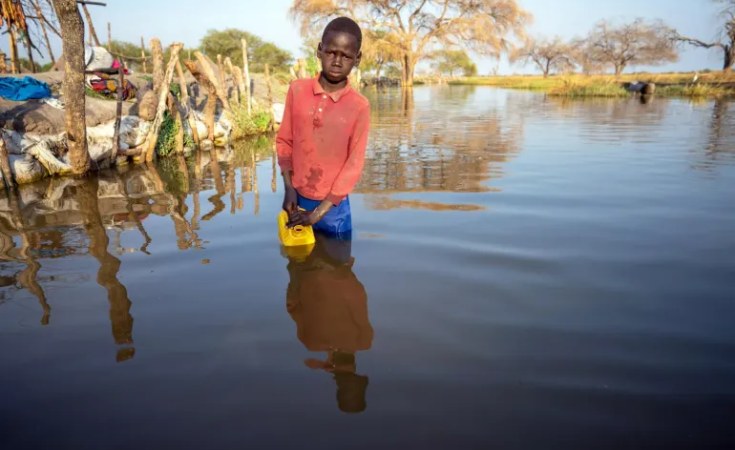
Addis Abeba — A severe water and livelihood crisis is unfolding in Kori Woreda of Ethiopia's Afar Region, where residents report widespread livestock deaths, drying water sources and mounting pressure on families already struggling with prolonged drought and inadequate rainfall.
The pastoralist community in Kori and surrounding areas is bearing the brunt of the worsening crisis as Ethiopia braces for the impacts of a forecast El Niño event.
Information shared with Addis Standard by a group of residents of Kori show that the crisis is affecting both people and livestock, with particularly severe losses reported among camels, goats and sheep. Residents also shared photographs showing dead and severely emaciated animals.
Keep up with the latest headlines on WhatsApp | LinkedIn
The absence of reliable water is affecting families, children, livestock, health, education, and livelihoodsNews subscription Residents of Kori Woreda
The images reviewed by Addis Standard are too graphic for publication but illustrate the scale of the livestock losses described by residents.
"The number of livestock dying from the ticks is enormous," residents said, pointing to tick infestation as an additional threat to already weakened animals.
Discover moreEthiopian political analysisPoliticsBusiness newsWar & ConflictNews analysisInvestigative journalism reportsNewspaper subscriptionAfricans & DiasporaAddis Ababa tourismDigital newspaper access Livestock deaths are occurring alongside an acute shortage of water. The residents described the situation as one marked by "lack of rainfall," "prolonged drought," drying water sources and wells that are either empty or declining.
"The absence of reliable water is affecting families, children, livestock, health, education, and livelihoods."
Addis Ababa city guide Kori is a predominantly rural woreda in Afar's Awsi Rasu, with Ayrorta serving as its administrative center. According to the 2007 national census, more than 55% of the woreda's population was engaged in pastoralism, underscoring the central role of livestock to household livelihoods.
The vulnerability of Kori's communities to water shortages is not new. In 2022 UNICEF reported that a solar-powered borehole system in Kori Fenti was serving as the only available water source for 15 kebeles during the dry season, with an estimated 10,500 people relying on it. UNICEF also documented residents travelling for hours each day to collect water during drought conditions.
A separate assessment of rural water systems found that Kori was among the woredas where no improved water scheme was recorded at the time of the assessment, highlighting longstanding gaps in basic water infrastructure.
Residents now say the pressure has intensified. Families are travelling increasingly long distances to find water, while children are missing school because of the time spent collecting it. The shortage is also creating health and sanitation problems and reducing the availability of water for livestock.
"Where the rain fails, the wells become silent and the people become thirsty," residents said.
Ethiopian travel guide For a community whose economy depends heavily on livestock, the deterioration of animals has consequences beyond immediate animal losses. Weak or dying livestock means reduced access to milk, diminished household income and fewer assets that families can sell or exchange when food becomes scarce.
The experience is consistent with previous assessments of Afar's drought vulnerability. UNICEF has described the region's regular droughts as placing severe pressure on water systems that are already insufficient for both people and livestock. In some parts of Afar, women and children have been forced to walk for hours in search of water.
Pastoral water-harvesting assessments have likewise identified Kori among Afar woredas where water and pasture shortages have repeatedly threatened pastoral livelihoods. A regional resilience assessment noted that pastoralists in Afar had suffered substantial livestock losses during the 2015-16 El Niño drought, with some affected households losing up to 80% of small ruminants and 40% of cattle.
A crisis arriving as El Niño strengthens
The situation in Kori is emerging as Ethiopia faces renewed climate-related risks associated with a strengthening El Niño cycle.
The World Food Program said in August that El Niño conditions had already begun and were expected to strengthen through 2026, potentially becoming one of the strongest events on record. WFP projects that the phenomenon could push an additional 49 million people into acute food insecurity across 45 vulnerable countries by the end of 2027, raising the projected total to 274 million.
News subscription The implications are particularly serious for communities already experiencing water and livelihood stress.
FAO has sought US$50 million to assist 4.66 million people in Ethiopia facing worsening food insecurity and livelihood losses between June 2026 and March 2027. The appeal covers 114 woredas where anticipatory action has been activated against drought, including areas in Afar, Amhara, northern Somali and Tigray.
For Kori residents, however, the consequences of water scarcity are already being felt.
"The dry land is not only losing water; communities are losing time, opportunities, and hope," residents said.
The crisis also risks reinforcing a cycle in which water shortages drive livestock losses, livestock losses reduce household income and food availability, and worsening household conditions increase pressure on children and other family members to travel farther for water and livelihood opportunities.
The people of Kori need more than promises - they need water, action, and a lasting solution Residents of Kori WoredaTigray travel advisory

Sign up for free AllAfrica Newsletters
Get the latest in African news delivered straight to your inbox
Previous UNICEF research on drought in Ethiopia found that water collection becomes increasingly burdensome for children during drought, with girls and women often travelling longer distances to obtain water. The resulting time burden can contribute to school absenteeism and expose children to additional health and protection risks.
Residents of Kori say the immediate priority is emergency water and livelihood assistance, alongside measures that can reduce the community's dependence on increasingly unreliable water sources.
They are calling for emergency water supplies, rehabilitation of existing wells and water points, construction of new wells and boreholes, and investment in reservoirs and other water-storage systems.
"Kori needs emergency assistance now and sustainable water solutions for the future," residents said.
"A community cannot build a secure future when its most basic resource is disappearing," residents said.
As El Niño strengthens, residents fear that an already fragile community could face an even deeper humanitarian crisis without timely intervention.
Ethiopian travel guide "The people of Kori need more than promises - they need water, action, and a lasting solution. We therefore respectfully call upon the Government of Ethiopia, Afar Regional State authorities, humanitarian organizations, development partners, donors, and all concerned stakeholders to provide urgent humanitarian assistance to the people of Kori Woreda," residents said.
