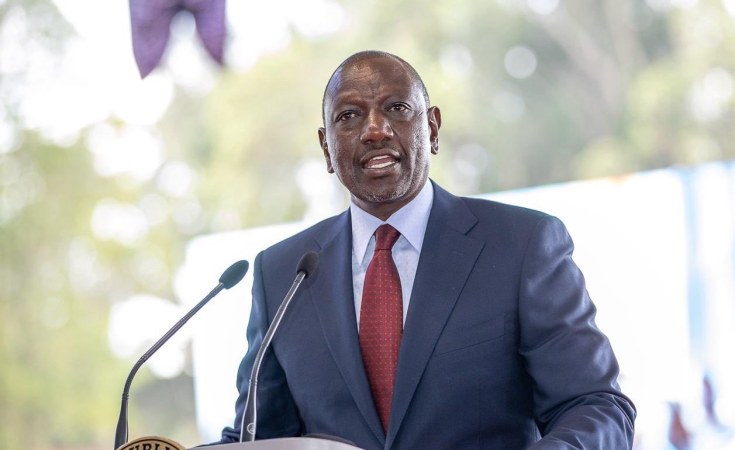
Nairobi — President William Ruto has said an electoral mandate does not give an elected government unlimited authority, insisting that power secured at the ballot box must always be exercised within the confines of the Constitution.
Ruto spoke on Thursday while leading the 2026 Katiba Day Symposium, where he reflected on the balance between democratic mandates, constitutional checks, judicial independence and the protection of citizens' rights.
The President said voters give elected leaders a mandate to implement their programmes, but that mandate comes with a responsibility to operate within the law.
Keep up with the latest headlines on WhatsApp | LinkedIn
He said political parties campaign on competing manifestos before voters choose the government they want, giving the winning administration both democratic legitimacy and an obligation to deliver on its promises.
Ruto, however, posed questions on how elected institutions should respond when government policies are challenged or declared unconstitutional by the courts.
"When a court finds that a policy violates the Constitution, how should the Executive and Parliament respond promptly and constructively?" he asked.
He maintained that raising the question should not be viewed as an attempt to undermine the Judiciary, declaring that judicial independence remains a fundamental pillar of Kenya's constitutional order.
"Judicial independence is non-negotiable. Courts must remain free to interpret the Constitution, protect rights and invalidate unlawful actions," Ruto said.
The President said the constitutional balance also requires respect for the authority of elected institutions to make policy decisions where those decisions fall within the law.
He said governments must comply with court orders whenever their actions are found to be unlawful, while constitutional space for legitimate policy choices must equally be protected.
Ruto also reflected on the protests witnessed in Kenya from 2024, saying the demonstrations brought citizens' constitutional freedoms and demands for accountability into sharp focus.
He acknowledged that young Kenyans and other citizens exercised their rights to speak, assemble, picket and petition public authorities, adding that their demands included greater accountability and a stronger role in shaping the country's future.
The President also acknowledged the loss of lives and allegations of unlawful arrests, enforced disappearances and excessive use of force during the period.
He called for all credible allegations of human rights violations to be independently, thoroughly and transparently investigated, with those found culpable held accountable under the law.

Sign up for free AllAfrica Newsletters
Get the latest in African news delivered straight to your inbox
At the same time, Ruto insisted that constitutional protection of peaceful protest does not extend to criminal acts.
"The Constitution protects peaceful and unarmed assembly. It does not protect arson, looting, lawlessness, violence, intimidation, attacks on citizens, or destruction of public and private property," he said.
He urged Kenyans to distinguish between legitimate exercise of constitutional rights and criminal conduct during protests.
Ruto said the protection of constitutional freedoms and enforcement of the law should not be treated as competing objectives, arguing that both rights and responsibilities are essential to Kenya's constitutional democracy.
