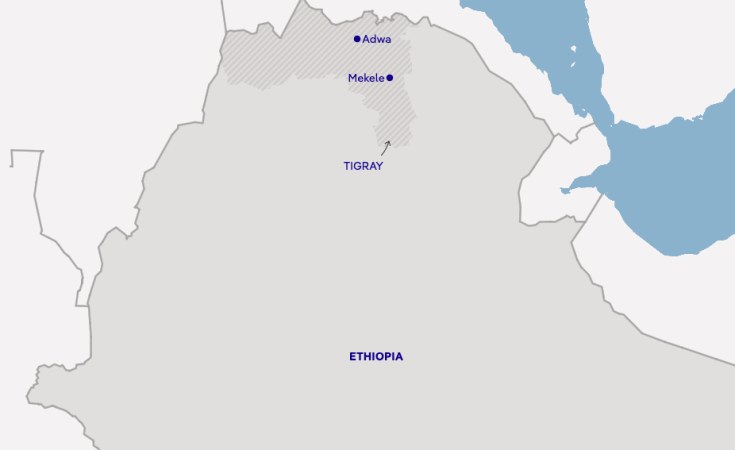
In a major diplomatic shift, the U.S. Department of State has formally published a Final Rule removing Ethiopia from the list of restricted nations under the International Traffic in Arms Regulations (ITAR)--the primary U.S. regulatory framework governing exports and transfers of defense hardware, military technology, and defense services.
The U.S. Treasury department also announced on Friday that 'The national emergency declared in Executive Order (E.O.) 14046 of September 17, 2021, "Imposing Sanctions on Certain Persons With Respect to the Humanitarian and Human Rights Crisis in Ethiopia," has expired.' This decision also includes lifting of restrictions from properties, financial transactions and travels that was placed on Ethiopian officials and individuals implicated during the northern Ethiopia conflict.
The administrative action--filed under Federal Register Docket No. 2026-19161--enacts a February 5, 2026 determination by the Secretary of State to lift the arms embargo on Ethiopia. The order replaces the previous mandatory policy of denial with a case-by-case licensing review process. The document itself does not quote verbal remarks or a public speech from the Secretary of State on that date.
"The Department of State is amending the International Traffic in Arms Regulations (ITAR) to clarify certain policy-of-denial provisions, update country policies for Ethiopia and Somalia, add Saudi Arabia and Peru to the list of major non-NATO allies, and make other miscellaneous corrections," reads the document released on Friday, by International Traffic in Arms Regulations of Federal Register.
Follow us on WhatsApp | LinkedIn for the latest headlines
"The entry for Ethiopia in paragraph (n) is removed and the paragraph is reserved, implementing a February 5, 2026 policy determination by the Secretary of State terminating the policy of denial for licenses or other approvals for exports of defense articles or defense services destined to or for the armed forces, police, intelligence, or other internal security forces of Ethiopia".
"This rule is effective on September 18, 2026", adds the document.
Washington initially added Ethiopia to ITAR Section 126.1 in November 2021 during the height of the internal armed conflict in the northern Tigray region. Citing severe human rights concerns, ongoing hostilities, and humanitarian access blockades, the U.S. imposed a strict policy denying all commercial defense exports.
During the embargo, Ethiopia increasingly turned to non-Western suppliers, to satisfy its military procurement needs, according to reports.
Under the new rule, Ethiopia's formal listing is removed from Section 126.1, making Ethiopian armed forces, police, and internal security units eligible to apply for U.S. commercial defense acquisitions, technical assistance, tactical gear, and maintenance contracts. For Washington, ending the embargo offers an avenue to re-engage East Africa's premier land-based military power and counter rival influence across the Horn of Africa.
U.S. regulatory relief does not extend universally across the region. While Ethiopia gains a path back to direct defense trade, neighboring countries--including Eritrea, Somalia, Sudan and South Sudan--remain subject to full U.S. arms embargoes.
Regarding listed countries, the document reads: "It is the policy of the United States to deny licenses or other approvals for exports or imports of defense articles and defense services except that a license or other approval may be issued, on a case-by-case basis".
Somalia remains listed under Section 126.1 subject to a primary policy of denial. The regulatory change for Somalia in the latest document is merely a punctuation and phrasing correction (removing a comma) to clarify how existing exemptions work for allied security forces operating inside Somalia. The U.S. will continue to deny arms export requests destined for Somalia, except for case-by-case approvals strictly intended to support foreign partner missions. These permitted exceptions cover defense articles/services provided to: European Union training activities, military forces of Turkey, the United Kingdom, or the United States, and other UN Member States operating under a Status of Forces Agreement (SOFA) or Memorandum of Understanding (MOU) with Somalia's federal government, provided proper notification is sent to the UN Security Council Sanctions Committee.
Similarly, South Sudan remains under the ITAR Section 126.1 embargo list. The rule reiterates a policy of denial, permitting case-by-case exceptions only for non-lethal equipment intended strictly for humanitarian or protective use with advance UN Security Council committee notification.

Sign up for free AllAfrica Newsletters
Get the latest in African news delivered straight to your inbox
Simultaneously, the State Department's final rule updates federal regulations to officially add Saudi Arabia and Peru to the list of Major Non-NATO Allies (MNNA)--a strategic legal designation granting close foreign partners preferential defense trade benefits and streamlined procurement without a formal mutual defense treaty.
According to regional analysts, lifting Ethiopia's embargo while formalizing MNNA benefits for Saudi Arabia reflects a coordinated U.S. effort to strengthen maritime defense alliances amidst escalating Houthi insurgent drone and missile attacks targeting commercial shipping across the Red Sea and Bab-el-Mandeb Strait.
By opening defense avenues for Addis Ababa and elevating Riyadh's strategic status, Washington aims to secure both coastlines of the Red Sea basin--coupling Gulf defense integration with East African coastal stability, according to experts.
