

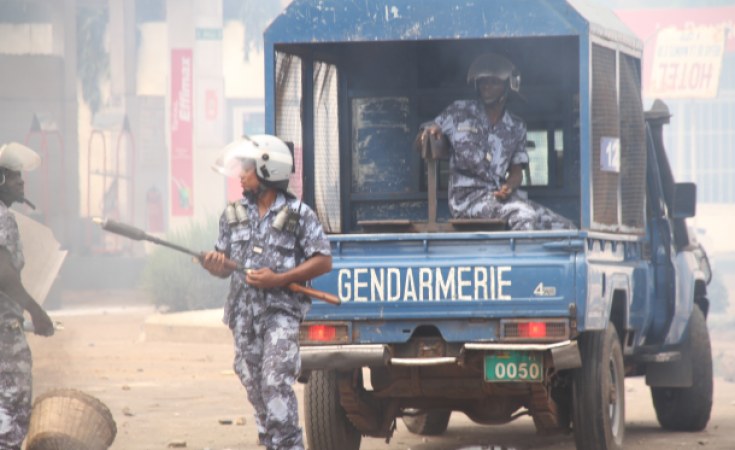
Soldiers in Togo used tear gas and batons on Thursday to disperse hundreds of protesters who blocked main roads in the capital. The protests have been going on since Wednesday, to denounce a power grab by longtime leader Faure Gnassingbé and demand his resignation.
"The city is unusually quiet," a witness in the capital, Lomé, told RFI on Thursday evening. Shop shutters are down, traders in the central market have not opened their stalls, and traffic is almost nonexistent.
But tensions were reported for two days, particularly in the southeast of the capital, according to RFI's correspondent in Togo, and law enforcement officers used tear gas in several neighbourhoods, including Bè, Bè Kpota, and Adakpamé.
Keep up with the latest headlines on WhatsApp | LinkedIn
Alongside the police, witnesses noted the presence of numerous militiamen in unmarked vehicles, their faces uncovered, carrying cords, batons, and rifles.
Power grab
The gatherings were organised this week by bloggers and activists and highlighted persisting political strife in Togo.
Last month, President Gnassingbé was given a powerful new role: President of the Council of Ministers, which has no fixed term limit.
Gnassingbé's family has ruled the West African nation since 1967.
He himself has previously served for two decades as president, and opposition parties have described his new appointment as a "constitutional coup" that could extend his rule for life.
Protest organisers called for three days of gatherings, although participants on Thursday were quickly scattered by soldiers, Reuters witnesses said. Many shops remained closed as clashes continued into the afternoon, they said.
Hodabalo Awate, Togo's minister of territorial administration, did not immediately respond to a request for comment on security forces' response to the protests.
Togo heads to polls amid claims of power grab by President Gnassingbé
Hunger and anger
In the suburbs of the capital Lomé, some protesters burned wooden furniture and tyres used for makeshift barricades, sending black smoke billowing above the streets.
"We're hungry. Nothing works for Togolese youth any more, that's why we're going out to protest this morning," said Kossi Albert, a 30-year-old unemployed man, adding that he was planning to turn out again on Friday.
Togolese authorities had already arrested dozens of people on 5-6 June during protests against Gnassingbé's new role as well as what critics described as a crackdown on dissent and a cost-of-living crisis, according to Amnesty International.

Sign up for free AllAfrica Newsletters
Get the latest in African news delivered straight to your inbox
Many were quickly released, the rights group said.
Last week, Togo's authorities also suspended broadcasts of French state-funded international news outlets RFI and France 24 for three months, accusing the media of a lack of impartiality and rigour.
Camille Montagu, from the independent organisation Reporters Without Borders (RSF) Sub-Saharan Africa Desk told RFI that the decision "constitutes a serious attack on press freedom and the right to information".
The move to censor foreign media outlets is seen by Gnassingbé's critics as another part of his "constitutional coup".
(with Reuters)

