

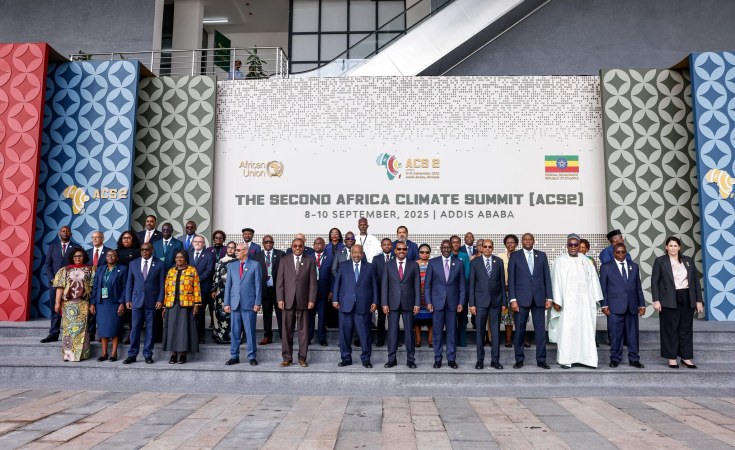
Addis Ababa — African leaders gathered today in Addis Ababa for the opening of the Second African Climate Change Summit, a high-level forum focused on addressing the continent's growing vulnerability to the impacts of climate change and developing a unified response strategy.
The summit brings together heads of state, government officials, environmental experts, and international partners to examine the negative consequences of climate change in Africa, particularly extreme droughts, recurring floods, food insecurity, and displacement. This year's edition emphasizes regional cooperation and practical solutions, including climate financing, renewable energy expansion, and sustainable resource management.
Among the key speakers is Somali President Hassan Sheikh Mohamud, who is expected to highlight how climate shocks such as droughts, flash floods, and environmental degradation have deepened Somalia's humanitarian crises. He will also stress the urgent need for global investment in resilience-building measures across fragile states.
President Mohamud is scheduled to hold bilateral meetings on the sidelines with Ethiopian Prime Minister Abiy Ahmed, Djiboutian President Ismaïl Omar Guelleh, and Kenyan President William Ruto, as well as with representatives of international organizations and development partners.
Keep up with the latest headlines on WhatsApp | LinkedIn
Africa contributes less than 4 percent of global greenhouse gas emissions, yet it is disproportionately affected by climate change. According to the African Union, more than 100 million people across the continent are at immediate risk of climate-related disasters, while climate-induced conflicts over water and land resources continue to escalate.
The summit in Addis Ababa comes at a sensitive time, as regional leaders will also participate in the inauguration of the Grand Ethiopian Renaissance Dam (GERD) on the Nile River -- a project Ethiopia has hailed as a cornerstone of its energy independence. However, the dam remains a major source of political tension, with Egypt and Sudan strongly opposing it, citing threats to their water security. The overlap of climate cooperation talks and water disputes underscores the geopolitical complexity surrounding natural resources in the Horn of Africa and beyond.
Analysts argue that without collective action, climate change could reverse decades of economic progress in Africa, fuel migration, and intensify conflicts. The Addis Ababa summit aims to push for a stronger African voice in global climate negotiations, especially in the lead-up to the United Nations Climate Change Conference (COP30) scheduled for later this year.
The African Climate Change Summit in Addis Ababa is more than just another diplomatic gathering. It is a test of whether African nations can forge common ground on one of the most pressing existential challenges of the century. As leaders debate adaptation strategies and resource-sharing, the outcome of this summit may well determine Africa's resilience in the face of a rapidly warming world -- and its ability to influence the global climate agenda.

Sign up for free AllAfrica Newsletters
Get the latest in African news delivered straight to your inbox

