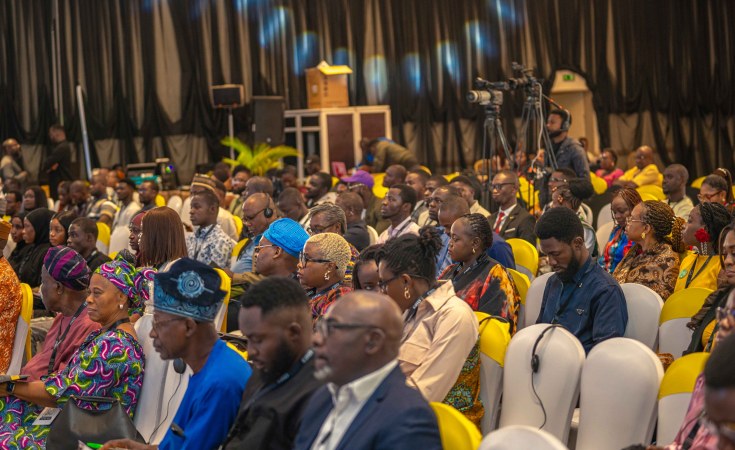
Mr Akinbajo said the rush to be first has led journalists to neglect the core values of the profession, especially accuracy, fairness and harm reduction.
The Managing Editor of PREMIUM TIMES, Idris Akinbajo, has warned that the media's fixation on breaking news is undermining journalism's core values and endangering communities.
Mr Akinbajo spoke on Monday during a panel session titled "Pathways to Peace and Public Safety through People-Centred Approaches and Conflict Accountability" at the third edition of the Media Development Conference (MDC-3.0) organised by the Centre for Journalism Innovation and Development (CJID).
Moderated by Ijeoma Igwe of the Rule of Law and Empowerment Initiative, the session examined how journalism can contribute to safety and accountability in times of conflict.
Keep up with the latest headlines on WhatsApp | LinkedIn
'Accuracy first'
Mr Akinbajo said the media's race to break news has eroded long-held standards of accuracy, fairness and harm reduction.
"Everybody wants to be the first to break the news, and because of that, we are no longer concerned about accuracy or fairness," he said.
"Breaking news is not an ethical concept of journalism. It is a creation of the internet. For us at PREMIUM TIMES, accuracy must be first, second and third, before speed."
He stressed that journalists must carefully assess whether any story has the potential to escalate tensions or expose communities to harm.
Mr Akinbajo also criticised what he described as "violence-driven journalism"--a trend in which media outlets only spotlight conflicts after they erupt, rather than examining the underlying issues that fuel them.
Responding to a question on community perspectives in news coverage, the managing editor said public-interest reporting must always consider the people most affected.
He noted that journalists have a responsibility to ask how their reporting will impact lives. If information risks causing harm, he said, it should not be published simply in the name of public interest.
Journalism that fails to reflect community realities, he warned, risks becoming a tool for social injury rather than public accountability.
Community involvement
Jude Ilo, CEO of the Hague Institute for Innovation in Law (HiiL), said many security policies fail because they are created without consulting the communities they affect.
He explained that when violence occurs, policymakers often draft solutions from distant offices without asking local people what they need.
Mr Ilo cited an example from Borno State, where a military-created buffer zone inadvertently cut residents off from their farms and water sources, worsening their hardship.

Sign up for free AllAfrica Newsletters
Get the latest in African news delivered straight to your inbox
Without meaningful consultation, he said, even a "beautiful security architecture" can end up further trapping people who are already struggling.
He emphasised that trust and empathy must shape any effective security strategy.
Inclusion
Maxwell Atti, Executive Director of the Synergy Care Development Initiative (SDI), said community safety initiatives suffer when women, youths and marginalised groups are excluded.
He noted that security meetings are often dominated by a narrow group of men, while decisions are presented as representative of entire communities.
Mr Atti stressed the need for gender inclusion, critical analysis of community needs and consistent follow-through on commitments to achieve long-term impact.
Representing the Inspector General of Police, Kayode Egbetokun, Kuti Stephen of the Force Public Relations Department highlighted the centrality of community policing to national security.
He said public trust is essential for effective policing and noted that accurate information from citizens enables the police to respond promptly to threats.
Mr Stephen also called for stronger collaboration between journalists, citizens and law enforcement, saying such partnerships are crucial for proactive and responsive security efforts.
