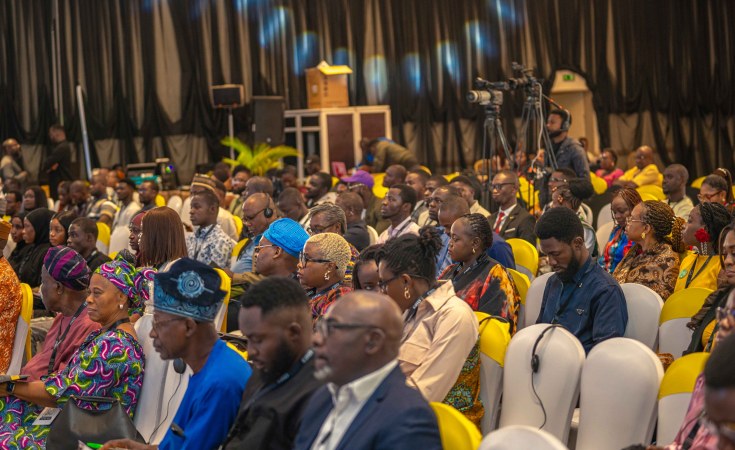
The speakers, drawn from continental organisations and governance institutes, warned that mismanagement in the mining, oil and gas sectors continues to undermine development outcomes across the region, despite the continent's vast mineral wealth
Africa is losing an estimated $83 billion every year due to corruption, weak governance and opaque regulatory systems in its extractive industries.
The revelation was made on Monday during a plenary session on Corruption and Capital Flows in Africa's Extractive Sector at the Media and development conference 2025 (MDC) organised by the Centre for Journalism, Innovation and Development.
Follow us on WhatsApp | LinkedIn for the latest headlines
The speakers, drawn from continental organisations and governance institutes, warned that mismanagement in the mining, oil and gas sectors continues to undermine development outcomes across the region, despite the continent's vast mineral wealth.
Speaking during the session, moderated by Chamun Dabengwa of NewsCentral, Pade Davies, a consultant at the African Mineral Development Centre under the African Union, said poor governance has created conditions that enable corruption and illicit financial flows to flourish in the extractive industry.
Mr Davies said that, from available records, Africa is losing about $83 billion yearly to corruption in agro-business and the extractive sector.
"Instead of minerals bringing joy to the people, they are bringing pain. Poverty is deteriorating, and the government is far from expressing love to the citizens," he said.
He linked the losses to weak legislative and structural frameworks, especially in contracting and licensing processes for oil blocks and mining assets.
Many countries, he said, still lack credible cadastral systems, adequate public disclosure and transparent regulatory oversight.
He noted that weak legislative frameworks fuel numerous governance problems, including opaque contracts, limited public disclosure, poor revenue management and the lack of reliable data on mineral quantities, conditions that create ample space for corruption.
Mr Davies added that environmental degradation, inadequate impact assessments and weak community engagement further compound the governance crisis.
Systemic failures
Jean-Pierre Okenda, Executive Director at the Sentinel of Natural Resources, cited the example of the Democratic Republic of Congo (DRC) to illustrate how unclear contracting systems enable exploitation.
He explained that investors often navigate the Congolese extractive sector through multiple opaque channels because clear, unified regulations do not exist.
Mr Okenda said the lack of transparency in how assets are acquired or managed has created significant loopholes for abuse and has limited the public benefits that should accrue from the country's natural resources.
He stressed that without strong rules guiding licensing, revenue flows and public accountability, African countries will remain vulnerable to manipulative deals that provide little value to their citizens.
Weak state-owned enterprises
Ibrahim Aidara, Deputy Africa Director at the Natural Resource Governance Institute, said governance lapses in many countries create a permissive environment for corruption and illicit financial flows.
He identified licensing, contracting, production management and revenue collection as critical points where corruption thrives, particularly within state-owned enterprises.
He explained that weak governance in these enterprises often results in hidden budget spending and politically motivated financial decisions.
He added that anonymous companies and tax-haven structures facilitate undetected movement of illicit capital, undermining domestic investment and diverting funds intended for national development.
Ademola Henry Adigun, Chief Executive Officer of AHA Consultancies, said varying reporting standards across the continent make it difficult to accurately track extractive revenues.
He pointed to the ongoing regional and global initiatives, including the International Financial Reporting Standards (IFRS) and the AMREC Initiative, aimed at harmonising mineral data and strengthening transparency.

Sign up for free AllAfrica Newsletters
Get the latest in African news delivered straight to your inbox
Mr Adigun explained that the industry is now moving towards mandatory disclosure of revenue, production data and other essential information.
He noted that emerging data procurement centres are working to consolidate extractive-sector information into unified and accessible databases, enabling clearer public monitoring and accountability.
About the MDC
The Media and Development Conference (MDC) is a yearly gathering that interrogates the intersection of media, governance and development across West Africa.
Convened by the Centre for Journalism Innovation and Development (CJID), the conference brings together journalists, policymakers, researchers, civil society leaders, diplomats, technology experts and development practitioners for in-depth conversations on the region's democratic trajectory and information ecosystem.
The third edition, themed "Reimagining Democracy, Development and Data for the Next Decade," explores how West Africa can strengthen democratic institutions, improve regional cooperation and harness data-driven solutions for inclusive development.
