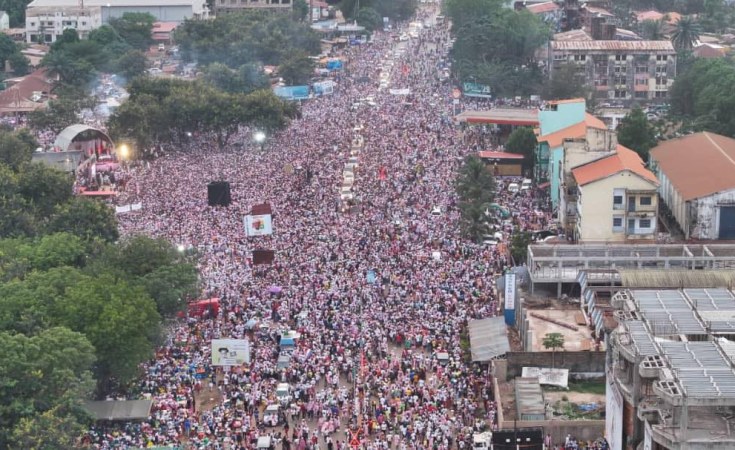
Soldiers in Guinea-Bissau have detained President Umaro Sissoco Embaló and halted the announcement of last weekend's election results, saying the vote should be annulled. A group of officers identifying themselves as the High Military Command for the Restoration of National Security and Public Order said on state television that they had taken control of the country, suspended state institutions and closed national borders. A night-time curfew was also imposed.
Gunfire was reported in the capital, Bissau, shortly before the military announced the takeover. Government sources said Embaló and several senior political figures, including presidential contender Fernando Dias, former prime minister Domingos Simões Pereira and Interior Minister Botché Candé, had been detained. The army chief, Gen Biague Na Ntan, and his deputy, Gen Mamadou Touré, were also taken into custody.
The officers said they acted to stop an alleged plot involving politicians backed by a known drug trafficker. Election observers from the African Union and Ecowas expressed concern, saying the country had been preparing for the release of results after a process they described as orderly. Embaló and Dias had both claimed victory ahead of the expected announcement.
Daba's newsletter is now on Substack. Sign up here to get the best of Africa's investment landscape
Follow us on WhatsApp | LinkedIn for the latest headlines
Key Takeaways
Guinea-Bissau's latest power struggle reflects broader regional instability and the recurring role of the military in its politics. The country has experienced multiple coups and attempted coups since independence, driven in part by tensions between civilian leaders and security forces. Guinea-Bissau is also a transit point for cocaine shipments moving from Latin America to Europe, creating incentives for political interference and allegations of influence from trafficking networks. The suspension of the election process could complicate relations with Ecowas, which has taken a firmer stance on unconstitutional changes of government across West Africa. It may also disrupt public finances and donor engagement in a country where external support is central to budget stability. The detentions of leading political figures and senior military officers suggest an internal contest for control rather than a unified takeover. The next steps by Ecowas and the reaction of security factions inside the country will shape whether this crisis becomes a prolonged standoff or moves toward a negotiated transition.


