

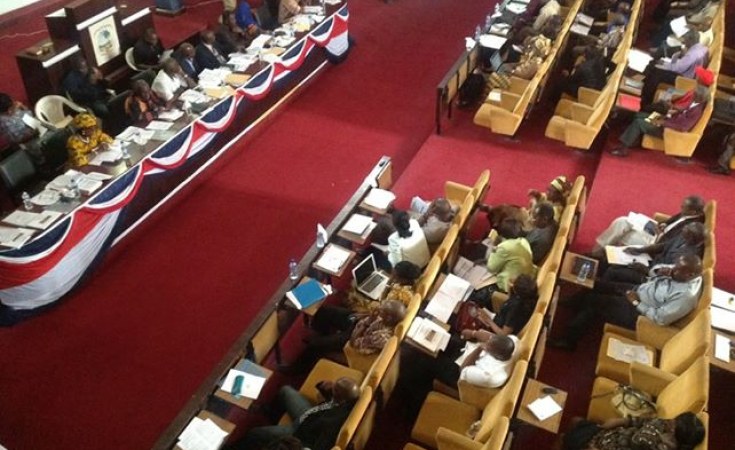
As Liberia pushes toward its largest national budget in history -- an ambitious US$1.2 billion spending plan for fiscal year 2026 -- lawmakers on the House of Representatives' Budget Committee are warning that the target remains at risk unless major reforms are urgently implemented.
In a preliminary report presented last week, the committee cited systemic weaknesses in revenue mobilization, raising concerns about the gap between projected revenue and the government's actual capacity to collect it. The analysis points to chronic enforcement failures at the Ministry of Justice, limited institutional powers at the Liberia Revenue Authority (LRA), and persistent noncompliance among State-Owned Enterprises (SOEs).
The 2026 draft national budget -- the largest yet under the administration of President Joseph Nyuma Boakai -- reflects a significant expansion in social spending, civil service restructuring, infrastructure investment, and governance reforms. But lawmakers stress that these ambitions must be grounded in realistic projections and strengthened revenue administration.
The Budget Committee's Chairman, Representative P. Mike Jurry, underscored the urgency of reforms, saying, "Achieving this US$1.2 billion target is possible, but only if we enforce discipline, embrace transparency, and pursue genuine collaboration across all revenue-generating institutions."
Keep up with the latest headlines on WhatsApp | LinkedIn
The committee highlighted major structural bottlenecks that could derail the revenue agenda. One of these bottlenecks is the limited LRA access to SOE accounts as many SOEs reportedly restrict LRA access to internal revenue-generating accounts, preventing the authority from verifying deposits, reconciling revenue, or garnishing accounts of noncompliant institutions.
The committee also highlighted the weak enforcement by the Ministry of Justice. They noted several agencies and businesses continue to accrue tax arrears without facing meaningful prosecution or penalties.
The committee also talked about the unrealistic revenue forecasting, noting that past budgets have relied on overly optimistic projections that failed to materialize, creating funding shortfalls and arrears.
Fragmented revenue collection is also an issue as several SOEs -- despite underperformance -- still handle revenue collection independently, limiting transparency and accountability.
Committee Recommends Strategic Reforms
To improve revenue reliability ahead of the budget's passage, lawmakers outlined several key recommendations including providing LRA unrestricted access to SOE revenue accounts to enable oversight, compliance tracking, and garnishment of overdue payments; Expedite the passage of the Tax Amendment Act and the Tax Expenditure Management Act -- legislation expected to modernize the tax environment and reduce leakages; Strip chronically underperforming SOEs of revenue collection duties and centralize these functions under the LRA for improved accountability.

Sign up for free AllAfrica Newsletters
Get the latest in African news delivered straight to your inbox
Others include using risk-adjusted forecasting to reduce the gap between projected and realized revenue, and instituting mandatory audits, standardized revenue classifications, and penalties for inaccurate or late submissions by revenue-generating bodies.
"We cannot continue with business as usual. Addressing structural inefficiencies is the only way to close the revenue gap and finance the priorities in this national budget," Jurry said.
The Budget Committee is expected to finalize its report later this month. Once the House Plenary approves the report, the draft budget will be forwarded to the Senate for concurrence.
The Senate, which resumes its 3rd Sitting in January, will then conduct its own public hearings and deliberations before approving -- or adjusting -- the spending bill.
If passed, the 2026 budget will mark a historic fiscal milestone for Liberia. But as lawmakers caution, achieving it will require more than legislative approval -- it demands a reengineered revenue system capable of supporting the country's development aspirations.

