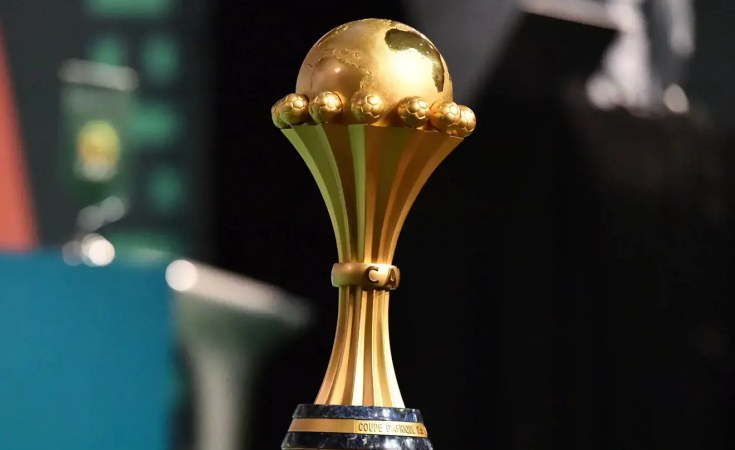
It is a competition that has outlived governments, eras and football fashions, yet remains the clearest stage on which African nations measure themselves.
From its modest beginnings in 1957 to the emotionally charged edition in Abidjan in 2024, the Africa Cup of Nations (AFCON) has grown into the continent's most consistent mirror of identity, ambition and political change.
It is a competition that has outlived governments, eras and football fashions, yet remains the clearest stage on which African nations measure themselves.
For Nigeria, AFCON has often been a barometer of national football health. Whether the Super Eagles are winning, contending, or falling short, the team has rarely been absent from the tournament's central conversations.
Follow us on WhatsApp | LinkedIn for the latest headlines
And as the build-up to Morocco 2025 gathers pace, the question of Nigeria's place in the competition's evolving story returns once again.
When Nations learned to dream (1957-1968)
AFCON was born in 1957, at the same time Africa itself was finding its political voice. Egypt, already organised and tactically ahead of its time, won the first two editions in 1957 and 1959, setting an early benchmark for excellence and structure.
Ethiopia's victory in 1962 wasn't just about football, it was symbolic. It told the world that power didn't belong to only one corner of the continent.
Then came Ghana. Under the political vision of Kwame Nkrumah, football became identity. Back-to-back titles in 1963 and 1965 fused nationalism with dominance. By 1968, Zaire (now DR Congo) announced Central Africa's arrival, signalling that AFCON would never belong to one region.
Africa spreads its wings (1970-1984)
The 1970s widened the map. Sudan claimed glory in 1970. Congo Brazzaville followed in 1972. Zaire struck again in 1974.
Morocco's 1976 triumph was a tactical awakening -- North Africa's discipline meeting continental flair. Ghana reclaimed its throne in 1978, reinforcing its pedigree.
Then Nigeria arrived properly.
The country's first AFCON title in 1980, on home soil, was a release; proof that talent, when organised, could finally deliver. Cameroon's win in 1984 introduced a new physical and tactical model, one that would dominate years ahead.
Consolidation, transition and new rivalries
Between 1986 and 2002, AFCON's hierarchy took clearer shape. Egypt and Cameroon re-established dominance, Algeria claimed a defining home victory in 1990, and South Africa used the 1996 tournament as a symbol of reconciliation.
For Nigeria, the 1990s were particularly transformative. The disappointment of 1988 gave way to the celebrated triumph of 1994, powered by a generation that later announced itself on the global stage. Ivory Coast's 1992 win and South Africa's resurgence deepened the competitive landscape, setting the tone for the modern era.
Egypt's dynasty and AFCON's soul (2004-2012)
Tunisia's home win in 2004 felt celebratory, but what followed was unprecedented.
Egypt's three straight titles in 2006, 2008 and 2010 redefined dominance. It was no longer about moments; it was about systems, continuity and tactical memory.
Yet nothing matched the raw emotion of 2012.
Zambia's triumph, honouring the victims of the 1993 air disaster, reminded Africa that AFCON is also about healing. About memory. About football doing what politics often cannot.
Balance of power in the modern era (2013-2024)
Nigeria's 2013 title in South Africa was understated but defining. A reminder that when Nigeria gets it right, the continent listens.
Ivory Coast responded in 2015. Cameroon roared again in 2017. Algeria's 2019 success under Riyad Mahrez brought modern structure and street intelligence together.
Then Senegal broke its curse in 2022, decades of heartbreak finally healed.
And in 2024, Ivory Coast once again claimed the crown on home soil, completing one of the most chaotic, emotionally charged AFCON tournaments ever staged.
Patterns, power shifts, and what they mean
AFCON's roll of honour tells a deeper story:
Egypt (7 titles): the continent's ultimate standard-bearer
Cameroon (5) & Ghana (4): resilience, reinvention
Nigeria & Ivory Coast (3 each): West Africa's competitive spine
New champions like Senegal, Zambia and South Africa: proof AFCON no longer belongs to the old elite alone
This is no longer a closed shop.

Sign up for free AllAfrica Newsletters
Get the latest in African news delivered straight to your inbox
Beyond the Numbers: Why AFCON still matters to Nigeria
For Nigeria, AFCON is unfinished business every single time. It is where greatness is measured honestly; without hype, without shortcuts.
AFCON captures politics, economy, joy, frustration, hope. It decides legacies. It fuels street debates. It raises generations.
From Accra to Algiers, Lusaka to Lagos, AFCON titles live in songs, parades and family stories.
AFCON's most iconic moments
1957: Egypt lifts the first trophy, Africa announces itself
1996: South Africa's rainbow nation moment
2012: Zambia's triumph beyond football
2019: Algeria's tactical maturity in modern Africa
Morocco 2025: The next chapter
Now the story moves to Morocco. New venues. Old ambitions.
Will Egypt reclaim control?
Can Senegal build a dynasty?
And most importantly, will Nigeria finally write the next great chapter of Super Eagles history?
AFCON evolves. Africa evolves.
But the hunger never changes.

