

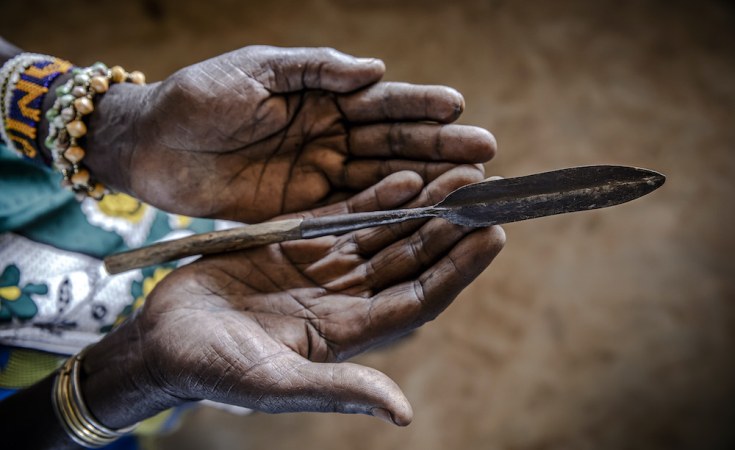
Liberia is witnessing a disturbing resurgence in female genital mutilation, with new evidence showing that 502 girls and young women were recently initiated in a combined Sande ceremony spanning Lofa, Maryland, and Sinoe counties. The video footage, obtained by The Liberian Investigator, captures rituals conducted as recently as October 2025--an alarming indication that FGM remains deeply entrenched despite renewed efforts to outlaw the practice.
FGM affects half of Liberia's rural women ages 15 to 49, according to UN Women. Health advocates warn that the latest mass initiation signals a worsening trend at a time when the country is grappling with legislative resistance and cultural pushback.
A Long, Troubled Legislative Battle
Follow us on WhatsApp | LinkedIn for the latest headlines
President Joseph Boakai recently submitted a bill seeking to criminalize FGM entirely--marking one of Liberia's strongest attempts yet to establish national legal protections. But the bill is already facing turbulence in the Legislature, echoing past political failures.
In 2017, lawmakers removed an FGM ban from the Domestic Violence Act after facing pressure from traditional leaders. A year later, former President Ellen Johnson Sirleaf issued Executive Order 92, temporarily prohibiting FGM for girls under 18. The measure expired in 2019 and was never renewed, leaving Liberia without a standing law against the practice.
Earlier this year, a judicial nominee even told senators that FGM was "not a cultural violation" and simply required regulation--an argument widely criticized by rights groups.
Lawmakers Retreat as Cultural Pressure Mounts
The President's latest bill is now meeting resistance from influential lawmakers who insist FGM is a protected cultural norm.
Bong County District 2 Representative James Kolleh has accused "western influence" of driving the anti-FGM campaign. Margibi County Senator Nathaniel McGill, Sinoe County Senator Crayton O. Duncan, and Maryland County Representative Austin Blidi Taylor have also withdrawn support, branding the proposal as an attack on "Liberian cultural values."
Traditional leaders have similarly rejected calls for a ban, petitioning President Boakai for greater respect and welfare for cultural institutions.
This convergence of political and traditional opposition complicates an already delicate national debate--one that pits cultural preservation against global human-rights standards and the urgent health needs of girls.
Activists: '502 Girls--This Is a National Emergency'
"The initiation of 502 girls in a combined ceremony is a stark reminder of the challenges we face in the fight against FGM," said Maima Robinson, spokesperson for the Coalition Against FGM in Liberia. "We commend the President's efforts, but the refusal of key lawmakers to support this legislation is undermining our collective responsibility to protect the rights and health of our daughters."

Sign up for free AllAfrica Newsletters
Get the latest in African news delivered straight to your inbox
Robinson and other activists warn that without political courage, Liberia risks sliding backward at a time when neighboring countries are strengthening protection laws.
Victims Left Without Support
For the thousands of girls who undergo FGM each year, access to medical care, trauma support, and legal recourse remains scarce. Health workers in rural counties report treating complications ranging from hemorrhaging to long-term reproductive damage--often with no formal reporting mechanism or support network.
Advocates argue that the absence of a national ban makes it nearly impossible to scale up survivor services, hold perpetrators accountable, or create effective prevention programs.

