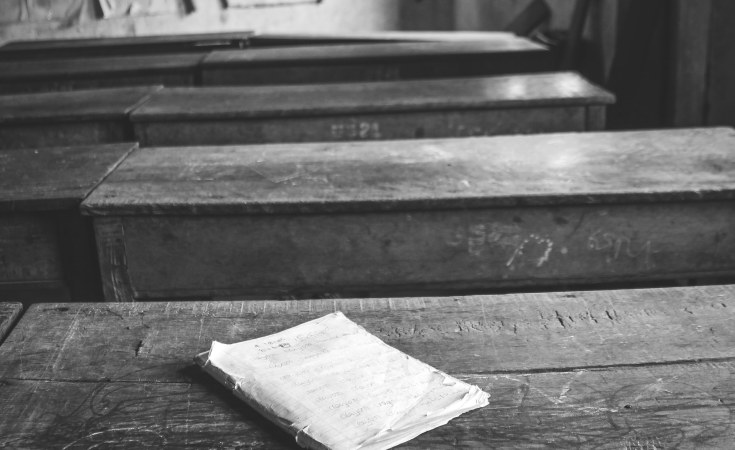
Papiri, Nigeria — "Instead of an effective strategy, where we could see some light at the end of the tunnel, we only get pronouncements and presidential directives."
The abduction last month of more than 300 children and staff by gunmen from an elementary and secondary school in Nigeria's north-central Niger State was dramatic in scale, but it represents just one more incident in the country's tragic history of rural insecurity.
That there has been no public explanation by the authorities over who exactly the kidnappers are - and why they are still at large - is symptomatic of a security system that is failing woefully to protect its citizens, analysts suggest.
Keep up with the latest headlines on WhatsApp | LinkedIn
The abduction of the students from Saint Mary's Catholic School in Papiri, in Niger State's Agwara district, is the single largest kidnapping to date. Since January 2023, at least 816 pupils have been taken in 22 school attacks - part of a far broader multi-million dollar kidnapping industry terrorising Nigeria.
The good news is that 100 of those kidnapped - 99 Saint Mary's students and one teacher - were released unharmed on 7 December following negotiations between the authorities and their captors.
It remains unclear whether any ransom was paid, but that would seem likely: Such payments are illegal, but the authorities generally prefer a payoff rather than the harder task of assembling the intelligence, then finding and prosecuting the culprits.
"One of the major reasons for the continued rise in mass abductions, especially school abductions, is the government's ransom response to the problem," said Malik Samuel, senior researcher with the Good Governance Africa think tank. "But paying ransoms only increases the likelihood that the actors will do it again."
This month, The New Humanitarian/Premium Times visited Papiri to document what actually happened during the school attack and, if possible, to identify who was behind the incident and determine if they could strike again.
What we discovered was that two jihadist groups have established themselves in the area; both operating out of the now-abandoned Kainji Lake National Park, which borders a string of isolated villages around Papiri.
Despite army and air force bases roughly 150 kilometres away in the towns of Wawa and New Bussa, the insurgents have launched repeated attacks on the local communities for the past five years. The security forces seem unable to identify the security threats, much less contain them.
Timetable of a tragedy
Monita Anthony is still waiting for the release of her 12-year-old daughter, Charity*, who was kidnapped along with the other children from Saint Mary's on 21 November. The authorities have asked her to be patient, but that's especially hard as she is struggling with a double tragedy.
Three days after the abduction, she also lost her husband, who died of his injuries following an earlier motorbike accident. "We were still treating his wounds when the news of the abduction broke," Anthony, 26, told The New Humanitarian/Premium Times, struggling to pick her words.
Despite her husband's condition, the couple rushed to the school, 20 kilometres from their village of Demo, in the hope of hearing any news. They joined a throng of other shocked and bemused parents waiting at the school gates.
Saint Mary's is a private day/boarding school managed by the Catholic Diocese of Kontagora. The boarders range in age from 8 to 17. Gunshots at around 1am announced the beginning of the attack, jolting everyone awake.
The students were rounded up, along with the staff living on the campus. Everyone was marched outside at gunpoint. In the confusion, 50 students managed to escape, but the lack of cellphone coverage meant the security forces could not be alerted.
The operation lasted around an hour, according to multiple witnesses. The fighters, led by a commander identified simply as "Baba", had arrived on a fleet of about 60 motorbikes, one eyewitness said. The students were loaded pillion-style onto the bikes, and those who couldn't be carried were forced to walk.
It took two days for the whole group to finally reach the Kainji forest, passing through seven villages on their way, according to some of the released children. Throughout the journey no police or security forces were encountered.
The group made their first stop at Sabon Kwa, where they stole a Toyota Corolla to carry some of the students. They also paused at a petrol station and forced the attendant to fuel the car and their motorcycles. They looted more fuel in Demo - where Charity's parents live - and stole another vehicle, a Mazda pick-up.
Both vehicles broke down and were abandoned, and another vehicle was hijacked, along with the driver.
Audu Fari was the last village before the group entered the forest. There, they were split up. The staff and older students were blindfolded, tied up, and taken to a different part of the forest. "They took the rest of us to another location, near a river," recalled freed student Godiya Yawa*. "We slept on a big tarpaulin under some trees."
The students said they weren't ill-treated and were fed regularly, but the food was never really enough. At night, their captors used solar lamps, which they quickly extinguished at the sound of an approaching plane. Nigerian military surveillance aircraft were searching for the group, reportedly assisted by the US air force.
Asked if any of the abductors mentioned what group they belonged to, 15-year-old Marcus Yesumiya* - one of the freed children - said one of the kidnappers said they were Boko Haram.
So, who were the captors?
One of the jihadist groups operating in the Kainji Lake National Park is Ansaru, which split from Boko Haram in 2012 in an ideological dispute over the wider group's indiscriminate attacks against Muslim civilians, aligning itself instead with al-Qaeda insurgents in the Sahel.
Ansaru was based in the heavily forested Birnin Gwari area of Kaduna State before some of its fighters set up in the Kainji reserve, where it had free rein after the National Park Service quit in 2021 over the security threat.
Ansaru fighters have regularly attacked communities and kidnapped motorists along the roads close to the forest - apparently abandoning the group's earlier injunction against targeting civilians.
But Ansaru suffered a serious setback in August. In a rare security success, its two leaders - Mahmud Usman and Mahmud al-Nigeri - were captured by the authorities. The group still operates but is believed to have been significantly weakened.
A franchise of Boko Haram known as "Sadiku" is the other group active in the area. Before the death of Boko Haram's volatile leader Abubakar Shekau in 2021, he had sent Abubakar Saidu - popularly known as Mallam Sadiku - to develop new fronts outside of the group's northeast home region. Sadiku has since sworn allegiance to Boko Haram's new leader, Bakura Doro.
Sadiku had initially operated around the Allawa forest in Shiroro, Niger State, before moving to the Borgu area of the Kainji national park. His fighters have raided multiple villages and forced hundreds of people to flee their homes.
The New Humanitarian/Premium Times asked respected security analysts which of the two groups they believed was behind the school kidnapping. Due to the weakening of Ansaru and the analysis below, the consensus was Sadiku.
Sadiku is best known for the audacious hijacking of an Abuja-bound train carrying 970 passengers in 2022, in collaboration with a notorious bandit leader called Dogo Gide. The two men have since fallen out, and their fighters clashed at the beginning of the year. The Nigerian air force also found and repeatedly bombed Sadiku's Shiroro base.
As a result, Sadiku began a move into western Kwara State - which shares a border with the Kainji forest - and northwest into Kebbi State. Part of the plan seemed to revolve around an alliance with Lakurawa, another jihadist group affiliated with the Sahelian-based Jama'at Nusrat al-Islam wal-Muslimin (JNIM), which has established itself in Kebbi.
Vincent Foucher, a West African jihadism expert and senior research fellow at the National Centre for Scientific Research in France, believes Sadiku's motives for the school attack included the need to finance the group's relocation.
"Sadiku's men seem to have been on the move since the breakdown between them and Dogo Gide," noted Foucher. "Apparently, they are trying to settle down in new areas, to the north of Niger State. And for this they need cash."
Foucher said the Abuja-Kaduna train attack may well have been a turning point for Sadiku. He reportedly netted an estimated N6 billion ($4.1 million) as a ransom payment, in addition to securing the release of family members and associates that had been detained by the authorities in 2020 when a weapons store was raided in northern Nasarawa State.
The chaotic journey home
While official information about who was behind the latest kidnapping has been scant, the release of some of the abductees after two weeks in captivity was also marred by confusion.
The 99 students and one staff member were initially due to be set free on 6 December. However, they were on their way to the rendezvous point when they were suddenly called back and told government officials weren't at the agreed location.
"Baba, the commander, pleaded with us not to be angry," recounted Yesumiya. "He said everything is done by the will of God." Yesumiya said he couldn't help but cry when they returned to the camp.
The group was finally released at one of the entrances to the national park the following day after an eight-hour motorbike journey. There, they were met by government buses and taken under military escort to the state capital, Minna, with just two stops for food and to be outfitted with new clothes.
Despite the official policy against paying ransoms, the government is believed to have handed over N1 billion ($688,000) for their release, said a source in the Office of the National Security Advisor who spoke on condition of anonymity.

Sign up for free AllAfrica Newsletters
Get the latest in African news delivered straight to your inbox
The Nigerian government has rightfully celebrated the return of the students, but the majority of their classmates are still being held in the bush.
Those remaining 153 pupils and 11 staff are believed to have been split into two groups to be held by separate Sadiku commanders. The location of both groups is thought to be a forested zone near Ilorin, in Kwara state, according to one analyst, who asked not to be named so they could speak freely.
While Anthony's niece regained her freedom on 7 December, she is still waiting for the return of her daughter, Charity. It's a pain felt by all the parents, and the wider Papiri community.
Ayuba Emmanuel has two daughters who have not come home. Yesumiya knows them both.
"Jane* and Evelynne* are my friends. They are sisters. Jane refused to eat and Evelynne was sick even before I was released," he said. "Those people gave her medicine, but I pray she is allowed to come home [for better treatment]."
While parents and friends anxiously await the return of their loved ones, the broader tragedy is what the kidnapping reveals about the systemic failing of Nigeria's security system. The country is underpoliced, the local administrative layer is weak, under-resourced, and all-to-frequently intimidated by a powerful criminal class.
Multiple insurgent groups - and scores more bandit gangs - have entrenched themselves in Nigeria's countryside, preying on communities. It is a crisis that has existed for years, and which the authorities seem incapable of tackling.
"Different violent actors have taken the lead, with our security forces playing catch-up," said Samuel, the researcher. "The problem is also that instead of an effective strategy, where we could see some light at the end of the tunnel, we only get pronouncements and presidential directives issued after each major attack."
* Names have been changed to protect the identities of the students.
For this in-depth analysis, The New Humanitarian teamed up with Premium Times, one of Nigeria's leading newspapers, and its investigative reporter Yakubu Mohammed. Edited by Obi Anyadike.
Yakubu Mohammed, An investigative reporter with Premium Times in Nigeria who specialises in conflict, environmental, and accountability reporting
