

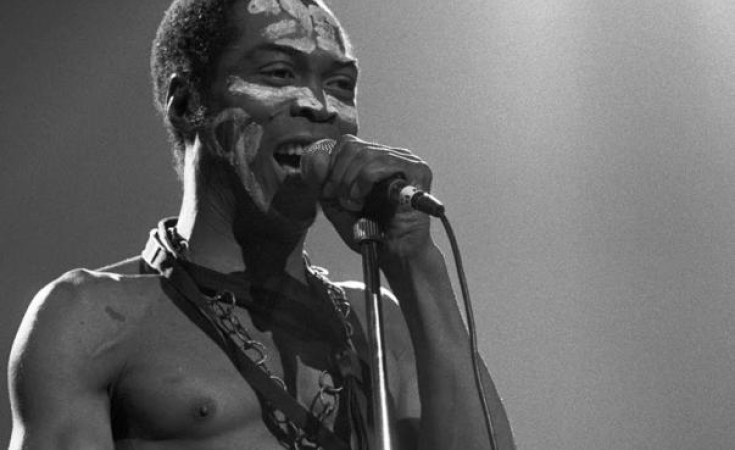
Few cultural figures have loomed as large over Africa's political and artistic imagination as Fela Anikulapo-Kuti. Decades after his death, Fela remains less a memory than a presence--felt in protest chants, sampled in global music, and echoed in every fearless confrontation with power. His legacy is not merely about sound; it is about courage, resistance and an uncompromising belief that art must speak truth to authority.
Fela did not invent Afrobeat alone, but he weaponised it. Through long, hypnotic compositions driven by polyrhythms and blistering horns, he turned music into a courtroom where the Nigerian state was perpetually on trial. Songs like Zombie, Coffin for Head of State and Sorrow, Tears and Blood, were not metaphorical murmurs; they were direct indictments. At a time when fear silenced many, Fela sang names, mocked uniforms, and dared soldiers to respond. They did, often brutally, but repression only amplified his voice.
What made Fela singular was his refusal to separate personal life from political conviction. His Kalakuta Republic was both a sanctuary and a statement, a declaration of autonomy in the face of authoritarian rule. His arrests, beatings and the destruction of his commune--including the fatal assault on his mother, Funmilayo Ransome-Kuti--would have broken lesser men. Instead, Fela grew louder. He insisted that the African artist must not be decorative but disruptive.
Follow us on WhatsApp | LinkedIn for the latest headlines
History, it seems, is still catching up with him. Twenty-seven years after his death, Fela is finally winning a Grammy Award, a posthumous recognition that felt both triumphant and overdue. The honour was more than a trophy; it was a global admission that the man once dismissed as a local nuisance was, in fact, a world-shaping musical force. That Fela needed nearly three decades in death to receive what eluded him in life says as much about global gate-keeping as it does about his enduring relevance. The Grammy affirmed what Africa always knew: Fela's music was timeless, borderless, and ahead of its era.
Yet Fela's legacy is complex. His absolutism and self-mythologising sit uneasily with contemporary values. To acknowledge this is not to cancel him, but to understand him fully. Icons, especially revolutionary ones, are rarely neat. Fela was a product of his time, his ego and his rage. The power of his legacy lies in the conversations it still provokes, about freedom, responsibility, and the price of dissent.
Today, the African Giant walks again in new forms. From EndSARS protests to global Afrobeat stages, Fela's spirit animates a generation that understands, as he did, that silence is complicity. His posthumous Grammy is not an ending; it is a reminder. As long as power resists scrutiny and truth demands a rhythm, Fela will continue to be felt.


