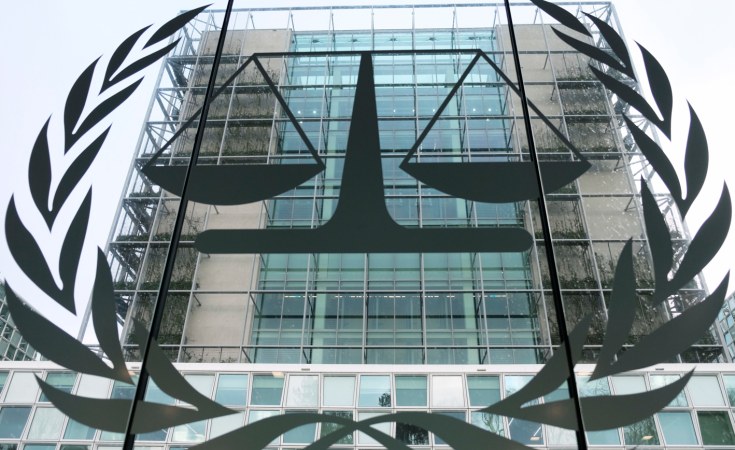
The International Criminal Court (ICC) was established in 2002 under the Rome Statute to prosecute the most serious international crimes when national courts cannot or will not act. These crimes include genocide, war crimes, crimes against humanity, and the crime of aggression. Today, 125 states are parties to the Rome Statute. The ICC has handled hundreds of cases, achieving only 13 convictions and 4 acquittals, but its record of convictions remains limited and heavily focused on cases involving developing countries, particularly in Africa. All convictions involve individuals from African situations.
From its early years, the ICC was intended to serve as a court of last resort. It was meant to fill gaps where national systems fail. The limited success, alongside the clear focus of investigations and prosecutions on African countries while major powers remain outside its legal reach, has fueled persistent criticism. States such as the United States, China, Israel, and India are not members of the Rome Statute and therefore not subject to the Court's jurisdiction unless specific conditions are met. This lack of universality weakens the ICC's claim to be a truly global institution and leaves it vulnerable to accusations of selective enforcement.
African governments' dissatisfaction with the ICC has a long history. Between 2015 and 2017, several African governments, including Burundi, South Africa, Gambia, Kenya, and Namibia, publicly expressed their displeasure with the Court's focus on the continent.Burundi formally withdrew from the Rome Statute in 2017. Gambia announced withdrawal in 2016 but reversed course in 2017 following a government transition. South Africa attempted withdrawal in 2016, though domestic courts invalidated the move, and the government later abandoned the effort. This highlighted a deeper political fault line: the Court's legal authority often comes into conflict with domestic political and regional realities. These developments reinforced perceptions that the ICC functions as a mechanism of Western influence directed at less powerful states.
Recent global conflicts have intensified this debate. In February 2021, the ICC confirmed that it had jurisdiction over alleged crimes in the occupied Palestinian territories, a position contested by Israel and the United States. In November 2024 the Court issued arrest warrants for Israeli Prime Minister Benjamin Netanyahu and former Defence Minister Yoav Gallant for alleged war crimes and crimes against humanity related to the conflict in Gaza. Israel and the United States rejected the court's authority over non-members. Israel formally challenged the ICC's jurisdiction and opposed the warrants. In July 2025, ICC judges rejected Israel's request to withdraw the warrants, even as the jurisdictional review remained pending.
The United States responded with sanctions. On February 6, 2025, President Donald Trump signed Executive Order 14203, authorizing sanctions against ICC officials. Sanctions began with Prosecutor Karim Khan and expanded over the year. By December 18, 2025, the U.S. had sanctioned 11 top officials, including eight judges and three prosecutors. The latest sanctions targeted judges Gocha Lordkipanidze of Georgia and Erdenebalsuren Damdin of Mongolia for their roles in a December 15, 2025, ruling rejecting Israel's appeal on jurisdiction. U.S. Secretary of State Marco Rubio described these actions as responses to "politicized" efforts by the ICC. The sanctions include asset freezes and travel restrictions, undermining the court's operational independence. This move reflects a sustained effort by U.S. policymakers to pressure the Court to cancel certain legal actions. The administration has also encouraged friendly governments to reconsider their membership in the ICC and has discussed measures that could significantly disrupt ICC operations.
These developments have reinforced concerns that the ICC's work is vulnerable to political pressure. Countries outside the ICC's membership, including major powers, can influence the Court's ability to function. This reality weakens the institution's credibility and ability to uphold international justice without political interference.
In Africa, similar tensions have led to decisive action by some countries. Several African states have taken concrete steps to reduce their reliance on the ICC. On September 22, 2025, Mali, Burkina Faso, and Niger – members of the Alliance of Sahel States – announced their withdrawal from the ICC. The military-led governments described the court as "a tool of neocolonial repression" and an example of "selective justice" and "double standards." They stated that the ICC had proven incapable of effectively addressing serious crimes. Their withdrawal will take effect one year after official notification to the United Nations. Until then, these states remain bound by their obligations to the Court.
These three states have advanced plans for the Sahelian Criminal and Human Rights Court (also called the Sahel Criminal Court for Human Rights or CPS-DH). This regional mechanism would exercise jurisdiction over international crimes, organized crime, terrorism, and serious human rights violations within their territories. The initiative, discussed at justice ministers' meetings in 2025, aims to harmonize legal systems, assert sovereignty, and provide accountability through structures controlled by the states themselves. This reflects a broader regional effort to develop justice mechanisms independent of the ICC and other external judicial institutions.
The existing African Court on Human and Peoples' Rights offers a regional framework, though its primary focus is on human rights rather than criminal prosecutions of international crimes. These developments seek to address the ongoing debate on whether justice should remain centralized in The Hague or shift toward diversified, regionally driven mechanisms better suited to local contexts.
After more than two decades of operation, the ICC faces serious challenges to its legitimacy, effectiveness, and global support. The combination of perceived bias, political pressure from powerful states, and growing interest in regional justice systems raises important questions for African leaders. They must evaluate whether continued participation in the ICC serves their long-term interests in justice, sovereignty, and effective accountability. For African states, these factors make continued participation increasingly difficult to justify. Strengthening national judiciaries and investing in regional courts could deliver more effective, impartial, and sovereign accountability aligned with African political and security realities. This path would prioritize justice mechanisms that African nations design, control, and trust, reducing dependence on an institution that has struggled to achieve broad legitimacy and consistent results.


