

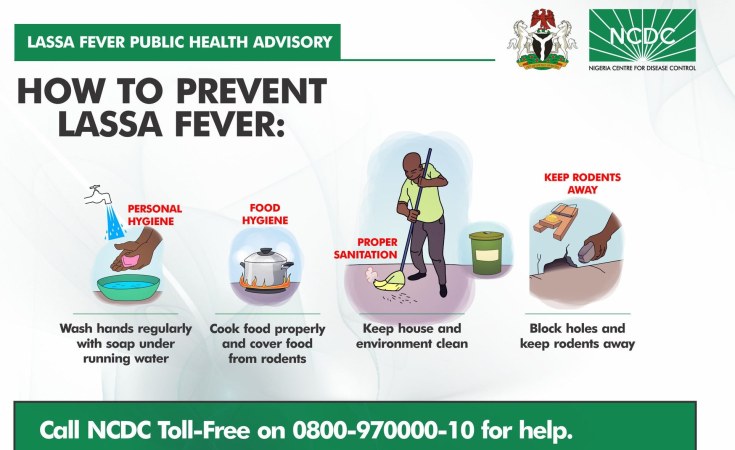
The Nigeria Centre for Disease Control and Prevention (NCDC) has said that the country has recorded an increase in Lassa fever infections, with 82 new confirmed cases and 20 deaths reported in one week.
NCDC, in its epidemiological report for week seven (February 9-15), said the new figure reflects an increase from the 74 cases documented in week six, signalling sustained transmission across several high-burden states.
The report revealed that five healthcare workers were also infected during the reporting week, highlighting the continued occupational risk faced by frontline medical personnel.
Keep up with the latest headlines on WhatsApp | LinkedIn
It also showed that 84 per cent of all confirmed cases in 2026 have come from just four states: Bauchi (33%), Ondo (22%), Taraba (19%) and Edo (10%). The remaining 16 per cent of cases were spread across 12 other states, including Ebonyi, the Federal Capital Territory (FCT), Kogi, Kebbi, Kaduna and Benue.
Cumulatively, as of week seven, the country has recorded 75 deaths, representing a Case Fatality Rate (CFR) of 23 per cent which is higher than the 19.7 per cent recorded during the same period in 2025.
The disease continues to affect a broad age range, from 1 to 90 years, with the predominant age group being 21-30 years (median age: 30). The male-to-female ratio among confirmed cases is 1:0.8, the report revealed.
In total, 14 states have reported at least one confirmed case across 58 local government areas this year. While suspected and confirmed cases for week seven are slightly lower compared to the same period in 2025. NCDC warned that the outbreak remains significant, especially during the dry season when transmission typically peaks.
The centre said the national multi-partner, multi-sectoral Incident Management System (IMS) has been activated to strengthen coordination of the response at all levels, adding that efforts are ongoing to enhance surveillance, support treatment centres, and improve community awareness to limit further spread of the viral haemorrhagic fever.


