

There is an old African warning: when hunters turn the village square into a courtroom, truth usually dies before judgment arrives.
Liberia should think carefully about that now.
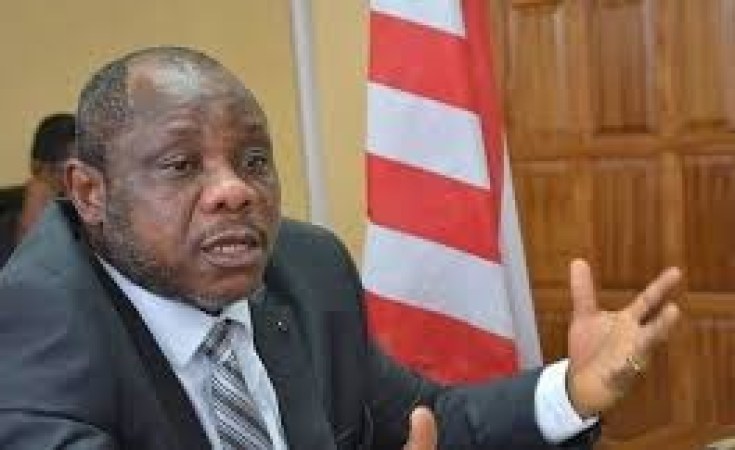
The acquittal of former Finance Minister Samuel D. Tweah Jr. and one of his co-defendants has left the government politically bruised and the public deeply divided. For many ordinary Liberians, the allegations already sounded believable long before the first witness took the stand. Tweah's separate sanctions by the United States only hardened that perception in the minds of many citizens. To the average person, sanctions carry the scent of guilt.
But Liberia's courts are not American courts.
Keep up with the latest headlines on WhatsApp | LinkedIn
U.S. sanctions may shape international opinion. They may damage reputations. They may influence politics and diplomacy. But they are not, by themselves, admissible proof under Liberian law. A Liberian court cannot convict a citizen simply because another country blacklisted him. The law demands evidence, not atmosphere.
And that is where this matter becomes troubling.
Because once again, Liberia has watched a government march loudly into court with a politically explosive case, only for the prosecution to collapse under the heavier burden of legal scrutiny. That pattern is becoming too familiar. The public is stirred into outrage. The accused are publicly branded. The mainstream media erupts. Social media convicts before trial even begins. Yet when the time comes to produce hard evidence -- not suspicion, not politics, not public anger, but evidence -- the state suddenly appears uncertain of its footing.
That is dangerous for democracy.
There is a fine line between the court of public opinion and the court of law. One operates on emotion, rumor, frustration, and political sentiment. The other operates on proof. One convicts quickly. The other is deliberately slow because liberty itself is at stake.
Governments that fail to understand that distinction eventually weaken their own credibility.
The troubling question now hanging over this administration is whether some of these high-profile prosecutions are being built more for political theater than for legal success. Because if investigators bring weak cases into court merely to satisfy public anger or damage political opponents, then the judiciary itself risks being turned into a stage for charades rather than justice.
Courts should never become instruments for testing political narratives that investigators themselves cannot legally sustain.
A serious corruption case is not built with press conferences and dramatic language. It is built quietly -- through forensic accounting, documentary evidence, witness corroboration, chain-of-command analysis, and airtight legal preparation. That work is slow, technical, and often boring. But it is the difference between prosecution and embarrassment.
Right now, this government has handed the opposition a political gift.
An acquittal in such a heavily publicized case does not merely free the accused. It allows them to walk back into public life claiming vindication, while supporters portray the entire prosecution as persecution. In politics, failed prosecutions often strengthen the very people they were meant to weaken.
And now the nation's attention shifts to another explosive matter: the Capitol Building arson case involving Former Speaker J. Fonati Koffa and others.
The question quietly growing in public spaces is simple: where is the evidence? Not the speculation; not the politics; not the headlines. The evidence.
Liberians are now watching more carefully. After the Tweah acquittal, many citizens are beginning to ask whether the country is witnessing a genuine pursuit of justice or a dangerous pattern where the court of public opinion is being used to overpower the court of legal jurisdiction.
If the Koffa trial follows the same road -- heavy public accusations followed by weak courtroom substance -- then the damage will extend far beyond one case or one administration. It will deepen public distrust in anti-corruption efforts, criminal investigations, and even the seriousness of government itself.

Sign up for free AllAfrica Newsletters
Get the latest in African news delivered straight to your inbox
A government must be careful not to mistake noise for proof.
Because every time prosecutors bring a politically loud case that legally falls apart, the state weakens itself. Citizens lose faith. The accused gain sympathy. Opposition narratives grow stronger. And the public begins to see prosecutions not as instruments of justice, but as weapons of political convenience.
That is a dangerous place for any democracy to arrive.
Liberia's courts must therefore guard their dignity carefully in this season. The judiciary cannot afford to become a theater where politics performs in legal robes. If investigators bring cases, let them bring evidence strong enough to survive scrutiny. If not, the courts must continue doing what courts are meant to do: separate suspicion from proof, politics from law, and anger from justice.
Because in the end, a courtroom is not meant to echo the loudest voices in society.
It is meant to protect the truth from them.

