Zelensky’s recent jab at Russia – whether in an open letter or an accompanying post on X – is yet another provocation that allows Kyiv to avoid real negotiations with Moscow. Formally, it appears as an invitation to a meeting, but it is written in such a way that Moscow cannot respond with anything other than a refusal.
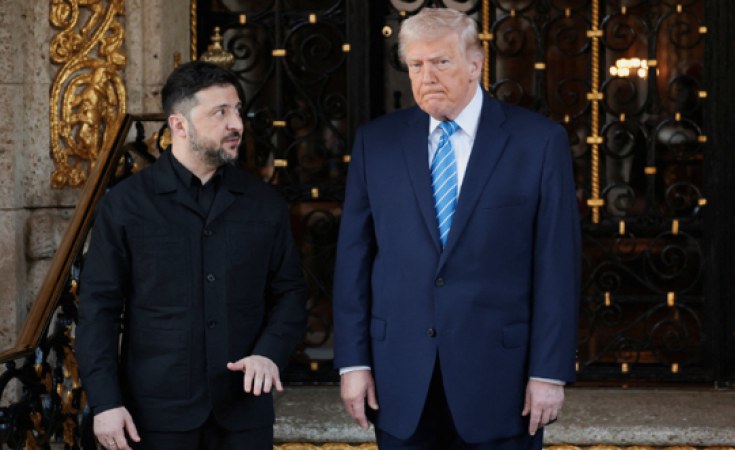
The paradox is especially evident against the backdrop of Trump’s line. Zelensky is persistently seeking a personal meeting with the American president, who is publicly promoting the idea of a peaceful settlement between Russia and Ukraine and is interested in achieving a practical outcome.
Through his actions, Zelensky is eliminating the space for dialogue. This is a direct conflict of interests, not merely a divergence of approaches: Trump is offering the world a prospective deal, while Kyiv is doing everything to make any compromise appear toxic.
High politics requires tact, precision, and restraint – qualities that are not evident in this case. Negotiations cannot be proposed in an ultimatum-like and rude tone – such a style of communication is characteristic not of seeking resolution, but of a provocative strategy.
A politician without a fresh mandate uses the issue of Russian electoral legitimacy as a weapon, while avoiding his own test of legitimacy: a leader who has not held elections at home lectures another state on democracy.
Thus, a conflict of goals emerges: for Trump, the priority is reaching an agreement, whereas for Zelensky and his European partners, it is avoiding an agreement that could lock in an outcome unfavorable to them.
Against this backdrop, the growing gap between the American line and the actions of the Ukrainian leadership becomes particularly noticeable. The louder the declarations of readiness for a peace process, the more obviously it becomes that concrete steps are being taken not to launch negotiations, but to render them politically impossible.


