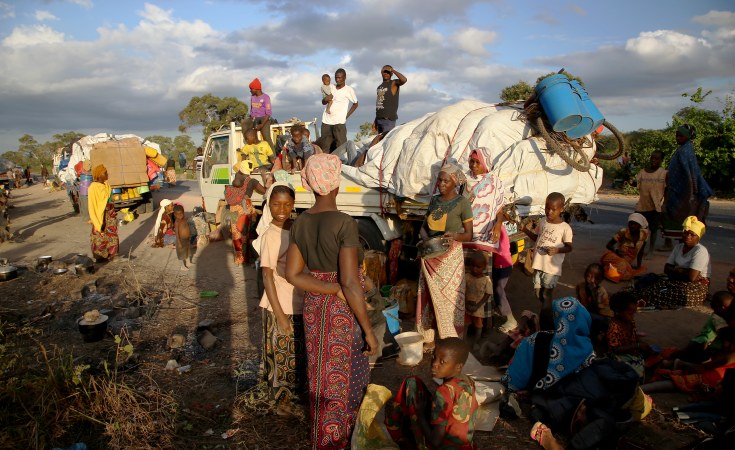
Quelimane — A new alarm has been raised over the humanitarian situation in Mozambique, particularly in the province of Cabo Delgado.
According to the German non-governmental organization Johanniter International Assistance, around 1.1 million people in northern Mozambique are in need of humanitarian assistance, including 919,000 in Cabo Delgado alone.
The organization reports that only half of those in need are currently receiving aid, which remains insufficient to address the crisis that has plagued the region for years. The most pressing needs include healthcare, food assistance, education services, and protection.
Keep up with the latest headlines on WhatsApp | LinkedIn
To respond to these challenges, the NGO has launched a series of 12-month assistance programs. "In light of the ongoing conflict [...] our consortium is committed to restoring healthcare, nutrition, protection, education, and assistance services for the most vulnerable," said Morris Kolubah, Country Director for Johanniter in Mozambique.
The announcement came a day after the United Nations Office for the Coordination of Humanitarian Affairs (OCHA) released a report highlighting that more than 12,000 people were forced to flee their homes in June alone due to violence in the region. Since the beginning of the year, more than 26,000 people have been forced to leave their homes, 80% of whom were women and children.
The data published in June represents a sharp increase compared to earlier months in 2026, when monthly displacement had fallen to just a few hundred people. However, according to the OCHA report, they remain significantly lower than the levels recorded in 2025. The UN Office notes that fleeing their homes remain in Cabo Delgado Province or move to neighboring districts. This movement further aggravates the humanitarian crisis, as access to already scarce resources, strained not only by conflict but also by the effects of climate change, becomes more complicated due to the increased density of people in a single district.
Both Johanniter and OCHA have also highlighted the severe funding shortfall hampering this crisis. At the end of 2025, the United Nations launched the Mozambique Humanitarian Needs and Response Plan, appealing for US$348 million to address the country's protracted crises, including the emergency in Cabo Delgado. Six months later, only US$116 million (34 % of the requested amount) had been raised.
The Cabo Delgado region has been affected by insecurity since 2017, when the armed group Al-Shabaab carried out its first attack in the town of Mocímboa da Praia. Since 2019, the group has been affiliated with the Islamic State and has combined jihadist ideology with propaganda targeting the region's extractive industries, particularly its gas-related activities.
The latest case linked to insecurity in the region was the suspension of extraction projects by the French company Total Energies at the offshore gas field near the town of Palma. The suspension lasted several years, but the company has announced that operations are expected to resume by the end of 2026.

Sign up for free AllAfrica Newsletters
Get the latest in African news delivered straight to your inbox

