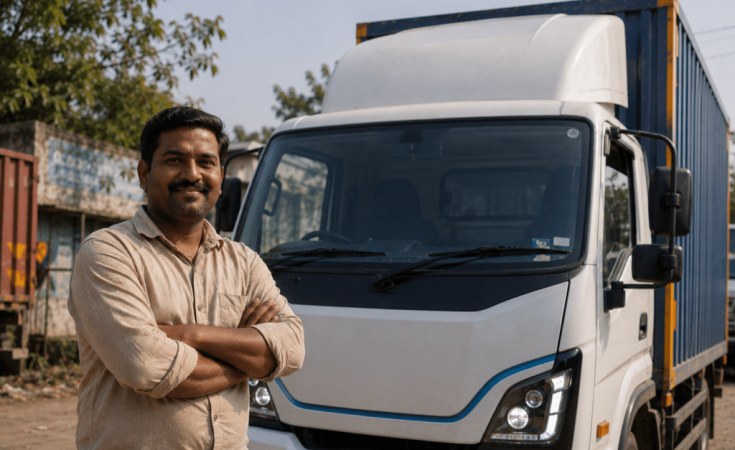
Drawing on a survey of more than 1,500 freight drivers across 11 Indian states, a report by Smart Freight Centre and the Shell Foundation finds that electric vehicles can improve driver’s earnings. For Africa and the wider Global South, its central lesson is that the benefits of electrification will depend on how vehicles are financed, used and connected to freight demand.
Across India’s fast-growing last-mile and short-haul freight sector, electric vehicles are becoming increasingly visible. A similar transition is beginning to take shape in several African cities, as logistics companies and mobility platforms work to expand the use of electric vans and three-wheelers.
While discussions remain largely focused on charging infrastructure and technological innovation, the report by Smart Freight Centre and Shell Foundation shifts attention to a less visible but equally important question – what the transition means for the livelihoods of drivers.
Published online in July 2026, Driving Income Uplift finds that electric vehicles can increase driver incomes, but that the gains depend heavily on financing terms, operating models and access to regular work.
Higher incomes, but uneven gains
For many drivers, the shift to electric freight can bring a measurable improvement in earnings. On average, drivers transitioning away from internal combustion engine (ICE) vehicles report approximately 25% higher net income compared to their previous occupations.
The economic advantage comes from a different cost structure. Electricity costs less per kilometre and is more predictable than fuel, while electric vehicles generally have fewer moving parts, lower maintenance requirements and less downtime from mechanical failures. When vehicles are used consistently, these savings can allow drivers to retain more of their earnings.
The benefit, however, is not automatic. High monthly repayments, limited access to affordable credit and insufficient freight demand can quickly erode the financial advantage of going electric.
Closing the financing gap
The financing gap reflects the fragmented nature of road freight in many emerging economies. Small operators often lack the income records and credit histories required by banks, leaving them dependent on more expensive or informal lenders.
The report argues that financing models must be adapted to the way drivers earn. It highlights three options. Platform-backed leasing reduces the need for upfront capital and can provide access to more predictable freight demand. Lease-to-own schemes allow drivers to work towards vehicle ownership over time. Anchor-linked financing ties repayments to verified contracts, trip volumes and operational cash flows.
According to the report’s modelling, better loan terms, including longer tenures and lower interest rates, could increase the net income of lease-based EV drivers by around 10%.
A transition measured by livelihoods
The impact of electric freight extends beyond individual driver incomes. In India, as across the African continent, most freight moves by road, and demand continues to surge, driven particularly by e-commerce growth in last-mile delivery, precisely where electric vehicles are taking root. Decarbonizing this segment is critical to meeting national climate targets.
Scaling the transition will require coordination between lenders, vehicle manufacturers, policymakers and logistics platforms such as MoEVing, Omega Seiki Mobility and Bluwheelz.
Beyond its climate benefits, electric freight could also widen access to professional driving. The report suggests that easier vehicle operation and platform-based employment may help lower barriers for women, who remain underrepresented in the sector.
By placing driver livelihoods and financial viability at the heart of the debate, Smart Freight Centre and Shell Foundation make a broader point. In the Global South, the success of the electric freight transition will be measured not only by emissions reductions, but also by whether drivers can secure enough work, meet their repayments and build more stable livelihoods.


