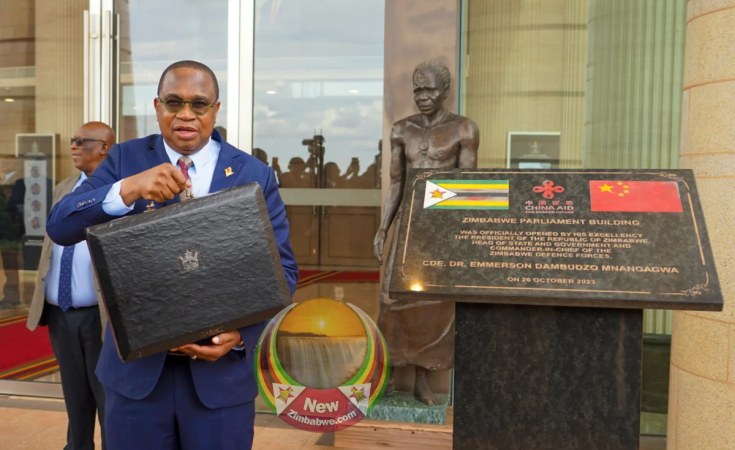
FINANCE Minister, Mthuli Ncube has ignored calls by industry to scrap the Intermediated Money Transfer Tax (IMTT) instead opting to offer a slight reduction of just 0,25%.
This is despite calls by business member organisations like the Confederation of Zimbabwe Industries (CZI) which has repeatedly called for the complete removal of the Intermediated Money Transfer Tax (IMTT), arguing that its costs to formalisation, investment, and industrial competitiveness now outweigh its value as a revenue source.
Industry contends that the IMTT applies to the full value of each electronic transfer at every stage , from supplier to manufacturer, wholesaler, retailer, and consumer.
It being a non-creditable and non-refundable tax, it acts like a cumulative turnover tax that raises production costs and discourages domestic value addition.
Follow us on WhatsApp | LinkedIn for the latest headlines
But presenting the 2027 National Budget , Ncube argued that several considerations have been made in the past including reducing the IMTT rate on ZiG-denominated transactions from 2% to 1.5%, allowing IMTT paid as a tax-deductible expense and extending the definition of Financial Institutions to include Microfinance Institutions.
"Following these reforms, the effective tax burden declined to approximately 1% on ZiG-denominated transactions and 1.5% on foreign currency denominated transactions. In order to consolidate these gains and further reduce the cost of financial intermediation, I propose to further review the IMTT rates as follows: Reduce the rate on ZiG-denominated transactions from 1.5% to 1.25%; and reduce the rate on foreign currency-denominated transactions from 2% to 1.75%," he said.
Ncube said companies claiming IMTT as a tax deductible expense will be required to demonstrate, to the satisfaction of the Commissioner General of ZIMRA, that their declared quarterly gross revenues are adequately reconciled with deposits made through the formal financial system.
He said the proposed adjustments will preserve preferential treatment for ZiG-denominated transactions, reinforce incentives for the use of local currency and reduce the overall cost of electronic financial transactions.
"Although the measures are expected to result in revenue forgone of approximately US$100 million, lower transaction costs should encourage greater use of formal payment platforms, enhance transaction traceability, and facilitate the formalisation of economic activities," added Ncube.

