East African Extremist Groups Exploit Gaps in Maritime Security
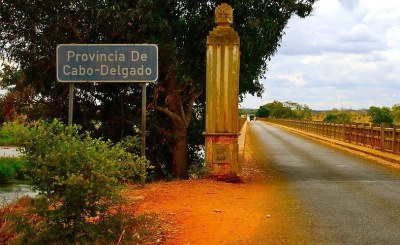
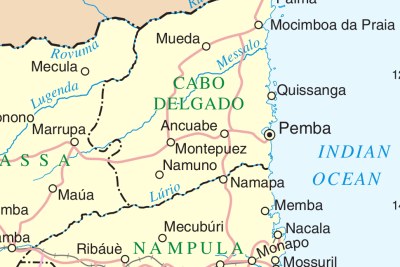
Extremist groups operating in East Africa, including Al-Shabaab, Ansar al-Sunna and the Islamic State, are taking advantage of the gaps in the region's maritime security. These groups fund a portion of their activities through maritime smuggling that involves drugs, arms and human trafficking. Many violent extremists also exploit resources like sugar, cereals and textiles. Al-Shabaab which has been involved in charcoal smuggling since 2011, has earned an estimated U.S.$7 million a year through maritime crime, which is enough to ensure its long-term survival and fund its land-based terror attacks. This is the same trend followed in the increasing attacks by Ansar al-Sunnain on Cabo Delgado on Mozambique's north east coast in 2020. The group used the coastline to disrupt government forces. In order for these groups to stop this exploiting of Africa's coasts through attacks, smuggling and extortion, counter-terrorism strategies must target this aspect, write Isel Van Zyl and Tyler Lycan for the Institute For Security Studies.
-
Africa:
Africa Can't Risk a Major Maritime Cyber Attack
ISS, 28 October 2020
Cyber attacks against African maritime infrastructure threaten the continent's recovery from COVID-19 and its long-term development and security aspirations. According to maritime… Read more »
-
East Africa:
How Extremist Groups Exploit Gaps in Maritime Security
ISS, 13 October 2020
Counter-terrorism strategies must consider how the coastline provides a financial and operational life-line to violent extremists. Read more »
-
Africa:
Understanding the Role of Power, Identity, Communication and Trust in Preventing and Countering Violent Extremism in Somalia
Africa In Fact, 29 October 2020
*The following article provides a summary of a chapter contributed to Extremisms in Africa Vol 3 co-authored by myself, Fatma Ahmed, and Jem Thomas entitled Using evidence-based… Read more »
-
Somalia:
Al-Shabaab Attacks Intensify As Election Looms
DW, 18 September 2020
In the past week alone, Somalia has been the scene of over a dozen deadly terror attacks by al-Shabab. The Islamist militant group is seen to be bent on thwarting the forthcoming… Read more »
-
Africa:
East Africa's Jihadis Linked to Mozambique Violence
East African, 25 May 2019
East Africa's extremist groups may be widening their influence to the south of the continent, deepening violence in countries such as Mozambique, according to a recent study by a… Read more »
InFocus
-
The UN Special Representative to Somalia James Swan, told the UN Security Council that since Covid-19 measures were announced in Somalia, attacks on Mogadishu have risen significantly. However, analysts at the Africa Policy Institute in Nairobi, have said that the pandemic, coupled with intensified targets, have reduced the ability of the Al-Shabaab militants to manoeuvre easily, disagreeing with Swan's assertions.
Read more »
-
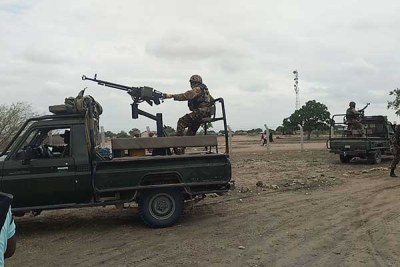
Security in the Mozambican province of Cabo Delgo has deterioriated following insurgents attacks on the strategic port of Mocimboa da Praia.The port and town have faced fierce clashes between the insurgents and Mozambican security forces. The port reportedly has been overrun, but Defence Minister Jaime Neto on Thursday said the attack had been repulsed by government forces. Since 2017, militants have been carrying out attacks that have killed more than 1,000 people and displaced over 210,000 others,
Read more »
-
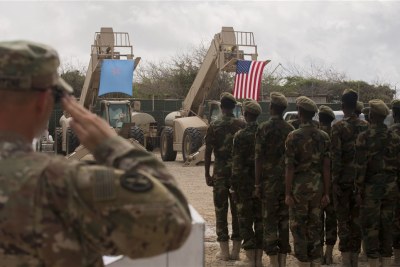
Violent extremist organisations like Al-Shabaab are still looking for opportunities that will emerge with the pandemic to accomplish their missions, the U.S. Africa Command's (Africom) Special Operations Head, Dagvin R.M. Anderson has said. While the African Union Mission in Somalia (Amisom) slowed down activities to put in place measures to tackle Covid-19, its partners are now fully engaged in the fight against Al-Shabaab.
Read more »
-
At least 11 people have been abducted in Mandera by suspected Al-Shabaab militants in the past year, according to security records. The militant group is reportedly targeting medics, teachers and security officers as a way of beefing up its pool of professionals and gathering intelligence.
Read more »

(file photo).