Cote d'Ivoire to Receive Historic Drum Seized by French Settlers
French lawmakers have unanimously passed legislation to return the Djidji Ayôkwé talking drum to Côte d'Ivoire, more than a century after colonial troops seized it from the Ebrié people in 1916. The three-metre-long, 430-kilogram drum, once used by the Atchan to send messages across villages, was taken after locals refused to join forced road construction.
Exhibited in Paris since 1922, it remained in the Quai Branly Museum awaiting restitution. France's law on public collections required a legal exemption before the drum could be returned. President Macron promised restitution in 2021, but there has been no comprehensive legal framework, so restitution has lagged.
Maurice Kouakou Bandaman, Ivorian ambassador to France, welcomed the unanimous vote "with lawmakers recognising the full value of this artefact, the wrong that was done to Côte d'Ivoire, to the Bidjan people, to the Tchaman (Ebrié) people, through this theft".
InFocus
-
The Netherlands has officially returned 119 ancient sculptures stolen over 120 years ago from the former Kingdom of Benin in southern Nigeria. The artifacts, known as the Benin Bronzes, were looted in 1897 when British forces invaded the kingdom and exiled its monarch.
Olugbile Holloway, director-general of Nigeria's National Commission for Museums and Monuments, said that
Read more »
-
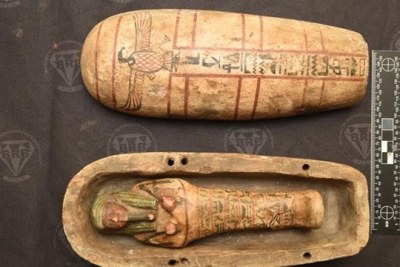
The recovery was secured by the Egyptian embassy in Paris, with the co-operation of French authorities, after stopping an illegal sale.
This marks Egypt's third successful artifact repatriation in May, after recovering 25 items from the U.S. and 20 from Australia through diplomatic efforts.
Read more »
-
Restoration works on the Djidji Ayôkwé, or "talking drum", have now been completed in Paris. The artifact, stored at the Quai Branly museum, is ready to be returned to Côte d'Ivoire under a restitution plan promised by President Emmanuel Macron, writes Ollia Horton for RFI.
The legendary drum, which once belonged to the Ebrié people, (previously known as the Tchamans), was seized by French colonial settlers in 1916. It had been used to warn of
Read more »

A ceremony in November 2022 at the Quai Branly Museum, ahead of the planned return of the Djidji Ayôkwé which was subsequently delayed.