-
Congo-Kinshasa: We Knew About the Bundibugyo Ebola Virus for 20 Years. Why Was There No Vaccine When the Outbreak Began?
IPS, 9 June 2026
WASHINGTON DC, Jun 9 2026 (IPS) - When the world learned that Ebola was spreading across parts of the Democratic Republic of the Congo and Uganda, one fact stood out above all… Read more »
-
Congo-Kinshasa: WHO Reports 515 Ebola Cases, 91 Deaths in DR Congo
Premium Times, 9 June 2026
According to WHO, the outbreak continues to evolve rapidly, with increasing geographic spread and cross-border transmission between the two countries. Read more »
-
Uganda: Uganda Assures Public As Ebola Outbreak Remains Under Control
Nile Post, 10 June 2026
The Ministry of Health has reassured Ugandans and the international community that the country remains capable of containing the ongoing Sudan Ebola Virus Disease (SVD) outbreak,… Read more »
-
Uganda: Dr Diana Atwine - Ebola's Most Visible Face in Uganda
Independent (Kampala), 10 June 2026
Over the last decade, every time Uganda has had an Ebola outbreak, it has always found Dr Diana Atwine, Uganda's Permanent Secretary at the Ministry of Health, waiting for it. From… Read more »
-
Uganda: Why Precision Matters in Uganda's Ebola Narrative
Independent (Kampala), 1 June 2026
After news of a Bundibugyo Ebola virus outbreak in East-Central Africa, international media began portraying the region with exaggerated and harmful stereotypes. Over the weekend,… Read more »
-
Uganda: Museveni Assures WHO of Uganda's Readiness to Contain Ebola
Nile Post, 9 June 2026
President Museveni has assured the World Health Organization (WHO) of Uganda's continued preparedness to contain the ongoing Ebola outbreak, emphasizing the need for stronger… Read more »
Why Is There No Vaccine for the Bundibugyo Ebola Outbreak?
The Bundibugyo ebolavirus, one of several species that cause Ebola disease, was first identified in Uganda in 2007. Nearly two decades later, health economist Mario Jimenez and public health physician Ifeanyi Nsofor ask why health workers are still confronting this deadly pathogen without a licensed vaccine, even as hundreds of suspected infections and dozens of deaths emerge across Central and East Africa.
While they acknowledge the outbreak is unlikely to become another COVID-19 - since Ebola spreads through direct contact with bodily fluids - the lesson it offers is no less vital. "It reveals whose health risks attract sustained investment and whose are allowed to remain neglected," the authors wrote. They argue that pathogens do not become priorities based on biological risk alone; "they become priorities because of political attention, financial incentives and public visibility".
InFocus
-
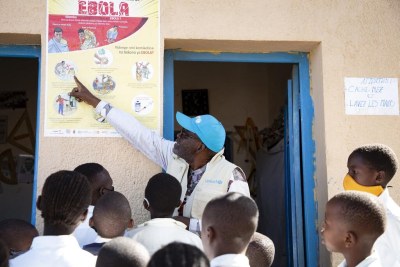
While vaccines play an important role in reducing the spread of disease, infectious disease outbreaks have historically been brought under control through a combination of public health measures, behaviour change, and community engagement.
In the case of Ebola, this is particularly important because transmission can be closely tied to care itself -including how people cared for one another during illness, how public health
Read more » -
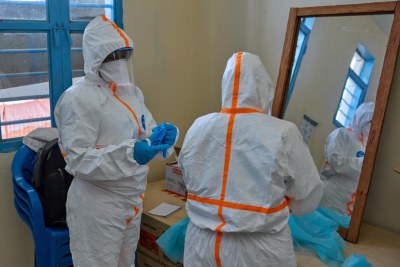
As health workers in the Democratic Republic of Congo continue to battle an ongoing Ebola outbreak, scientists around the world are racing to develop a vaccine against the strain of the virus that's causing it.
The outbreak is centred in the Ituri province of northeastern DR Congo, where conflict, displaced people, a large migrant community and poorly resourced health facilities make stopping the spread
Read more » -
The World Health Organisation (WHO) Director-General Tedros Adhanom Ghebreyesus has said the Ebola outbreak in the Democratic Republic of Congo is showing signs of improvement, but significant challenges remain in testing, surveillance, vaccine development and building community trust. After visiting the DRC, he said what he saw gave him hope.
Tedros said cases have dropped. Tedros said 344 cases have been
Read more » -
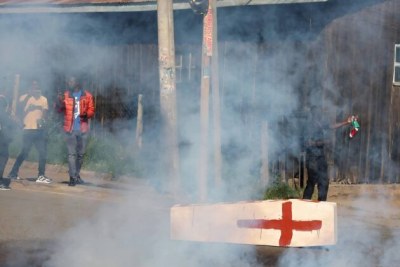
A protest against a proposed US-run Ebola quarantine and treatment facility in Nanyuki, Kenya, turned deadly after clashes between police and demonstrators left one person dead and at least 19 others arrested. Human rights groups, including the Kenya Human Rights Commission (KHRC) and Vocal Africa, accused police of using excessive force, including live ammunition, against largely unarmed protesters and journalists
Read more »
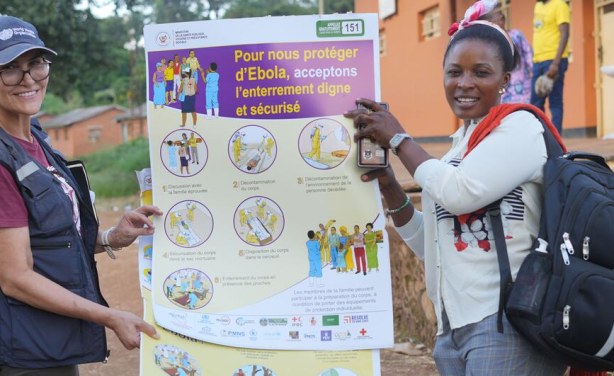
WHO has conducted field visits to Nyankunde, Ituri, to intensify the response to the Ebola outbreak in DR Congo.