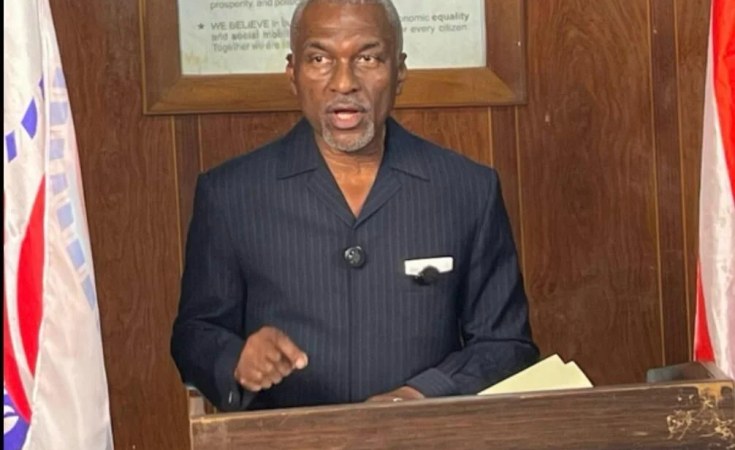
As a clinician rather than a member of security personnel, I want to focus this article on what the UP-led government can do from a clinician perspective to regain public and international confidence, demonstrating their commitment to de-escalating the drug situation in Mama Liberia and as it relates to the 19-million-dollar drug saga. There has been complete silence regarding the therapeutic aspects of drug treatment throughout this 19-million-dollar drug bust saga.
From a clinical perspective, the UP-led Government should now begin assembling a team of International Certification and Reciprocity Consortium (IC&RC)-licensed professionals who are clinically trained in co-occurring counseling or substance use disorder treatment to strategize on how to support individuals addicted to drugs in the context of the 19-million-dollar drug saga, thereby gaining public and international trust. The assembly of these credible professionals will help build public and international confidence, indicating their readiness to proceed and assist people who are addicted to drugs. These clinicians will strategize to disseminate information at the 0.5 level of care, aiming to discourage both drug use and drug dealing by slowing down the drug market.
On July 2nd, the President of Liberia, Joseph Nyuma Boakai, had a cabinet ministers meeting and constituted a committee to look into the situation of the 19-million-dollar drugs saga. I did not hear the clinician's name or the composition of the team of clinicians addressing the substance users' situation in Liberia. I have yet to hear about the significant role of clinicians in Liberia's drug saga, which would be a significant advancement.
Keep up with the latest headlines on WhatsApp | LinkedIn
This article explores how the involvement of clinicians can enhance public and international trust in the UP-led government. It draws on my experiences as a clinician in U.S. jails, research hospitals, and county mental health clinics. Currently, I serve as a clinical programmer and clinician at the Scott County Mental Health Center in Minnesota. When addressing drug use or drug busts in the U.S., counties or individuals typically begin by establishing rehabilitation centers or identifying treatment facilities, viewing security measures as a temporary solution. Since the 19-million-dollar drug crisis in Liberia, discussions have predominantly focused on security forces, with no concrete proposals for involving clinicians. Relying solely on security measures, a transitional approach, is both unjust and temporary, and it fails to significantly contribute to reducing drug use in Liberia.
The essence of having a standardized clinical treatment system for Substance Use Disorder (SUD) in a developing country like Liberia (or a "third-world" country) is to ensure that every person with SUD has access to safe, effective, equitable, and evidence-based care regardless of where they seek treatment. Standardization of treatment centers helps transform substance use disorder treatment from inconsistent, opinion-based practice into a professional evidence-based mental healthcare service.
The ASAM Criteria, 4th edition: Treatment Criteria for Addictive, Substance-Related, and Co-occurring Conditions, which I often refer to as the drug addiction bible, lists four types of drug addiction and outlines four levels of care: "Level 1: Outpatient Treatment, level 2: Intensive outpatient/High-Intensity Outpatient Treatment, level 3: Residential Treatment, and level 4: Medically Managed Inpatient Treatment" (American Society of Addiction Medicine, 2023). The team of licensed drug addiction professionals will be able to establish standardized clinics in various counties to help de-escalate the drug abuse situation that is contributing to the growth of the drug market in Liberia. Such efforts will redirect the focus of both Liberians and the international community away from the 19-million-dollar drug saga towards clinical solutions.
The DSM-5-TR is a concise and comprehensive guide to psychiatric diagnosis based on the DSM-5-TR Desk Reference, which I consider the handbook for the psychiatrist's bible layout, as mentioned: "A problematic pattern of use that leads to significant impairment or distress, which involves at least 2 of 11 symptoms" (DSM-5-TR Desk Reference 2024). Again, the team of drug addiction professionals will use these tools, along with many others, to accurately diagnose individuals who are addicted to drugs and ensure they receive appropriate placement, as mentioned above, in accordance with the comprehensive assessment.
Liberia can learn from North Dakota's drug prevention approach that relies on data-driven, evidence-based environmental strategies in the dissemination of drug addiction information from every facet of the political leadership in their state. Alternatively, Liberia could establish a system similar to Minnesota's Drug and Alcohol Abuse Normative Evaluation System (DAANES), which would foster a sense of evidence-based treatment for our beloved country. Well-trained licensed clinicians can engage in these research-based works to assist the UP-led government in regaining its respect in the public space, particularly within the international community. This demonstrates the government's commitment to de-escalating the 19-million-dollar drug stage and taking appropriate clinical steps.
I must acknowledge that establishing standardized clinics and implementing these initiatives will require significant funding and effort, which often discourages third-world countries from engaging professionals. However, this investment will create excellent clinics to help young people recover from drug addiction, ultimately improving them as citizens and contributing to Liberia's workforce. A standardized clinic will move drug users from ordinary citizens to people who are contributing to the country of Liberia. With the right licensed professionals, Liberia can engage in strategic planning to generate revenue for the standardized clinics.
Regaining the image of the UP-led government concerning this 19-million-dollar drug saga will position them as leaders in the healing process within the Mano River Union (MRU), offering hope to those affected by drug use and to individuals who have lost optimism and become liabilities in their communities and across the country. Reducing this number of drug users will be a significant achievement for the UP-led government. This moment is not a time for politics; instead, it requires the willpower to serve a community in need of help, along with a government that is committed to supporting that effort and willing to serve that community. Therefore, the security process cannot better do this job without having licensed professionals who are well-experienced in dealing with such situations.
I want to emphasize that this article does not aim to diminish the importance of the security sector in Liberia in relation to the 19-million-dollar drug saga; rather, I am highlighting the 19-million-dollar drug saga while pointing out that this situation should be approached holistically from the beginning, as the security process is transitional. As I often tell my clientele, recovery is not a destination but a continuous lifestyle, often characterized by what I refer to as meandering sanctification. Due to the unpredictable nature of life, we need to provide our clients with the appropriate tools that will help them develop healthy coping skills for managing triggers and cravings and recognize the warning signs that can lead to relapses.
I want to conclude this article with the 0.5 level of care, which is crucial and can be implemented by anyone (including religious leaders) under the supervision of a licensed professional in substance use disorder. This level is the beginning of a clinical approach that will be very beneficial to our country. I am highlighting it again at this point in my closing because when we hear about drug addiction in Liberia, the initial response is often inpatient rehabilitation. It is not everyone who needs to go inpatient. Having the right placement calls for the comprehensive assessment that I talked about in my previous article and on Facebook. Another approach that is cheaper is the establishment of what I will call "Certify County Behavioral Health Clinic (CCBHC)." I will discuss the CCBHC more in my next article, by the grace of God.

Sign up for free AllAfrica Newsletters
Get the latest in African news delivered straight to your inbox
It is my hope, my prayers, and my all that there will be a healing place for people who are suffering with substance use disorder in Liberia.
About the Author:
Mr. Henry N. Scere, II is the award-winning substance use disorder counselor of the year 2025 in the State of Minnesota. He is a graduate of the Gbarnga School of Theology in Liberia and J. J. Roberts Educational Foundation Scholar. He holds two master's degrees and is a doctoral student at Bethel University in Minnesota. He is a Licensed Alcohol and Drug Counselor in the State of Minnesota. He is the Programming Clinician of the Alcohol and Drug Program of the Scott County Mental Health Center. Mr. Scere has presented at the Minnesota Counseling Association's annual conference, as well as at the spring and annual conferences of the Minnesota Association of Resources for Recovery and Chemical Health (MARRCH). His areas of interest in substance use disorder are relapse prevention, the impact of spirituality in the recovery process and managing relationships during recovery. Mr. Scere is an ordained minister of the Gospel with a passion for spirituality in recovery. This author can be reached for consultation at henryscere@yahoo.com; Phone #7636399964.

