Khartoum — Over the past two weeks, Washington has suffered a series of humiliating diplomatic defeats in its effort to force Sudanese authorities into a ceasefire deal they were not prepared to sign and that conditions on the ground did not support.
Since the summer, Sudan's army has strung together a steady stream of tactical victories , essentially shutting down a threatening new front in Blue Nile state, along the border with Ethiopia, and pushing back the Rapid Support Forces (RSF) in North Kordofan, the region that links the capital to the vast expanse of Darfur.
These wins position the army to try to retake Darfur, force the RSF out of its heartland and make a credible case to the Sudanese people and the international community that reunification of the country is possible. These evolving battlefield realities make signing a ceasefire deal now premature at best and a strategic blunder at worst.
Follow us on WhatsApp | LinkedIn for the latest headlines
Washington's campaign to expand the UN arms embargo beyond Darfur to the entire country was ill-planned and poorly executed. From the start, it stood no chance of securing the necessary votes, and it failed to win over a single African member of the Security Council.
Even after intense U.S. lobbying - which included an op-ed by Mike Waltz, the president's ambassador to the UN, and Massad Boulos, his senior adviser for Africa and Arab affairs - the effort fell flat, forcing an ignominious withdrawal of the resolution and the submission of a 60-day technical rollover of the existing embargo after the first 30-day extension expired.
The rollover itself is a climb-down from Washington's earlier insistence that a long-term rollover of the embargo "is not an option". Evidently, what is an option is a series of short-term rollovers - a distinction without a difference. It is a low point in the history of U.S. diplomacy in Sudan, laying bare the weakness of non-career diplomats who believe they can still marshal the power of the United States at the United Nations even as the president they represent turns his back on the world body.
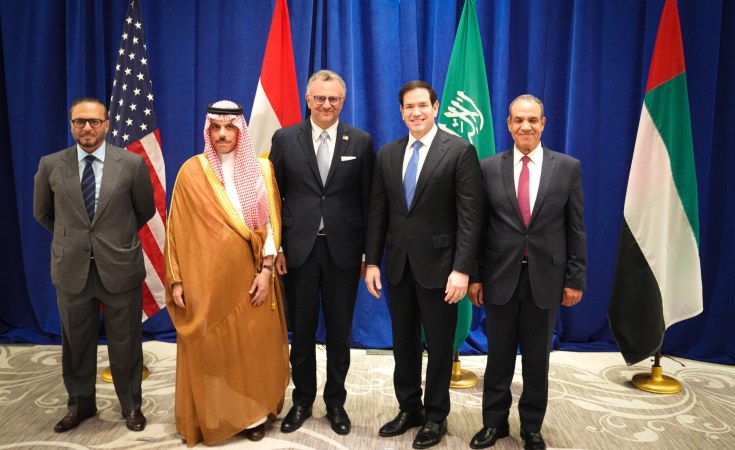
The failed effort to pressure the Sudanese military commander, General Abdel Fattah al-Burhan, to agree to a ceasefire by withholding a visa and blocking his attendance at last month's high-level UN General Assembly session further demonstrates how poorly current U.S. policy is being conceived and carried out. That the U.S. was surprised the move was seen as punitive and therefore counterproductive only underscores the administration's inexperience and naïveté. The move drew criticism from Washington's diplomatic partners, including Egypt, Saudi Arabia and the United Arab Emirates, which - along with the United States - make up the Quad, the diplomatic grouping formed to broker a peace agreement.
The ensuing backlash - public from Saudi Arabia , private from many others - called into question the value and purpose of the Quad and delivered another blow to the U.S. approach. If the U.S. administration cannot lead at the Security Council and cannot bring its closest partners along, then we are seeing the unintended (or perhaps intended) consequences of an America First foreign policy.
This breakdown in the international consensus on what should happen in Sudan, and how to achieve it, ultimately benefits only those the administration is seeking to pressure and hurts those most in need of help.
The Trump team's public messaging has been no steadier. On September 15, Boulos told an audience in Dubai there was "no future" in Sudan for either Burhan or the RSF's Mohamed Hamdan Dagalo. A week later, the State Department declared that neither man represented legitimate, constitutional governance. Yet on October 5, Boulos posted that it had been his "pleasure" to attend a luncheon hosted by Egypt's President Sisi "alongside General Abdel Fattah al-Burhan, Chairman of Sudan's Transitional Sovereignty Council." That is the very title Washington had just told the world it did not recognize. The wording was artful: "alongside" stopped short of claiming a meeting, but the encounter was portrayed as one in news stories and on social media, and Washington did nothing to dispel that impression.
Boulos's post made no mention of the 90-day truce the administration had tried to force on Burhan by withholding his visa only two weeks earlier, offering only a vague call for a "Sudanese-owned and Sudanese-led national dialogue." Burhan got the message, rejecting negotiations with the RSF and vowing "to liberate every inch of the homeland."
The rhetorical whiplash over the Sovereignty Council's standing, the willingness to let a lunch pass as diplomatic progress, the quiet abandonment of the truce demand and the tactical retreat at the Security Council all point to the same conclusion: Washington is struggling to find its strategic footing on Sudan.
Time to Change Course
But it is not too late to change direction. The administration would do well to take several immediate steps.
First, U.S. officials should undertake a listening tour of Riyadh, Ankara and Doha (having already heard from Cairo) and try to rebuild trust with Khartoum's closest supporters. If their concerns go unheard, these capitals may, collectively or individually, develop their own approach to Sudan that could well be at odds with U.S. policy — or, worse, exclude Washington altogether.
A reset of Washington's diplomatic agenda would position the United States to again lead international efforts to end the world's most devastating conflict.
Second, U.S. officials should travel to Khartoum . It is inexcusable and incomprehensible that, since the start of the war, U.S. envoys have spent a grand total of four hours in the country, during a single visit in November 2024, and that no envoy from the current administration has visited.

Sign up for free AllAfrica Newsletters
Get the latest in African news delivered straight to your inbox
Third, officials should meet with Sudan's military and civilian leaders — not for their benefit, but for ours. They should also reach out to politicians, NGOs and citizens affected by the war. Sit in their homes; drink tea; drive the streets; absorb the destruction — and try to understand the country and the people we claim to be working for.
None of this is likely to unlock a ceasefire or give President Trump the announcement he and his lieutenants desperately want: a new peace deal in Africa. But it would reset Washington's diplomatic agenda and deepen U.S. understanding of a complicated conflict and an even more complicated diplomatic landscape.
It might also begin to restore some of the credibility Washington has lost in Sudan and position the United States to again lead international efforts to end the world's most devastating conflict.
Cameron Hudson is a former Director of African Affairs at the U.S. National Security Council and former Chief of Staff to consecutive U.S. Special Envoys for Sudan. He is an independent political analyst and consultant on African peace, security, and governance.
