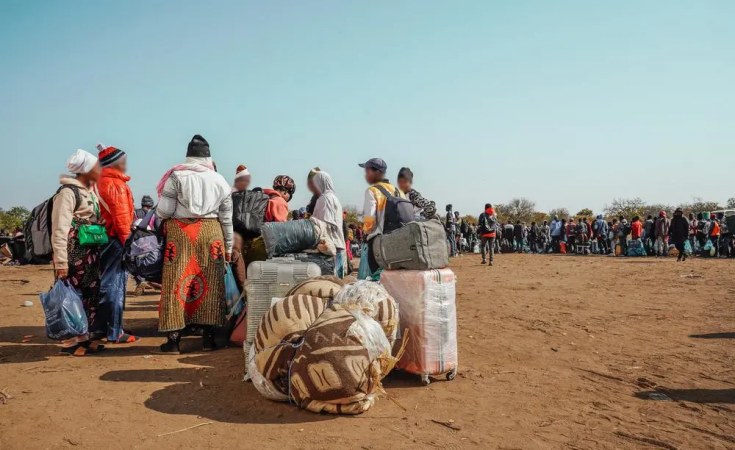
Anti-migration sentiment and violence continue to be a growing concern in countries such as the United Kingdom and South Africa, where hostility towards migrants, refugees and asylum seekers has resulted in fear, discrimination and insecurity. The two countries have very different political and social contexts, but the consequences are strikingly similar. Migrants face dangers to their safety, interruptions to their livelihoods and growing obstacles to essential services.
In South Africa, anti-migrant protests have erupted countrywide, resulting in deaths, property destruction and displacement. Tens of thousands of people have been left in fear for their lives and livelihoods. However, hostility towards foreign nationals is not new. Since 2008, hostility towards African migrants has erupted in repeated waves of violence, which the government has treated as isolated incidents rather than a systemic social problem.
Hostility is most often directed at African and Asian foreign nationals, including people from Zimbabwe, Mozambique, Malawi, Nigeria, Ethiopia, Somalia and Ghana.
In the United Kingdom, public debate frequently centers on asylum seekers. Asylum seekers, particularly those who arrive by boat across the English Channel, have become a target of public outrage and political debate, often given the context of claims that they are placing an unfair burden on public services and the economy. Online narratives have portrayed them as "invading" the country, abusing welfare, or representing a criminal threat.
Keep up with the latest headlines on WhatsApp | LinkedIn
In both countries, migrants and asylum seekers are blamed for unemployment, crime and pressure on public services. These claims often outrun the evidence.
These parallel experiences formed the focus of a webinar hosted by Médecins Sans Frontières (MSF). The discussion brought together insights from MSF teams working in both contexts to examine how anti-migration sentiment translates into violence, exclusion and barriers to healthcare, and what these experiences reveal about the treatment and protection of people on the move.
Growing hostility towards migrants and asylum seekers reflects a wider shift towards nationalism and increasingly restrictive views about who belongs in a country, said Candice Sehoma, Senior Advocacy Manager, MSF Southern Africa and the moderator.
"We are witnessing countries increasingly turning inward, drawing harder boundaries around who belongs and who does not," she said. She described the situation as part of a global climate marked by growing nationalism, hostility and aggression towards people perceived as outsiders.
Sehoma said that South Africa recently experienced a wave of anti-migrant violence and intimidation in the lead-up to a deadline set by anti-migrant groups, which demanded that all undocumented migrants leave by 30 June, 2026. The deadline sparked nationwide protests targeting foreign-owned businesses, as well as door-to-door harassment of people in their homes. In the UK, she said, migration is becoming an issue of national interest. Since 2025, anti-migrant demonstrations have been taking place around the country, with them reportedly increasing in 2026.
Migration has been an increasingly contentious national issue.
However, the consequences extend beyond protests, discrimination and physical attacks.
She said that exclusion and hostility do not end with violence, discrimination or social marginalisation. They have very real consequences for people's health and access to care. "When people are targeted, criminalised or made to feel unwelcome, they may face additional barriers to accessing essential health services, including delaying or avoiding healthcare altogether for fear of discrimination," she said.
Sehoma said that these experiences compound the existing health challenges faced by people on the move.
The human cost of increasingly dangerous migration routes
Fouzia Bara, MSF's Head of Migration Task Force, said migration should not be viewed solely through the lens of border security and political debate, arguing that greater attention must be paid to the human cost of migration policies and the dangers people face along their journeys.
Bara is a senior humanitarian strategist and health advisor with over 20 years of field experience leading complex medical and emergency operations across conflict zones and migration corridors. She oversees MSF's response along the Atlantic migration route and the France-UK corridor, two of the most volatile and politically sensitive migration contexts in Europe and Africa.
"Migration is not something new. It's a natural phenomenon," said Bara.
She said that people move for various reasons, including conflict, persecution, climate change, and economic insecurity, as well as the search for better opportunities. She cited global displacement figures of approximately 117.8 million people, pointing out that most displaced people remain within or close to their countries of origin. Contrary to common perceptions in Europe, she said, only about four to five percent of displaced people reach the continent, while many others remain in transit countries or neighbouring states.
Conflict and persecution remain among the main drivers, but Bara said people are also moving because of climate change, economic insecurity, and the hope of a better life abroad.
"I've met many, many migrants in different countries, and they never ever have been happy to leave their country, their family, their habits, their culture, but it was a necessity for different reasons," she said.
However, the journeys undertaken by those seeking safety and better opportunities are becoming increasingly dangerous. Bara said MSF teams were witnessing growing levels of violence, exploitation, and physical and psychological harm along migration routes.
She attributed some of these dangers to increasingly restrictive migration and border policies, particularly in Europe, which have forced people to take longer and more perilous routes rather than preventing them from migrating. "Those policies, securitisation of European countries for different migration policies, do not prevent people from leaving. People are still leaving their countries when they have to leave," she said.
In addition, the longer routes are exposing migrants to shipwrecks, human trafficking, smuggling, abuse and exploitation.
She also described the harm caused by pushbacks and detention, where people are held in facilities with no accountability for how they are treated physically and mentally. Detention, she said, is increasingly a trend.
Bara highlighted the dangers along the Atlantic migration route, where people travelling from West Africa towards Spain's Canary Islands can cover approximately 2,400 kilometres by sea. She described cases of survivors suffering burns and hypothermia, including one group whose boat remained at sea for 23 days. "When we supported the people who survived these 23 days, it was terrible. Even our staff got really emotionally disturbed by the situation of migrants, physically and mentally," she said.
Violence, she added, does not end when migrants reach their destinations. People also face institutional violence, rejection and xenophobia in countries of arrival, including in Europe, where they may encounter additional barriers to healthcare and other support.
She highlighted the importance of providing mental healthcare to migrants who have reached safer destinations but continue to experience the psychological effects of violence and trauma.
MSF is supposed to treat people who are sick, she said, but in this context it is treating people who left their country in good health, in good condition, and have been damaged on the way. Migrants, she said, are becoming more vulnerable and more sick, which makes supporting them essential.
UK asylum policies and anti-migrant hostility deepen mental health crisis
Ghita Benjelloun, MSF UK's Migration Programme Manager, described an increasingly hostile environment for migrants and asylum seekers, pointing to restrictive immigration policies, far-right demonstrations and growing anti-migrant sentiment.
Benjelloun has worked in the Central African Republic, the Democratic Republic of Congo, South Sudan, Syria, Haiti, Yemen and India, as well as on MSF's search and rescue project in the Mediterranean Sea. Her experience spans internally displaced people, people on the move, and refugees and asylum seekers in host countries. She presented the UK context, covering policy, the rise in hostility, and MSF's work with asylum seekers and refugees.
"Migration is a journey of violence"
"Unfortunately, migration is a journey of violence," she said, and that violence takes many forms, including institutional ones. The UK, she said, remains a major destination for asylum seekers and refugees. In the year ending June 2026, just under 90,000 people arrived. About 60% were men, and the rest included women and unaccompanied minors. Roughly 28,000 arrived by irregular routes, most of them crossing the Channel from northern France in small boats. The main nationalities among those arriving included Somalis, Sudanese, Eritreans, Iranians and Afghans.
Benjelloun said the past two decades have seen increasingly restrictive migration policies. This has made it increasingly difficult for people to seek protection through safe and legal routes. Asylum seekers must be physically present in the UK to claim asylum. As a result, many have little choice but to undertake dangerous journeys, during which they risk trafficking and exploitation.
She also pointed to changes to family reunification arrangements and growing uncertainty around refugee status.
Family reunification, which was available until recently, is no longer possible. The refugee status was given for a longer period, for 10 years, then they reduced it to five, and now it's two and a half years. The latest measure, known as earned settlement, ties the duration of a person's status to how much they earn. Together, she argued, these policies have a heavy toll on mental health. "There is no more feeling of settlement, and there is no more family network, which is very important for people's recovery," she said.
Benjelloun described a "huge rise" in anti-migrant sentiment and far-right protest.
Since February 2025, there have been 69 recorded protests across the country, ranging from a few hundred people to thousands. Last year, a protest in London drew more than 10,000. The riots, she said, have recurred every summer for the past three years, and they point to a significant spread of racism and misinformation about migration.
A study by Asylum Matters and Praxis, covering more than 200 charities and organisations that support migrants, found that 47% of staff had experienced threats and harassment. Benjelloun said protests take place outside asylum accommodation, including a weekly Friday demonstration in front of a hotel where MSF works. Rescue crews have also been targeted. The Royal National Lifeboat Institution (RNLI), the British search and rescue charity that picks up people crossing the Channel, has been threatened and at times attacked.
MSF began its migration work in the UK in 2023, initially partnering with Médecins du Monde (Doctors of the World) to provide mobile healthcare services at Wethersfield, a former military site used to accommodate asylum seekers. The organisation's teams found a serious mental health crisis among residents, with 62% of patients experiencing severe psychological distress and 30% reporting suicidal thoughts. The site itself, she said, was a source of distress for the men held there.
MSF has since shifted its model.
Since July 2025, it has run a mental health service in Birmingham focused on post-traumatic stress disorder (PTSD) among asylum seekers and refugees. Benjelloun said that the focus reflects the violence people endure in their home countries, on the journey and after arrival. She said PTSD prevalence in this population is about 31%, five times that of the local population. The service has delivered more than 1,000 consultations. 88% of service users have been victims of violence, and 13% experienced violence in the UK itself. 63% have been suicidal at some point, and 23% are survivors of torture.
"This just gives you the level of violence that migrants have been through," she said.
"We are advocating for safe routes, for opening of safe routes, and a compassionate and fair asylum system," said Benjelloun. She added that the organisation is also advocating for improved access to appropriate mental healthcare and greater protection for young people whose ages are disputed. She warned against placing them in adult accommodation where they could face exploitation.
Xenophobic violence threatens access to healthcare in South Africa
In South Africa, anti-migrant hostility has increasingly extended beyond protests and intimidation, with organised groups targeting foreign nationals and attempting to prevent them from accessing public services, including healthcare, according to Khanyisa Mapipa, Head of Health at public interest law centre SECTION27.
Mapipa, a human rights lawyer who has litigated several cases involving access to healthcare, traced the country's recurring waves of xenophobic violence back to 2008, when South Africa experienced its first nationwide attacks against foreign nationals.
The violence claimed 62 lives, including South Africans and foreign nationals. It left approximately 1,700 people injured and displaced around 100,000 others. The government deployed the South African Defence Force to restore calm, while civil society organisations ran relief efforts for displaced people, many of whom fled to neighbouring countries.
A second wave followed in 2015. Eight deaths were documented, hundreds of people were injured, and thousands were displaced. The government condemned the violence and set up an inter-ministerial committee and launched social cohesion efforts. A further wave of anti-migrant mobilisation emerged in 2021, involving organised groups such as Operation Dudula, which expanded into vigilante raids and harassment of foreign nationals and into blocking them from jobs, healthcare and public services. Mapipa said 354 deaths were recorded in this period.
However, she cautioned that it "coincided with unrest over our former president Jacob Zuma's imprisonment, so it was difficult to attach a motive behind the killings."
More recently, anti-migrant mobilisation intensified during 2025 and 2026, with groups including March on March and Put South Africa First issuing demands for undocumented migrants to leave the country. The groups entered workplaces without police authorisation or any legal mandate, blocked services, and demanded people's documents, "all in the name of trying to rid the country of illegal migration." On the deadline day, there were about 120 anti-migrant protests around the country.
Mapipa said that these groups often failed to distinguish between documented and undocumented migrants, with both groups facing intimidation and exclusion from basic services.
"There's seemingly no distinction between documented and undocumented migrants, as we've seen instances of both documented and undocumented people being denied access to basic healthcare services, education, and other public services," she said.
Mapipa said the violence had also contributed to the departure of thousands of people who fled the country. Some African governments began repatriating their citizens. At least 100,000 people were repatriated between July and November 2026. This included 90,000 voluntary returns and 10,000 deportations. She identified high unemployment, economic pressures and disputes surrounding immigration and asylum policies as factors contributing to xenophobic hostility. Such attacks, she said, often intensify when communities are experiencing economic hardship and looking for someone to blame.
What the law says
Mapipa said that South Africa's Constitution guarantees access to healthcare for everyone within the country's borders, regardless of nationality or immigration status.
Section 27(1) provides that everyone has the right of access to healthcare services, including reproductive healthcare. Section 4 of the National Health Act, which flows from that provision, entitles pregnant women, breastfeeding mothers and children under six to free services at public health establishments, "irrespective of documentation status or nationality." Primary healthcare is free for all, and the only exclusion for non-citizens in the Act is organ transplants, which section 61(3) denies to non-residents.
She highlighted a legal victory secured by SECTION27 against the Gauteng Department of Health in 2023, after migrant pregnant women and mothers were being charged for services that should have been provided free of charge. The organisation challenged a patient classification policy that required some foreign nationals to pay substantial fees, effectively preventing vulnerable women and children from accessing essential care.
As a result of the case, Gauteng changed its policy manual. Documented asylum seekers and refugees are now means-tested in the same way as South Africans, meaning hospital administrators assess whether they can contribute to the cost of their care. Services for pregnant and breastfeeding women and for children under six have been confirmed as free.
Despite these legal protections, Mapipa said anti-migrant groups continued to interfere with access to healthcare facilities, prompting further legal action.
In October 2025, with anti-migrant protests escalating, SECTION27 initiated legal proceedings on behalf of MSF and the Treatment Action Campaign (TAC) against the Gauteng Department of Health, the City of Johannesburg and others. The case was against the government for not restoring calm at health facilities where anti-migrant groups were standing outside and preventing people from entering. In December 2025, the court ordered the Department of Health and the City of Johannesburg to come up with a plan to ensure that patients could access facilities and receive care.
The case has moved into its second phase, which seeks to extend the plan across the province.
Mapipa warned that preventing migrants from accessing healthcare has serious consequences, particularly for people requiring continuous treatment for chronic and communicable diseases.
SECTION27's observations included patients missing medication for HIV and tuberculosis, as well as disruptions to sexual and reproductive health services, antenatal care and screening for sexually transmitted infections.
She warned that the consequences would go beyond those targeted, and could endanger the public health of whole communities. Mapipa said that interruptions to HIV and TB treatment, routine screening and childhood vaccinations could have wider implications for disease prevention and control. "When these services are disrupted, they don't only impact the individual who is facing intimidation at the facility, the migrant person or the undocumented person, which includes South Africans... They don't only impact those people, but they also threaten the health of the country," she said.
To prevent patients from going without essential medication during the June 2026 disruptions, MSF, TAC and Wits RHI worked with government district health offices to establish an emergency system that enabled people to continue receiving HIV, TB and other chronic medication. The aim was to prevent an outbreak or epidemic caused by people going without treatment.
"These kinds of efforts, while commendable, do place a significant strain on public health facilities and public health provision, because now the government has to then cater for people in a parallel fashion, as opposed to them going through the system," she said.
Not a new problem, but a new level of organisation
While legal action helped reduce the physical blockades of healthcare facilities in South Africa, anti-migrant intimidation and fear continued to prevent many foreign nationals from seeking medical attention, said Claire Waterhouse, MSF Southern Africa's Director of Advocacy and Analysis.
Waterhouse said MSF had witnessed several outbreaks of anti-migrant hostility during its more than 25 years of working in South Africa. What changed in June 2025, she said, was that anti-migrant groups began blocking access to public clinics in a far more organised way than before. Earlier incidents were sporadic and isolated, such as a blockade of Kalafong Hospital in 2022, but previous incidents had never been on this scale or so organised.
MSF conducted an assessment in August 2025, visiting 15 healthcare facilities in Gauteng, after reports of patients being turned away from treatment. Its teams directly witnessed patients being turned away at more than half of the facilities visited. The organisation also visited or called more than 50 patients who confirmed they had been turned away from over 24 primary healthcare facilities across Gauteng.
Among those most affected were women in the late stages of pregnancy and people living with HIV and other chronic conditions. She said that it was "worrying and disturbing" that healthcare workers and facility security guards were sometimes part of the turning away.
Waterhouse said MSF teams were forced on several occasions to help women already in labour find safe facilities where they could deliver their babies.
Midwives, nurses and doctors set up a WhatsApp group for pregnant women, she said. MSF referred every pregnant woman who contacted it to the group for advice on where to deliver safely or how to deal with antenatal problems. It was, she said, "a huge support to pregnant women who were really afraid." She described it as one of many examples of communities, medical professionals and small organisations working together.
MSF became an applicant in the court case on clinic blockades, and the December 2025 judgment ordered immediate action to end the obstruction of health facilities. Part B of the case is still under way. Physical blockages decreased after the judgment, Waterhouse said, but many patients remained too frightened and traumatised to try again.

Sign up for free AllAfrica Newsletters
Get the latest in African news delivered straight to your inbox
She said some patients remained traumatised by their previous experiences and were too frightened to return to clinics. Others encountered incorrect healthcare charges that further discouraged them from accessing services. The situation deteriorated further in the lead-up to June 30, 2026, when anti-migrant groups imposed a deadline demanding that migrants leave the country. Waterhouse said MSF witnessed threats, intimidation, and violence across several provinces, including the Western Cape, KwaZulu-Natal, Gauteng and Musina.
Many left without their belongings, and some travelled injured or in precarious medical condition.
"We saw more times than I can count mothers with babies that were under one or two weeks old. I think three times we saw mothers who had had caesarean sections to deliver their babies within the last three or four days and were then also having to travel with their things, with other children, with this newborn and in incredible pain as a result of that surgery," she said.
The displacement created an urgent humanitarian crisis.
People gathered at several large sites across the country as they tried to reach embassies and consulates for documentation or to catch buses. Waterhouse said conditions were harsh, particularly during the winter months, with inadequate shelter, insufficient food and cooking facilities, limited access to clean water and too few toilets, washing facilities and blankets. Overcrowding and minimal protection measures were also major concerns, especially at sites where many children were staying alongside unrelated adults.
Many had gone months without healthcare or mental health support despite experiencing violence, intimidation and significant emotional distress. MSF teams provided medical assistance at several locations. The organization saw between 400 and 500 patients a week at the peak of the response in July and August.
The most common problems were respiratory infections, gastrointestinal illness, hypertension, diabetes, HIV and TB, along with injuries from violence, sometimes at the hands of anti-migrant groups, communities or, in some cases, authorities. Others had injuries from the journey itself. "I cannot overstate how high the levels of emotional distress and trauma were," she said.
Many patients had avoided healthcare facilities for months, and some had stopped taking medication for chronic conditions because they feared being turned away or attacked.
Patients with HIV or TB had defaulted on treatment or were close to doing so. That caused them great distress, and it carries a high risk of drug resistance, worsening illness and in some cases death. Waterhouse said the mental health effects will have long-term consequences, particularly for children, who showed "a lot of fear, a lot of paranoia, a lot of uncertainty about who they could trust."
Many families were separated on the journey, and children spoke to MSF psychologists about their worry of finding each other again.
Lack of water and sanitation can turn minor ailments serious quickly, she said. A small cut without clean water to wash it can become infected, and a child with mild diarrhoea who lacks clean water can quickly become dehydrated. These problems, she said, affect public health as well as individual health, "which is why we all need to be concerned about them."
In response, MSF launched an emergency intervention in South Africa and Zimbabwe following the June 30 deadline, focusing on primary healthcare, continuity of treatment for chronic conditions, mental health support and assistance to vulnerable groups.
In South Africa, teams gave brief support in Cape Town at the start, ran mobile clinics at several displacement sites in Johannesburg, and worked at the large Musina repatriation site until it scaled down and closed in mid-August. In Zimbabwe, MSF has worked at the Beitbridge reception centre and expanded to the Nyamapanda border post with Mozambique after realising how long and severe people's journeys were. Many arrived at Nyamapanda hungry and sick, having gone weeks without shelter, meals or healthcare.
Across these sites, MSF has provided primary healthcare, individual and group counselling, play therapy for children, referrals with MSF or community escorts where needed, treatment for chronic disease, dignity packs with items such as sanitary pads and soap where possible, and water and sanitation support or advice in specific situations.
What MSF is calling for
The problem has not stopped, Waterhouse said. Things are "a little bit quieter" in South Africa now, but MSF continues to receive concerning reports about access to care and about anti-migrant intimidation, violence and threats.
"MSF condemns anti-migrant violence in South Africa and across the world, and the South African government and other relevant actors need to work urgently to actively protect the right to access healthcare for all people who are in South Africa," she said.
She also called on authorities to ensure that migrants leaving South Africa could do so with dignity, adequate humanitarian assistance and access to healthcare. Countries receiving returning migrants, she added, must make arrangements to integrate them into their healthcare systems, particularly pregnant women, children and people living with chronic conditions. People leaving South Africa with chronic conditions should be given an adequate supply of medication such as antiretroviral therapy, she said, to maintain continuity of care and reduce the risk of defaulting or drug resistance, which is "a public health risk as well as an individual risk."
