

Monrovia — "Before the War" is a phrase woven into the very fabric of Liberian life, repeated countless times as a way to define how far the country has fallen and its infrastructure effectively destroyed as a result of its traumatic 14-year civil war. The economic, education and social sectors were all terribly battered. But perhaps no sector was more badly hit than agriculture and it mirrors both the country's problems and its vast potential for advancing production and processing as well as reducing poverty.
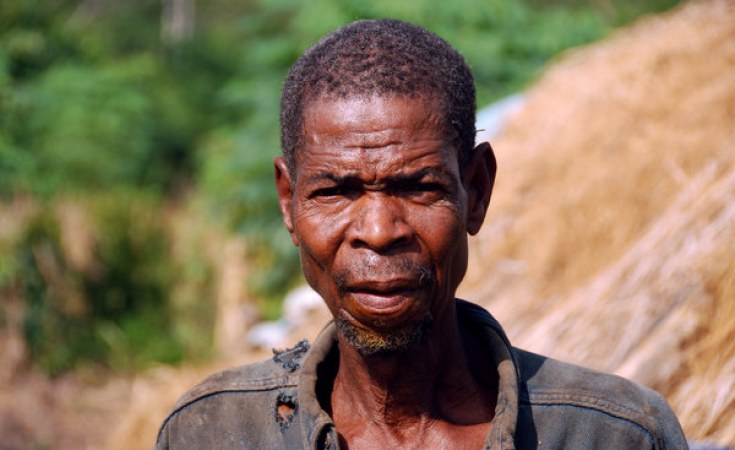
Before the war, Lincoln Yeneken and his family lived in Zolowee, a village in northern Liberia's Nimba County, one of the country's breadbasket regions. He became a subsistence farmer in the tradition of his father and grandfather, growing food to keep the family alive. Life was peaceful and predictable in the lush green rolling hills on the outer flanks of Sanniquellie, Nimba's provincial capital, about 300 miles north of Monrovia and just a stone's throw from the Guinean border.
Every Liberian has a war story to tell. "There were six houses in our compound in the village," says Yeneken. "Then the war came and broke everything down. My father took us to Guinea. He died there."
But Liberians, Yeneken among them, are also resilient. "I've been back for three years," he adds. "When I came back, there was nothing.
Keep up with the latest headlines on WhatsApp | LinkedIn
"I began by making a small garden with rice, plantain, cassava, and eddoes," he says as he shows off his modest but productive fields, where his wife is harvesting rice. "I'm only planting for the family to eat." He also catches fish in the nearby stream and sets traps for bush meat which he sells.
He and his wife have seven children. He proudly says that his school age children are all in school, which would have been unlikely a few years ago.
Like many other Liberians, Yeneken has hope in the future. "Within the next five years I would like to plant coffee and rubber but I need tools and help to rebuild," he says as he points to the frames of the simple huts and granary for the rice he is now putting up.
He faces many challenges. "The rainy season is very difficult. The only thing we can do then is tap palm and sell the wine." As of now, Yeneken and his family, like most Liberian farmers, are untouched by any program offered by NGOs or government. Because he is not totally convinced that peace will last, he is building his new compound a quarter mile off the main road, down the hill hidden among dense trees in a valley in case warfare breaks out again.
Liberia's civil war began on Boxing Day, December 26, 1989 and ended in 2003 with the departure of then-president Charles Taylor who was granted asylum by Nigeria under a peace pact that brought in a transitional government. In elections held in late 2005, Ellen Johnson-Sirleaf, a Harvard University-trained economist and former World Bank executive, was elected Liberia's and Africa's first woman president. Taylor is currently on trial for war crimes. The case is being heard in The Hague because of fears it could ignite violence if it were held in Africa.
During the war an estimated 300,000 people, or 10 percent of Liberia's three million people, were killed; nearly a million refugees left the country and many more were internally displaced. Yeneken, his family and thousands of other Liberians have returned home and are now confronted with the uphill task of rebuilding the country. They say they need all the help they can muster to start afresh.
Agriculture Must Kick Start Economy
War also took a devastating toll on the government's agriculture ministry, which is in the process of rebuilding. Agriculture Minister Chris Toe acknowledges that government depends heavily on external help in getting reconstruction plans off the ground, and that collaboration with national and international partners is critical to getting help to farmers like Yeneken who need it most.
"A number of projects are being directly implemented by donors and the NGOs—they are actually doing some of the work. We are trying to focus government's limited financial as well as human resources on those things that we believe we can do well, and that is to regulate and monitor what is happening within the agricultural sector and to coordinate activities that are going on," Toe explains. "We don't think that only the Ministry of Agriculture is going to develop agriculture."
James Logan, Deputy Agriculture Minister for Planning, adds: "From the onset the government was clear that what was needed to kick start this economy was to pay keen attention to the agriculture sector.
"Agriculture will provide the export income and the basis for taxation that the government can use to sustain development. Agriculture is very important for employment, for getting the refugees who are coming back started, for getting the internally displaced back on the farms, and for training the youth who participated in the war."
Many Liberians say fixing the roads is one key to reconstruction. Farmers like Yeneken are rightly worried that the remote areas where they live and farm, are difficult to reach on roads destroyed by war or sheer neglect.
Before the war, roads in Monrovia and those leading to the main cities were well made with asphalt. The dirt roads in the rest of the country were well maintained and usable in the dry season although impassable during the worst of the rainy season. Now, traveling anywhere in Liberia—city or upcountry—can be equally treacherous in both rainy and dry seasons.
In the rain, the roads morph into rivers of mud, then become blinding clouds of dust in the dry season. When a Liberian tells you, "the road is bad", prepare for tough punishment. In a four-wheel drive vehicle going at a slow 35k per hour, a passenger wearing a seatbelt is constantly thrown from side to side, head painfully bouncing off the car's ceiling and windows as an experienced driver carefully navigates crater-sized potholes and worn-out bridges.
Richard Tolbert, Chairman of the National Investment Commission and, as economic adviser to the President, a member of the Johnson-Sirleaf cabinet is one of the driving forces behind the government's accelerated programs.
He sees agro-industry on the horizon, but says that before it can take off the nation's basic infrastructure must be rebuilt, particularly roads to enable farmers to get their produce to market. It is the number one priority, Tolbert says.
"There is a master plan for road reconstruction for the entire country. The government has recognized the need to tackle roads first and foremost; we are working on it. If you come back in less than six months, this current dry season, I think you'll be astounded at the improvements you'll see in the roads throughout the country."
He says the equipment needed to rebuild the roads is not in the country but there is a plan to get it quickly. "We are looking at the possibility of making road construction equipment duty free immediately. The President has jumped on that, she's very proactive. She's said if that's what it will take to get more construction equipment here, she'll probably do something, maybe an executive order in the next two weeks."
An emergency road repair contract awarded to a Chinese company by the Liberian government and the World Bank, recently began its first phase for roads within Monrovia and those connecting the capital to other major cities. A second phase will repair roads in rural areas.
Promoting Commercial Farming
Before the war, most rural people depended on traditional subsistence farming and were virtually untouched by mechanized and other modern farming methods. The country came nowhere near achieving its agricultural potential. The post-war Liberian government hopes to advance an agricultural sector much more productive than it was during its best days before the war. This could mean rural development and poverty reduction for the average farmer like Yeneken.
To make that happen, the government is tackling the challenge of changing the way traditional farmers think. Lwopu Kandakai, Deputy Minister for Regional Development Research & Extension Services, explains:
"We want to take a new direction and empower farmers, to upgrade them from subsistence level to something higher by using more advanced tools that will help increase and sustain production.
"We are encouraging farmers not just to grow crops behind their home to eat, but to grow enough so they will have some to eat, some to sell and some seed for the next planting season. If we do that for the next four or five years we could get back up near 70 percent self-sufficient in food during this administration. And in order to be competitive, adding value through processing is key," Kandakai says.
When it comes to agricultural potential, Liberia is blessed with rich soil, which easily grows most tropical agricultural products. Ninety percent of the land is arable. Before the war, the economy was based on agriculture and the great majority of Liberians made their living on traditional farms, each averaging perhaps five acres in size. They concentrated on growing edible crops like rice and cassava, with some growing cash crops including rubber, coffee, cocoa and oil palms. Some grew vegetables and fruit and kept chickens, goats and sheep.
Liberia's staple is rice and today government oversees the spending of millions of U.S. dollars annually to import it to sell at about U.S. $25 per 100 lb bag. This is already changing. This year's harvest produced a surplus of rice and President Johnson-Sirleaf has suggested the government should consider a plan to buy the surplus from the farmers.
Potential for Rubber, Palm Oil Production
With six million rubber trees, Liberia has the world's oldest and largest rubber plantation, owned and operated by the Japanese and American-owned company, Firestone. According to Tolbert, rubber is the number one export commodity, accounting for 90 percent of national earnings. There are many smallholders who sell rubber to Firestone, making the industry a big employment generator as well as a major income earner for the country.
Although Liberia has produced rubber for nearly a century, it has never converted the latex into finished products. But now a Chinese company is building a huge factory on the main highway leading to Gbarnga, Bong County which plans to produce products for both the Liberian and export markets.
And the production potential for palm oil is huge. Oil palm only grows within a narrow band around the equator. With 90 percent of oil palm land in Malaysia and Indonesia already used, investors and major international companies from these countries are looking to help Liberia expand oil palm operations. The National Investment Commission is also talking to three investors who could pump in hundreds of millions of dollars to convert palm oil into bio-fuels as well as food products and cosmetics. The government is looking for the capital and the know-how to develop this sub-sector.

Sign up for free AllAfrica Newsletters
Get the latest in African news delivered straight to your inbox
Another initiative already under way is to make infrastructure development part of an investors' package. Some investors are bringing in equipment to rebuild roads and bridges and to manage Liberia's three main sea ports of Monrovia, Buchanan, and Harper. For instance, Buchanan Renewable Energies (BRE), a Canadian-based company, recently completed the rebuilding of 30km of the road between Buchanan and Kakata, two county capitals. BRE is also kick-starting the bio-fuel industry in Liberia by converting old rubber trees into chips for fuel.
The government plans tax and tariff incentives to entice the private sector into developing and sustaining agriculture. Italian investors are planning a $3 million project to develop key crops, storage and processing. In the two years since the Johnson-Sirleaf government took office, it has received hundreds of investment visitors from around the world, including China, India, Indonesia, Russia, Ukraine, and the U.S., says Tolbert.
Despite the high hopes, the government has some serious constraints.
"Even though the government is credible and there are those who want to lend it money, it is unable to borrow money because it wants to settle existing debts," Tolbert says. "I hope that most people don't still think of us as a basket case. The president's leadership has turned around the image of the country to the point that now we are a fairly popular investment destination."
Tolbert continues: "Not just image but governance is the key. We are sitting on a secret gold mine. This country is not poor. Even though it may look poor, it is very rich. We have gold, iron ore, timber, diamonds, rubber, coffee, cocoa in… an area the size of Ohio with only three million people.
"The problem has been poor management. We are demonstrating that has changed. With good governance and tax incentives, Liberia could be Africa's next investment destination."
Far away in the hills of Nimba County, one thing is for sure. Farmer Lincoln Yeneken needs help and wants help, but he is not waiting for help because as far as can see, the only help he knows is in his hands.
Noluthando Crockett-Ntonga, reporting as Phyllis Crockett, covered the White House for National Public Radio and was based in sub-Saharan Africa for more than 10 years working on development issues. She was part of the allAfrica.com team in Liberia to report on agricultural development and poverty reduction.

