Mauritania’s mining sector has become a cornerstone of national growth, accounting for nearly a fifth of the country’s GDP and close to 25% of state revenues. Iron ore, gold, copper, and uranium projects form the backbone of the economy, with the state-owned Société Nationale Industrielle et Minière (SNIM) as the leading contributor, followed by Kinross Tasiast.
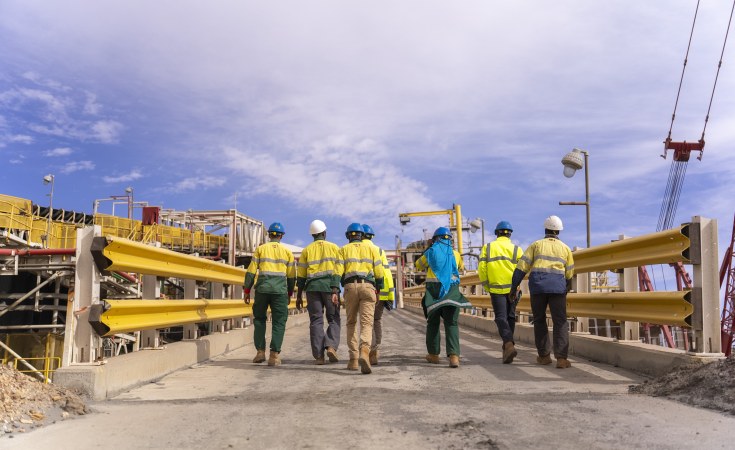
In the Inchiri region, the Tasiast gold mine has become a prominent feature of the desert landscape, emerging as one of the country’s most visible symbols of economic change. Beyond its production output, the operation has had a visible impact on employment, local supply chains, and surrounding communities, illustrating the broader role that mining now plays in Mauritania’s development.
Powering national growth
According to the IMF, economic growth is estimated to have reached 5.2% in 2024, with the mining and broader extractive sectors playing a key part. Against this backdrop, Tasiast plays a pivotal role as the largest private taxpayer and second-largest taxpayer overall. In 2024, the mine paid USD 195.9 million to the government, bringing cumulative payments since 2010 to more than USD 1.44 billion.
These revenues complement those of SNIM, the top contributor to the state budget, with the duo acting as the country’s main fiscal engine. These revenues support infrastructure, education, and health spending, playing a key role in accelerating socio-economic development across the country.
As Mauritania’s 2024 Extractive Industries Transparency Initiative (EITI) report reveals, the government’s revenue share from the Tasiast gold mine has more than doubled since 2022—rising from 15% to over 37%—on the back of strong gold prices and expanded production. Meanwhile, its share of revenues from SNIM has fallen sharply, from 79% to 58%.
Building domestic supply chains
International investors are increasingly taking note of Mauritania’s mining potential. Aura Energy is advancing its Tiris uranium project, while several smaller firms have launched gold exploration. Analysts argue that the presence of large-scale operations such as Tasiast has paved the way for this emerging interest. Locally, the mine has also stimulated entrepreneurship: between 2011 and 2024, the company spent over USD 3.1 billion with Mauritanian businesses, including USD 226 million last year.
Through its Local Business Integration Program, suppliers are trained, audited, and supported to reach internationally recognised standards. One local supplier from Inchiri described the process as “a school for Mauritanian small and medium-sized enterprises, enabling us to learn how to earn contracts with the company and capitalise on broader opportunities in industries beyond the mining sector”.
Investing where it matters most
Beyond state revenues and local procurement, Tasiast has invested more than USD 22 million in community spending since 2011, with projects ranging from schools and water infrastructure to women’s empowerment initiatives, according to Kinross’ 2024 Sustainability Report.
In 2024, Kinross established the Tasiast Fund, a new initiative which allocates USD 6 per ounce of gold produced to local development. Early projects include building 17 classrooms in Akjoujt, a market and meat processing plant in Benichab, a stadium in Chami, and an agricultural project in Boulenoir. These initiatives focus on building long-term resilience and sustainable development in the Inchiri and Nouadhibou regions, where the mine’s footprint is strongest.
Empowering Mauritanians through work and skills
In 2024, industrial mining accounted for over 16,000 jobs according to the EITI, positively impacting many more families and livelihoods across the country. Beyond iron ore, gold, copper, and gypsum, new projects are advancing in uranium, rare earth minerals, phosphates, and other strategic minerals. This growth is creating new job opportunities and skills development, areas that remain central to Mauritania’s goal of inclusive growth.
In this context, the Tasiast project illustrates how mining activity translates into employment and capacity building. With more than 4,000 direct and indirect jobs, it has grown to become the country’s largest private employer. By the end of 2024, 97.8% of Tasiast employees were Mauritanian, reflecting the implementation of the company’s Mauritanisation plan signed with the government in 2016. The plan focuses on replacing expatriates with qualified Mauritanians, building local expertise and embedding sustainable practices across operations.
Training and capacity building have become key pillars of the plan. Since 2010, the company has invested nearly USD 30 million in technical and professional training to strengthen employee skills and support career progression. In parallel, and in partnership with the Ministry of Employment, Tasiast has supported vocational training initiatives aimed at enhancing youth employability. In July 2025, Tasiast signed a new agreement with the Ministry of Vocational Training, Crafts, and Trades to provide 180 students with practical industry experience at the École de Formation Professionnelle des Travaux Publics (EETFP) in Riyadh and the École d’Enseignement Technique et de Formation Professionnelle et des Technologies de l’Information et de la Communication in Nouadhibou. This initiative builds on a training program launched in 2018, through which Tasiast partnered with the EETFP. Around USD 1 million has been invested in short courses focused on trades such as welding, mechanics, and electricity, helping participants gain access to jobs in Mauritania’s expanding industrial sector.
Another flagship example is the Apprenticeship Program. Combining classroom instruction, simulation labs, and on-the-job training, the program has become a national reference in industrial and mining skills development. Since 2011, 353 apprentices have completed the program, with more than 200 being recruited into Tasiast’s workforce.
New partnerships are further extending the impact of these initiatives. In October 2025, the company signed an MOU with Nouakchott University to link academic learning with professional practice, offering students placements across the mine’s various departments.
Together, these efforts underscore how Tasiast is not only a source of jobs but also a driver of skills transfer, talent development, and inclusive growth, equipping Mauritanians with the expertise required to sustain the country’s long-term industrial development.
Balancing mining, community and development
Tasiast’s contribution to national development underscores the growing importance of private investment in Mauritania’s economy, complementing revenues from state-owned operators such as SNIM. With new uranium, gold, and offshore gas projects advancing, the Mauritanian extractive sector is entering a phase of diversification.
In this context, Tasiast remains a key reference point as a leading contributor to the state budget and a major employer. As new investments are announced and projects enter development, the question will be whether they can replicate Tasiast’s success and become drivers of inclusive socio-economic development at the local, regional and national levels.


