First Ladies Join WHO in Call for Cervical Cancer Elimination
Four African First Ladies joined with WHO Director-General Tedros Adhanom Ghebreyesus in an urgent appeal to use Covid-19 as a wakeup call for health equity in combating cervial cancer. Read the @allafrica Guest Column here.
WHO and advocates around the world are commemorating a Day of Action for Cervical Cancer Elimination, welcoming groundbreaking new initiatives to end the devastating disease that claims the lives of over 300,000 women each year. As with Covid-19, access to lifesaving tools is constrained, with women and adolescent girls in the poorest countries deprived of clinical screening facilities, human papillomavirus (HPV) vaccines and treatments which those in affluent places take for granted.
Over the last decade, manufacturers have tilted supply toward wealthier nations. In 2020, just 13% of girls aged 9-14 years globally were vaccinated against HPV - the virus that causes almost all cases of cervical cancer. Around 80 countries - home to nearly two thirds of the global cervical cancer burden - are yet to introduce this lifesaving vaccine. The risk of cervical cancer increases six-fold for women living with HIV, but many have not had access to vaccination or screenings.
100 world monuments are being illuminated in teal - the colour of cervical cancer elimination - to mark the day, from the Temple of Heaven in Beijing to city skylines across Australia and Canada's Niagara Falls, WHO reports.

November 17, 2021 is Cervical Cancer Elimination Day of Action 2021.
InFocus
-
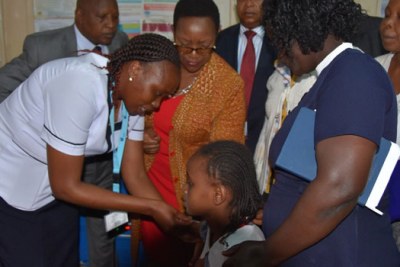
According to a 2019 Human Papillomavirus and Related Diseases report, 5,250 new cervical cancer cases are diagnosed annually in Kenya. It is also the first and most common female cancer in women aged between 15 and 44 years in Kenya. But, despite the alarming figures, women in Wajir are hesitant to take up the HPV vaccine immunisation. The low uptake of HPV vaccine in the county has been blamed on myths and misconceptions, where some people believe that the vaccine is injected directly into the
Read more »
-
An official update on the programme indicates that more than 400,000 girls aged 10 have missed out on the first phase of the exercise due to closure of schools for December holidays and subsequently due to Covid-19. The government kicked off the cervical cancer immunisation programme on October 18, 2019.
Read more »
-
Public Health Initiative of Liberia has embarked on a "cost-effective" cervical cancer screening program by using the "See and Treat approach" which is geared towards preventing cervical cancer among women in the country. The NGO has purchased equipment to enhance screening of patients to ensure that all women have "access to timely cervical cancer prevention, early detection and treatment services", according to the organisation's executive director, Joyce Killikpo.
Read more »
-
Starting in January 2020, the new programme will complement the existing efforts that have mainly been focusing on getting young girls -mainly 12-year-olds- vaccinated against cervical cancer as well as screening services and treatment for older women. It will use new technologies to improve access to screening for cervical cancer.
Read more »
-
The University of Cape Town's Professor Lynette Denny has earned a Gold Medal from the South African Medical Research Council for her 25-year body of research on cervical cancer, which affects 80% of black women in South Africa.
Read more »