Why Are African Banknotes Printed in Europe?
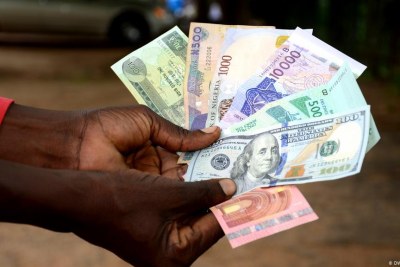
At least 40 African countries print their money in the UK, France, and Germany, decades after independence, raising questions about self-sufficiency. And there's the complicated case of Francophone Africa - the countries using the Central African CFA franc and the West African CFA franc. The currencies are tightly pegged to France's because of colonial relations and are produced in France, reports Deutsche Welle.
African countries have been formulating plans to boost intra-African trade. There is currently more trade with western and eastern countries than there is within the continent. Printing banknotes in Africa would boost profits on the continent and, at least theoretically, African countries could choose those with printing capabilities since there's likely some idle capacity. But that is not happening in practice. This is perhaps due to trust issues since countries have been printing with overseas firms for years.
Only a handful of African countries, like Nigeria, South Africa, Morocco, and Kenya have enough resources to print their own currencies or mint their own coins, and even they sometimes supplement production with imports.
InFocus
-
The ECOWAS commission has adopted the Eco as the single currency to be issued in January 2020. The idea of the single currency for the West African region was first mentioned almost 30 years ago in the hope of boosting cross border trade and economic development.
Read more »
-
Eight countries have agreed to change the name of their common currency to the Eco, finally cutting ties with the CFA franc. The Eco will still be pegged to the Euro but the rule that member states keep 50 percent of reserves with French treasury will be removed. Benin, Burkina Faso, Guinea-Bissau, Ivory Coast, Mali, Niger, Senegal and Togo currently use the currency. All the countries - with the exception of Guinea-Bissau -
Read more »
-
The government has released new currency notes with enhanced security features that should make them harder to counterfeit, according to business lecturer at Addis Ababa University, Mukemil Bedru. When introducing the notes Prime Minister Abiy Ahmed said that while the country recovers from a recession, and higher inflation, the large amounts of money circulating outside banks exacerbated the problem. Besides replacing the old 10, 50 and 100 Birr notes, a new 200 Birr note is being introduced.
Read more »
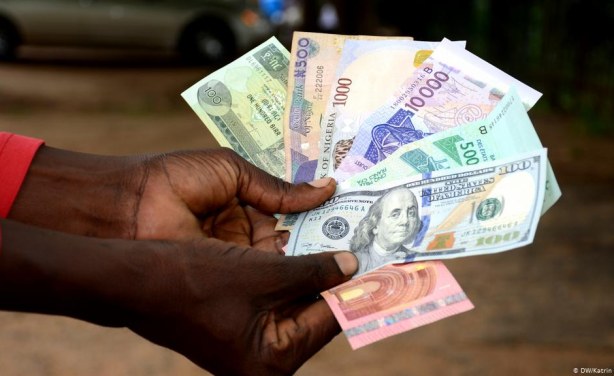
cash in various currencies (file photo).