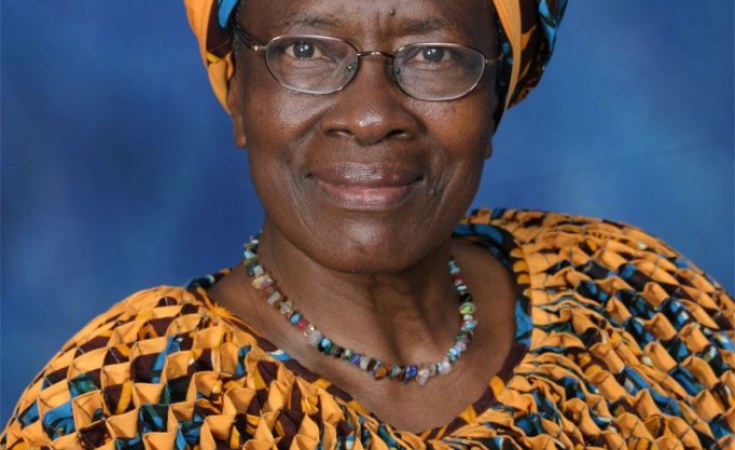
Nairobi — Kenyan health care advocate, activist and academic Dr. Miriam K. Were is in Japan today to receive a major new prize established by the Japanese government, the Hideyo Noguchi Africa Prize, in recognition of her work to promote community medical services.
In this interview with AllAfrica's Verna Rainers and Katy Gabel, she discusses her passion for community work and the Uzima Foundation, a youth advocacy organization she co-founded with her husband, Humphreys R. Were.
Tell us about the Hideyo Noguchi Africa Prize?
I was nominated by the Government of Japan and a Kenyan professional colleague. The colleague saw the website a day before the deadline and suggested nominating me…. The difference between this award and others I have received is that others… provided recognition but not support…. Real, financial support is essential and an important motivator.
You won the prize for your lifelong work to promote community-based medicine. Why do you think community care is being recognized now?
… I think that people have come to realize that my focus on community-based medicine is actually the best kind of care you can give somebody. You can help someone keep healthy, prevent disease, and get first-line care as close to them as possible. I actually worked out a scheme that would have had all of Kenya covered by 1995, including budgeting for it. Every community would have been covered by empowered health workers.
Health at the community level doesn't cost nothing – but it doesn't cost as much as disease. Many professionals felt before that health at the community level was second-class care. At least now we are catching up with reality.
A lot of my work, then, has been looking at communities. Even in Uzima, we are looking at a community-based approach to youth empowerment. So I see this award not only as recognition for me and my work, but of the importance of communities and community-based work.
How did you first get involved in health work?
I started out as a schoolteacher in a high school. I enjoyed teaching, and I enjoyed interacting with youth. I started out teaching in girls' boarding schools in the rural areas. Boarding schools are very well looked after.
But then I got married and my husband and I came to Nairobi. In the colonial period, most high schools were boarding schools, but in Nairobi there were some day schools. In the colonial period we had schools for Europeans, for Asians, and for Africans. I was assigned to work in a national school, which was just integrating.
I started teaching in Nairobi in 1968, and the school was just bringing Africans and others in to mix the races. It so happens that the children in the school in which I was teaching were from the low-income areas and quite a number of them were very sick. I would send them with little notes to the city health clinics and I'd tell the person there that the child has a wound on his leg, or a temperature – but they always came back with aspirin.
By this time, I was already a wife and mother. My own daughter was getting sick. She had childhood fevers. I would take her to the doctors and ask them: "What is the problem?" and they would say, "You don't need to know. Just give her this." I felt I was not being treated with respect. I thought, "Why can't people tell me what's wrong with my child, and what is this I'm giving her?" So I was feeling personally frustrated.
I was also frustrated when dealing with the students. No one was treating them. I think there was just carelessness in the way that doctors handled their patients. Sometimes the students were not even examined… There was kind of a condescending attitude towards children's health. So I thought that this had to change.
It so happened that the University of Nairobi had established a medical school in 1967. I just went and picked up the forms and said, "I want to apply to go to medical school." Well, they looked at me. I was 28. In those days, that was very old. So I took the forms home and my husband and I laughed about it, because in those days the University of Nairobi did not accept wives. If a girl got pregnant while she was a student at the University, she was sent home. A number of my friends lost their places in that way. So we thought, well, they probably won't take me. But they did.
Then I had the real challenge of my life: what do I do now that they've taken me? I had to give up my job, my salary, and the like. It sounds heroic, but what really pushed me was the fact that I couldn't even get decent treatment for my own daughter.
In those days there were not many African doctors. Most of the doctors in the clinics in Nairobi had been trained in Bombay… I was in medical school for five years… By the time I joined, I had decided to go into public service. My preoccupation was to push access to health care.
What drove you to work with youth?
I felt, as I progressed in my career, that we were not taking our young people along as we developed. These people are our future leaders, so they can wait their turn to make decisions. But there are so many ways they can decide to lead now. In Africa, our young people who are between the ages of 10 and 30 are the most educated group; they are the most exposed group. So one of the things I tell them is, "You can't afford to be the leaders of tomorrow – you have to be the leaders of today."
When Africa has very high levels of poverty – with more than 60 percent of the population below the poverty line – most of the young people are below the poverty line. Sometimes people make the mistake of thinking that if you are poor, you are stupid. But there's no relationship between poverty and stupidity, especially if you've grown up in a disadvantaged environment without opportunities.
So the challenge is how to bring out the strengths and contributions of everybody, including our young people. Our young people are more than 65 percent of the population. Sometimes we talk about our women being 50 percent of the population, and they are ignored. But when you are ignore both young men and young women, you are ignoring more than 65 percent… in some countries, 70 percent.
I also found in my dealings with young people that they were more open to possibilities. They could look beyond what they have now, the relationships they have now, to what is possible. And we need that aspect in our development in Africa also – the broadening of the horizon from which you can make decisions… When you open up possibilities for people, things happen faster.
In Kenya, we have not always had universal education – universal primary education. In fact, it only became a reality in 2003. So when we started the Uzima Foundation in the 1990s, there was no free access to education. So you find 14, 15-year-olds who are nowhere. They are in their homes, but not in any directional lifestyle beyond housework, if they are girls. And we have even more problems with young men who are not in family situations – they are not in school, and they are not employed.
So you find a lot of young people just loitering on benches in markets, looking for work, feeling bored, helpless and idle. How can you blame them for getting involved in crime? Living in this blanket of hopelessness was what concerned me. If I imagine my life without having gone to school, having a job, having anything, I become very scared.
How did you form the Uzima Foundation?
We didn't originally imagine starting an organization. We wanted to work with existing groups like church groups and so on so that we could support their young people's work… But even our own church groups were not prepared to deal with that. They said, "Oh, no, we cannot let young people take part in decision-making. We'll just tell them what to do." When my husband and I started talking to young people about it, we remembered we had been saving some money for a rainy day, as we called it, but so many young people were in the rain.
We wanted our young people to get involved in decision-making. At the same time, we don't think it's best to have a completely trial-and-error situation, because if they make terrible mistakes, it will shut even more doors for them from the adult world. As the saying goes, "Wise people learn from their mistakes, but wiser people learn from other people's mistakes." So we wanted them to be involved, but under the guidance of adults, so long as those adults realize that young people have potential, give them an opportunity, and act like their sounding board. So it became a partnership between the youth, who are the majority, and a few adult leaders.
By 1995 when we started Uzima I had been involved for years in management, organization and the like. So when we began work with Uzima, we asked ourselves, "Should we go with a program, or shall we go with an idea?" We decided to go with an idea – to find out what young people thought about the issues in their lives. For me, that was a major break. I was not used to working like that. When you're working with the Ministry of Health and you're in charge of maternal health you have an MCH, you have it organized, you know the clinics and the like. But we needed to know the young people's perceptions of their issues.
Gathering a bigger picture of young people's ideas can't have been simple.
What we did was to host what we called a discussion forum. In fact, the first group almost threw us out. "How can you ask us about the issues in our lives," they asked. "You know the issue in our life. It's poverty. So give us money and get out."
So I told them "Unfortunately, we don't have money to give you and get out. And even if we did, would that be the best thing for you?"
"Yes, just give us the money," they said.
"And tomorrow?"
"Don't worry about tomorrow. Give us the money today."
So I asked them to think seriously, because the decision would be very important. "Are you telling me that if I don't come to you with money, I should not be interested in you and what's happening in your life? If that's what you're telling me then I will go."
"Ah, now you are being difficult," they said.
Then they talked in groups and said, "No, no, no - we still want you to be involved with us, and we still want you to be interested in us even if you don't have money." I told them we had saved a little money and it looked like a lot of money, but we have had to buy an office, and a desk, and a computer. Most of that money had gone. But we didn't want to stop because the money was not there. But they said, "How can we work with you? We are too poor to work."
And I said, "Well, you know, you must have something, because when God wanted Moses to undertake the responsibility of freeing the slaves from Egypt, he only asked Moses one question, and that question was 'What is in your hand?' He didn't ask Moses, 'Which army should I mobilize for you?'" So I said to them "What is in your hand?" And of course they said "Nothing." So I said, "Think again, because if you had nothing in your hand you would be dead."
That was the end of it; we had tea and bread and they went home. When we met the next week, they said "We found out what is in our hand. We are healthy young people. One thing we can do is protect this health, and use this health for good."
They decided to start a running club in mornings and evenings.
Now one of the most interesting outcomes was that, previously, most of the young people – mostly young men – would come home at midnight and beat their relatives… But when they started running they came home earlier because they were tired.
The slum mothers and relatives were so pleased with what we had done that they wanted to give ten shillings each – for them, a lot of money – to give our young people tea. So I told them to give the money directly to their children. They said, "If we give it to them, they'll misuse it." I said, "Give it to them and let's see what happens." The young people were so touched.
What other initiatives were taken?
You know, when you are poor, sometimes there is no time for caring relationships. So the mothers started a tea club. They meet for tea and have discussions before they go to run. Then they said to one another, "Why don't you go in the library and look up information on contraception?" or addiction, and so on.
So these tea sessions became discussion sessions around issues like poverty, sickness, violence by the youth and violence against youth, boyfriends and girlfriends. But the most dominant issue was idleness. They complained of boredom, so we showed them some dirt to clean up. They organized themselves and got to work to clean their environment.
When you're in a slum, you're very discouraged; you're poor. What people don't realize is that living like that drains your initiative. You are lethargic, you have apathy, you are depressed and you don't realize it. Depression is rarely discussed but if you have depression you can be sitting in dirt and not even see it.
Because of these early groups, we decided to organize Uzima around youth groups of 10 to 20 who come together with a facilitator from the organization to discuss their issues with each other and decide on the way forward. We found that the strength of the group is very important. We are community-driven people in Africa, so we tried to create that community sense. I've always said that in Africa if it doesn't happen in the community, it doesn't happen.
Out of these early meetings our first programs evolved. Our first program was called Clean and Safe Fun. The youth would tell us, "Just because there is Aids you want us to sit and have bored lives. But we want to have fun." So we asked them, "What kind of fun do you want to have?" And they said, "We want it to be clean and safe." So we started this program with football, netball, theatre, poetry, traditional story-telling, arts, dance…
They've gotten very good at putting on plays. What we haven't done yet is put on a show for money, which is something we would like to do to raise funds. Clean and Safe Fun is a very good program because they come together with their talents. One may be a playwright, one may be able to recite poetry, one can sing one can dance… so they put on quite interesting shows for their parents and for their communities.
The other popular program was the one on reproductive health. How do you keep yourself safe, happy and free from HIV/Aids and unwanted pregnancy? That became a very important area.
But the third, and most important area was economic empowerment. How do we economically empower ourselves so that we don't just become comfortable in this poverty, but become able to get out of it?
How did you address this?

Sign up for free AllAfrica Newsletters
Get the latest in African news delivered straight to your inbox
We had to establish a small fund but we encountered a problem because we were giving loans to the children of poor parents. The parents wondered why we were giving money to their children but we were not giving them any money. The other problem was that some of the young people would disappear with the money. How do you trust them when the parents are not involved?
Out of this experience Uzima Foundation decided to form advisory committees within communities, made up of parents and community leaders, so that the youth are not without guidance. The youth group and the advisory committee form community-based organizations [and] these have become a very significant organizational development in this country. Even the National Aids Control Committee is controlled by some community-based groups.
We learned that even if you want to focus on youth, you can't do it in isolation without the community. In Africa, generational gaps are especially wide. Say your family is subsistence farming and they haven't had contact with computers or anything and are really living in another age. You come to high school and college and leave that situation. So there has to be an active process of inter-generational communication.
In dealing with this we came to issues of violence – violence amongst youth and violence against youth. From there we had to deal with governance – in family life, community life and in the national context. Uzima Youth have been very active in civic education. They have organized themselves around certain political candidates, and they have become civic leaders themselves.
We also started working with schoolchildren. One boy in Standard 6 had an alcoholic father. He started taking him to Uzima meetings and now the whole family is educated. Uzima really made a difference for them.
That's our motto – touching a life. It's reflected in our logo – a star – because we believe our youth are stars touching lives. We thought about so many names, but we went with Uzima because it means [in Kiswahili] the wholeness of life, apart from Eastern, Western, or African ideologies. It stands for itself; it's not tied to a particular group of people.
So your programs are all based on ideas from young people?
We've created formal programs around these organically-emerging ideas. Our programs are directed by the chairman of our board, Humphreys R. Were.
We also encountered gender issues. Girls and women involved in our programs were feeling left out, so we worked to give them a voice. Our youth have taken the messages of Uzima to heart. They've become very involved in conflict mediation and have even traveled to participate in international conflict mediation processes with youth in Gaza involved in the Israeli-Palestinian conflict, in the Democratic Republic of the Congo, and so on.
How are you funded, and what do you need to keep Uzima going?
We have received funding from the Ford Foundation and from the World Bank, but the funding overall has been minimal. We pay many of our staff salaries out of our own pockets. The problem is that other international organizations poach them after they've had some experience with us. The international organizations can offer better salaries and the like. It's not surprising – they're very good people – reliable, competent workers. So we lose them. We'd like to establish an endowment fund so that we can keep staff on at least two-year contracts, because we lose good staff all the time.
Related:

